
The most brutally panned film in the Competition section had to be At the Sea, directed by the Hungarian filmmaker Kornél Mundruczó and starring Amy Adams. I could not watch the movie due to a scheduling conflict, but I read the reviews. Here’s a sample of the brutality unleashed on this drama about an alcoholic woman who returns to her family after a rehab stint, and the relationship dynamics that unfold. “Insufferable”. “Humourless, self-adoring and vapid”. “Drowning in vanity”. “Every once a while a film comes along that is so miserably boring and uninteresting, there is nothing more that you’ll wish for than to get those 2 hours back.” “Amy Adams attempts to float to recovery, but gets marooned.” And the most elegant diss of them all: “Drop the definite article and you have a more apt title for At the Sea, a drab and laborious recovery drama with a mystifying amount of major-league talent behind it.” I laughed a lot, and I want to talk about this aspect of laughing at a movie by consuming reviews. But first…
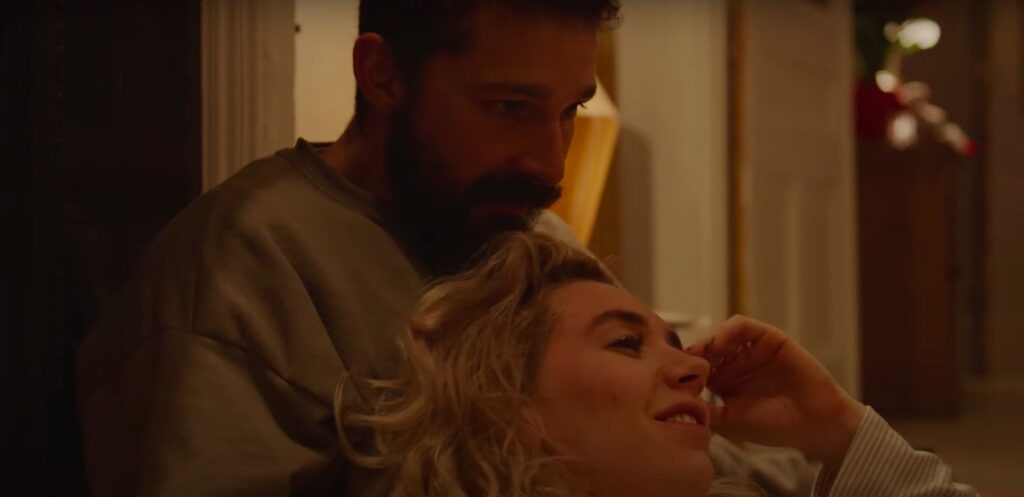
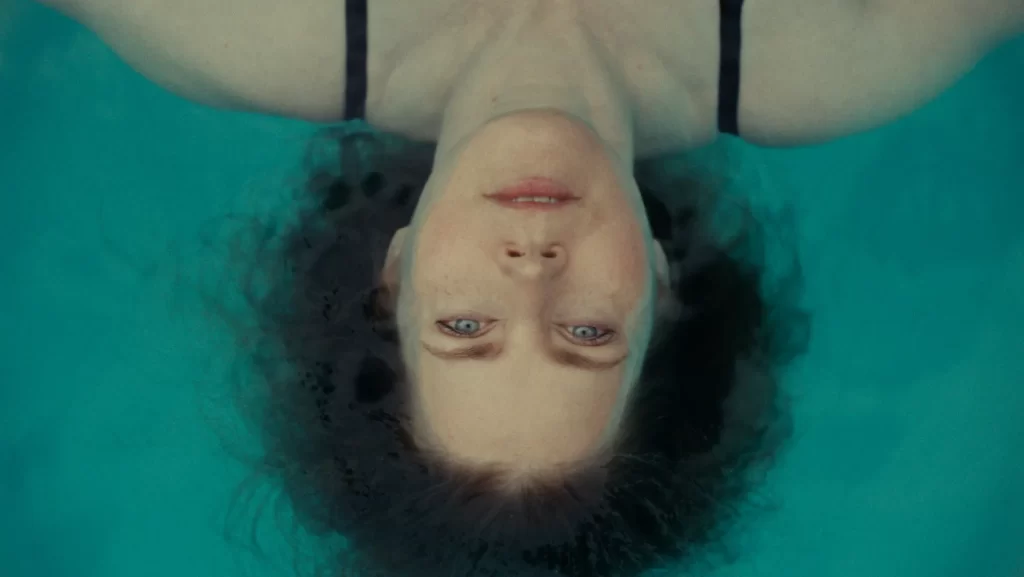 Why would a major-league star like Amy Adams be drawn to something like this (assuming that the film is indeed as terrible as the reviews say it is)? One, unless you are Meryl Streep or Nicole Kidman, it’s difficult for an actress to get good middle-aged parts. Streep has the legend of her accent-studded series of roles and her many Oscar nominations, and Kidman has built up an impressive résumé by consciously seeking out international art-house auteurs – and she did this right from the start. But Amy Adams has largely stuck to Hollywood, and you can see the attraction of a central part in the film of a director whose earlier English-language movie (Pieces of a Woman) got its middle-aged lead actress (Vanessa Kirby) an Oscar nomination. And especially when it’s a director who speaks like this: “Theater is words — cinema is visual and much more sensitive. Cinema is hair and skin, trees, light, and movement. Something else is happening between the lines; it’s never a straightforward emotion.”
 Mundruczó called this “return of an alcoholic woman from rehab” story a movie that’s really about life after death. He said, “It came from my personal experience as well. When you’re in real trouble, you can lose your connection with those closest to you. Still, there’s a way out, and I wanted to offer it to [the Amy Adams character]. It’s not utopian — it’s optimistic.” Perhaps making this movie was also some kind of catharsis because Mundruczó has lost Hungarian funding after being critical about the right-wing government. So this opportunity to make movies in English (At the Sea, and also Pieces of a Woman) is some kind of “life after death”. He added, “I’m just grateful I get to tell my stories in English and make American movies. I certainly didn’t want to make a ‘European’ film in the U.S. and just sink into the Atlantic Ocean”. These revelations are very touching, but maybe they’re also the root of the problem. Just how “American” a movie can a “foreigner” make? Maybe what those critics were roasting was really this mishmash of sensibilities, neither there nor here.
So about laughing at the reviews for this film, and about laughing at reviews in general – what does one make of it? The universal truth is that no one actively sets out to make a bad movie (anyway, good/bad is all subjective, et cetera), and the journey of making a so-called “bad movie” is as filled with blood, sweat and tears as the making of a so-called “good movie”. So are we being cruel when we laugh at films and reviews? I go back to that quote: intelligence is the ability to hold two contradictory thoughts at the same time. Just because you laugh at a review, it doesn’t mean you hate the film and those involved in it. It’s entirely possible that I may end up liking At the Sea if/when I watch it. But even then, the laughs I had at the film’s expense are valid because these laughs are not coming from the film itself but from someone’s irritated response to the film. It’s like laughing at a standup comedian’s jokes about religion, even if you are a truly religious person.
Also, you’d lose your mind if you start taking everything seriously and earnestly. And that’s why I enjoy the freedom of writing from a film festival. When I watch regular releases, I go in with the mindset that a review has to be written after the show, and when I sit down to write the review, I sometimes have to really make an effort to write something meaningful out of a film that may not have worked for me. But while at a festival, I can write a paragraph about a movie, or a series of thoughts around a movie, in whatever free-flowing form strikes my fancy. It doesn’t have to be an all-encompassing “review”. Even if I do not especially “like” a movie, I can still find things in it to write about, and I can do this writing whenever I feel like it (within the timespan of the festival) – and that’s liberating. Still, coming back to this film and its director, I was moved by his yearning. He said, “I’m lucky I’m able to work, but I’m Hungarian and I’d definitely like to make Hungarian movies again. I desperately miss it.” I hope he gets what he wants. And that’s a wrap, folks! Until next time, then!