Rahman Dakait is dead, and Ranveer Singh returns as Hamza, getting deeper into the Pakistani underworld. We see who Hamza was, before he landed in Pakistan, and then we see what he becomes in order to destroy India’s enemies. Even as he keeps winning, he keeps losing something – and this tragic undercurrent elevates a smartly written, superbly crafted, and very effective film that’s an all-out theatrical experience. That’s the short take. A more detailed review follows, and it may contain spoilers.
One of the unexpected (and quite delightful) aftershocks of Dhurandhar was the series of “peak detailing” memes dedicated to the writer-director Aditya Dhar. The film was jam-packed with information, and as viewers recalled moments they had missed, they began to highlight them as peak detailing. And soon, it became a game of sorts, where random shots were pulled up as peak detailing. So let me contribute my bit to this meme festival. My favourite bit of “peak detailing” is the series of shots that opened the movie. The camera gives us a close-up of the character played by Madhavan: Ajay Sanyal, Director of the Intelligence Bureau of India. On his sunglasses, we see the reflection of the Indian flag. But the next shot shows us that this is not, say, some Republic Day celebration. The flag happens to be the one painted on a hijacked Indian Airlines flight. We cut to a wide shot and what we see is a tiny man in front of a huge plane in hostile terrain. It’s the perfect visual metaphor for the towering odds this one man is against.
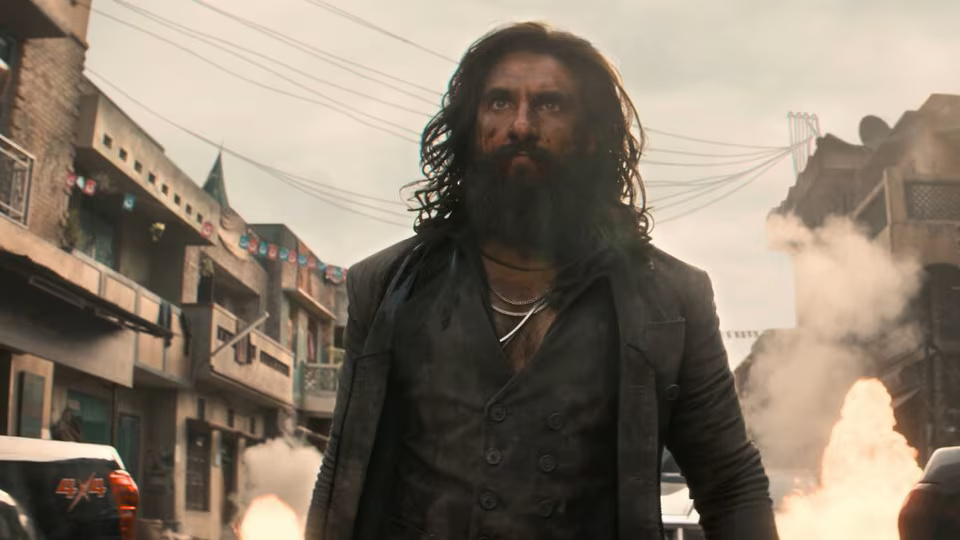
How do you fight back against the towering threat of terrorism? Dhurandhar said that the only way is to become a terrorist yourself. In our moral science books in school, Gandhi famously said, “An eye for an eye only ends up making the whole world blind”. But the other viewpoint (and one that is becoming more prevalent in the world today, as we’ve become grown-ups) is that you need a thorn to remove a thorn – and that’s how we came to meet Hamza Ali Mazari, the undercover agent played by Ranveer Singh. He infiltrated the barbaric Pakistani underworld in Lyari, the kind of hellhole where men play football with the head of an enemy they have just decapitated. And going into Dhurandhar: The Revenge, this is the question: Who exactly was this man before he became Hamza Ali Mazari? The end of the first part gave us his name, Jaskirat Singh Rangi. But how did this man who wanted to become a soldier in the Indian Army end up a terrorist at the service of India?
Dhurandhar: The Revenge opens with… an act of revenge. But this time, it’s not Hamza. This time, it’s Jaskirat. This time, it’s not political. It’s personal. We get a sensational action sequence that, like the earlier film, delivers on every single count: location scouting, editing and cinematography, prosthetic makeup and brutal action choreography, sound design and background score. If nothing else, the Dhurandhar films will be remembered for the high bar they have set in the technical departments. But the bar is equally high in the writing department. After Hamza narrates his backstory to his handler, he asks what the other man’s backstory is. The man says he will tell that story at some point – and when that point arrives, you are not hit with it. With Hamza, the screenplay says, “Let’s settle down… we are getting into flashback mode.” With the handler, the approach is different. The backstory is compressed into a single line of dialogue in the midst of a scene of utter chaos.
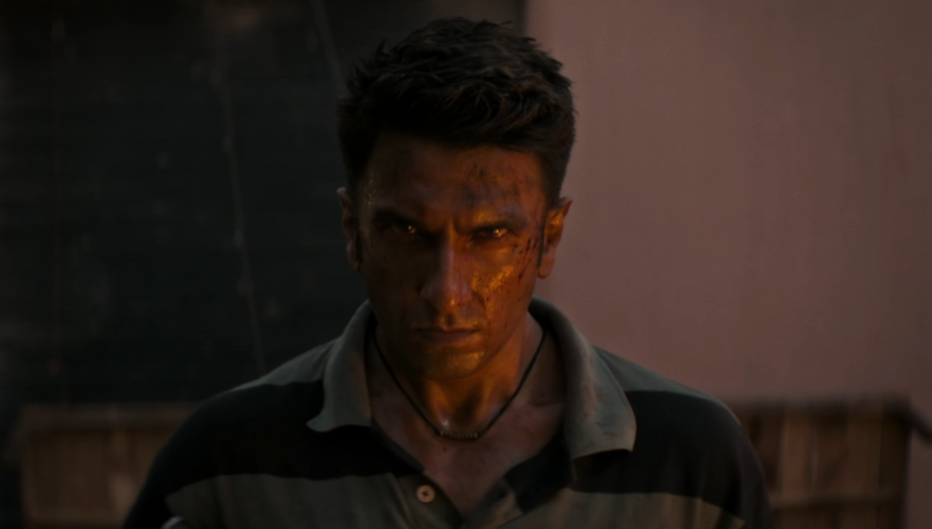
Like the earlier film, Dhurandhar: The Revenge is filled with these contrasts. Some portions that were dealt with in great detail, like the elections in Lyari, are tossed off here in passing. We hear of Hamza’s decision to ally with the Muslim Movement Party, and that’s that. There’s the docu-fiction feel of flipping through the pages of a newspaper and just glancing at the headlines. At other points, like when Jaskirat goes to his hometown, the screenplay slows down: shot, reverse shot, shot, reverse shot, shot reverse shot… The filmmaking is still, and it breathes to the extent that I was holding my breath wondering if this troubled man will finally find peace. Some of the storytelling is purely visual, like in the case of Uzair, the brother of the Akshaye Khanna character, played by Danish Pandor. At first, his body language suggests that he is hesitant to sit in his brother’s seat, his brother’s “throne”, if you will. But in just a couple of scenes, Uzair wears his newfound crown with ease.
The story is along expected lines. Hamza has to reach the heart of the terrorism nexus and make India safe again. And taken as a template, the Dhurandhar films are essentially masala movies, like Sholay. If the Thakur hired a couple of crooks to handle Gabbar Singh, here it’s the Indian intelligence hiring a convicted murderer to tackle terrorists in Pakistan. But the difference lies in how dense the detailing is. The difference lies in the nonlinear storytelling that constantly shuffles cause and effect: many times, we see the effect first and then we get the cause. The difference is in the unflinching and expertly executed violence. The difference is in the incorporation of real-life politics, from Uri to Modi to drugs in Punjab to demonetisation to the Ram temple. And at the same time, all this seriousness is constantly undercut with superbly judged “mass” moments, like the use of pop songs or the brilliant reveal of a new spy at the end. The tone of this reveal is both amusing and sympathetic, and it makes you travel back with this character and see why he was such a buffoon at so many points in the story. (I did warn you about spoilers!)
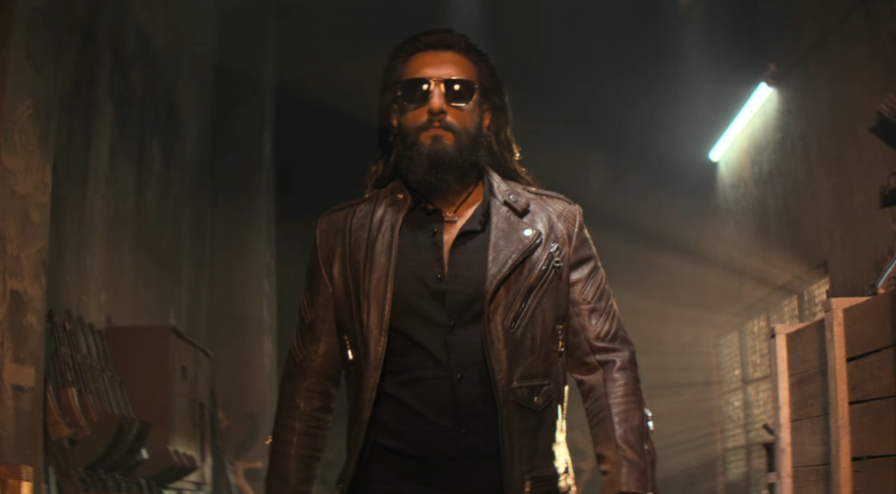
The film moves so fast and it’s so entertaining that it’s quite possible to miss the fact that it’s actually a tragedy. Coming out of the theatre, I thought ofDhurandhar: The Revenge as the spy/action world’s equivalent of The Godfather: Part 2. If the first Godfather was more of an ensemble piece, with Michael Corleone slowly emerging as the protagonist, the second part was about the soul of Michael – the war hero – being slowly swallowed up by darkness. Here, Jaskirit wants to be an Army man, but he is sent on a mission to the heart of darkness. He is told, “Yeh samundar bahut gehra hai aur door door tak andhera hai.” And this darkness, finally, engulfs him. Unlike Michael, his moral compass remains intact. He remains a patriot. But like Michael, even as he wins, he loses everything. He loses his handler. He loses his best friend from his village. He loses his family from back home and he loses the new family he has made in Pakistan. A pair of beautiful echo shots shows the burning of a photo each of two sets of families. In a telling scene, the chief of the underworld hierarchy, known as Bade Saab (and you know who this is!), says that Hamza “bilkul meri tarah ghoorta hai.” If the eyes are the window to the soul, we know what’s happened to Hamza’s soul. He may never be Jaskirit again.
In the middle of all this fine filmmaking, what do we make of a movie that (like its predecessor) opens with a quote from the Bhagavad Gita, and where a character is performing a Hindu ritual before witnessing the death of a Muslim terrorist who insulted Hindus as cowards? But then, we get Hamza’s wife Yalina, played by Sara Arjun. She is a Muslim who loves Pakistan, but is also able to see that war against terrorists is not war against your homeland. Even Muslims fight Muslims here, in the battle between the Baloch and the Pathan communities. But what about the accusation of all this being propaganda? That call will depend on how you see films. Even the staunchest Modi supporters may feel a twinge during the demonetisation portions, but overall, there is no denying that we have become more aggressive as a nation (and as a people), and whether that’s something to be celebrated or not is up to each individual viewer.
But as a movie movie, as something made to be experienced on the big screen, Dhurandhar: The Revenge delivers on almost all counts. The killing of a loudmouthed cop is one of the best theatre moments in recent times. The reservations I had were very few – like I wondered about the plot point of Hamza keeping a diary, or about a conversation that Yalina overhears a little too conveniently. I also wanted more of some characters like Rehman Dakait’s wife, who vanishes after a well-timed slap, or even Uzair and Yalina. But then, maybe Aditya and Co. will develop these various strands into a mini-series. There’s just so much material here, so much potential for furthering this story and this world. But mainly, this film lacks a charismatic villain at the centre. Arjun Rampal is very good, and there are some solid scenes written around the relationship he shares with his toxic father, but Rehman Dakait was really something else!
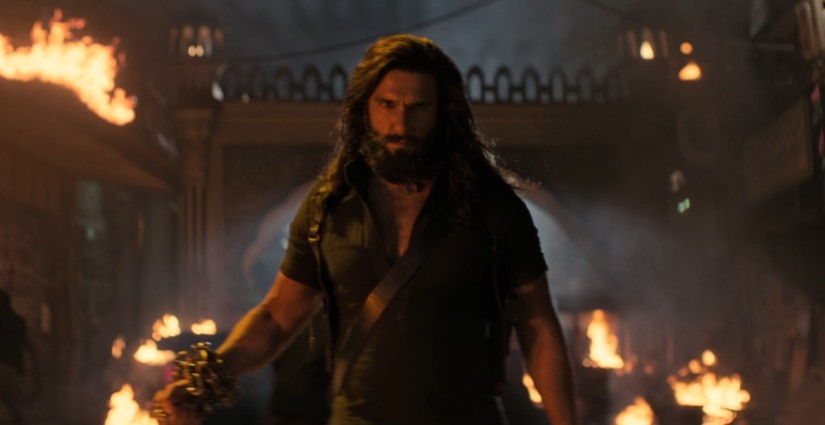
The casting is brilliant and almost every performance clicks, but the best of the lot are Madhavan, showing grey shades like never before, and, of course, Ranveer Singh. Ranveer’s capabilities were never in doubt, and he has moulded himself into every kind of acting zone from Bhansali’s dance-drama style to Zoya Akhtar’s restrained realism. In Dhurandhar: The Revenge, he is very literally in what the Internet calls beast mode. The character is referred to as “babbar sher”, and as Hamza, Ranveer’s hair is styled like a lion’s mane. Not only does Hamza look different from Jaskirat, even the stone-faced way Hamza weeps is different from the very vulnerable way that Jaskirat weeps. At one highly emotional point around the interval, Hamza drops his animal act and becomes Jaskirat for a bit, and then snaps back to being Hamza again. It’s thrilling to watch – and yet, Hamza is no solo-hero in the Stallone/Schwarzenegger mode. When he is captured, he still needs the help of the Indian intelligence to escape. And at the end, he is reduced to someone like the John Wayne character in The Searchers. He completes the mission but he will never know a home again. The door (here, it’s a gate) closes on him. Like Sholay, the ending is bittersweet. The only way to pull out a thorn may be to use another thorn, but as the heading of the first chapter of the earlier film suggested, there is a price to be paid for peace.