This feature is about a group of non-city folks who start an eco-resort, and deal with the eccentricities of tourists spoiled by capitalism. There is an enjoyable element of the absurd, and the quirky characters from a corner of the country keep us invested in their hijinks. That’s the brief review. A more detailed discussion follows, and it may contain spoilers.
Amartya Bhattacharya’s eighth feature, Lahari, tells the story of a bunch of quirky characters. One of them is a boatman named Bhuta (Choudhury Jayaprakash Das). When we first meet him, he is ferrying a city-based photographer who wants Bhuta to be a subject and not a model. “What’s the difference?” Bhuta asks. The photographer says that a model’s poses are staged, whereas a subject is captured naturally by the camera. Bhuta wants to know what’s the use of all this, when people can smile for the camera and slip back into their grumpy faces once the shot is taken. Also, by asking Bhuta to lean this way and that way, isn’t the photographer making him a “model” rather than a “subject”? This folksy wisdom of these people away from the city forms the foundation of this movie.
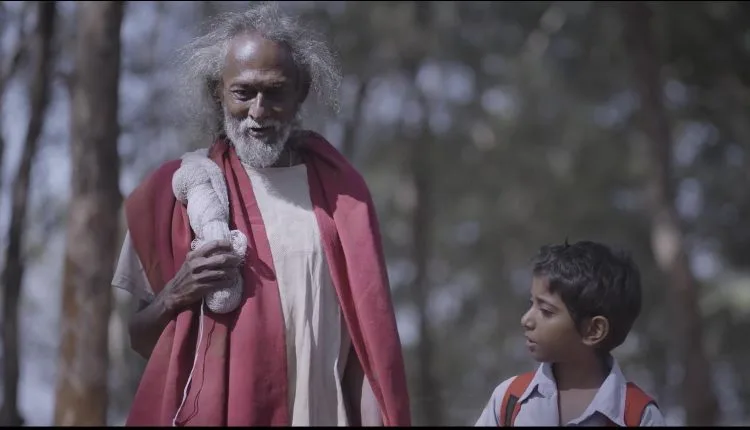
Lahari is structured as a series of encounters between the inhabitants of these bird-filled backwaters and tourists from the city. The locals include Dinu (Choudhury Bikash Das), whose wife is no more and who lives with his very, very young son, Naba (Smruti Mahala). Dinu is a fisherman, and he smells of fish. This is not the fate he wants for Naba, so he sends the boy to school. Dinu likens Naba to a bird that will soon leave this nest. When Naba protests, he reassures the boy that a bird never forgets its nest. Wherever he ends up, some part of Naba will always be part of this ecosystem. Then there’s Deepak (Dipanwit Dashmohapatra), a henpecked husband who likes to drink with Dinu and Bhuta. And finally, we have Golchu (Susant Misra) and Babuli (Swastik Choudhury), a government servant and his wide-eyed assistant.
From the city (or from foreign lands), we get a series of tourists spoiled by capitalism. One of them bargains with Dinu about the price of fresh fish. He refuses to part with a hundred bucks, even though the same fish will cost him three hundred in the city. Dinu is not desperate. He laughs at the man, who drives off in his pricey car. There’s the sense that, sometimes, we end up exploiting those we can easily end up helping. But some tourists are nice. One of them asks Bhuta to let his hut out as a sort of eco-tourism resort, and this development results in some big laughs. Don’t these things need government approval? But Golchu couldn’t care less. He has not yet been reimbursed for his petrol bills, and until that happens, he has decided to be in some sort of retirement.
There’s a lot of formal inventiveness. In a single shot where a stationary camera observes Bhuta from a distance, we see a tourist complain about a number of things. It’s almost like a running gag. Deepak’s jealous wife (we never see her, only hear her voice) asks him to inform the authorities that Bhuta’s operation is illegal, and the way this subplot ends is a lesson that money is important. We also see how the islanders help one another. Amartya is the writer, director, cinematographer, and editor – and he casually drops in facts of life, like how we grow tired of things we already have. The casual performances are amateur-level, but in a strange way, they add to the absurd air. Watching Dinu and Bhuta graduate from bidi-s to cigarettes is a visual to be savoured. The point is not pressed, but they, too, are not averse to a bit of capitalism.
The one major departure from the eco-resort section of the story is when Naba asks Dinu to get him a doll. He has seen one with a girl in his class. What Dinu ends up getting is wonderfully surreal, and it’s at once amusing and tragic. Like the migratory birds in this area, this part of the film takes off like a dream, tying up neatly with that earlier line about Dinu wanting Naba to leave the nest. And it makes you wonder if money can buy you anything, even a mother! Despite their minor imperfections, movies like Lahari are a gift, a window into corners of India we rarely get to hear about, let alone see. By prioritising characters over plot, the film takes us out of “audience mode” and makes us become some kind of eco-tourists ourselves: the difference is that we are observing human beings, human nature.