Sunny Deol plays Father India. Varun Dhawan plays the Army. Diljit Dosanjh plays the Air Force. Ahan Shetty plays the Navy. They unite during the 1971 Indo-Pak war in a film that manages to combine nostalgia with an amount of newness. That’s the short take. A longer review follows, and it may contain spoilers.
Border 2 is based on three battles from the 1971 war between India and Pakistan: the Battle of Munawar Tawi, Operation Chengiz Khan, and the Battle of Basantar. How can a single film – even a three hour and nineteen-minute film – hope to showcase the specifics of three huge military operations? Writer -director Anurag Singh and co-writer Sumit Arora crack this problem in a very interesting and very mainstream manner. Instead of three battles, the focus is on the three uniformed services of our Armed Forces: the Army, the Navy, and the Air Force. So even if the details of the battles become a bit of a blur, we are given a clean narrative thread to hold on to, thanks to a patented pre-Bollywood Hindi-cinema screenwriting trick. Nearly fifty years after Manmohan Desai put a face to each religion in Amar Akbar Anthony, we get a film that puts a face to each of our Armed Forces. Varun Dhawan represents the Army. Diljit Dosanjh represents the Air Force. Ahan Shetty represents the Navy. So Border 2 works in two ways. One, it is the story of how Pakistan was pushed back by a combination of the Army, the Navy, and the Air Force. And two, it is a throwback to multistarrer-potboilers like Karma, where three heroes went after one evil villain.
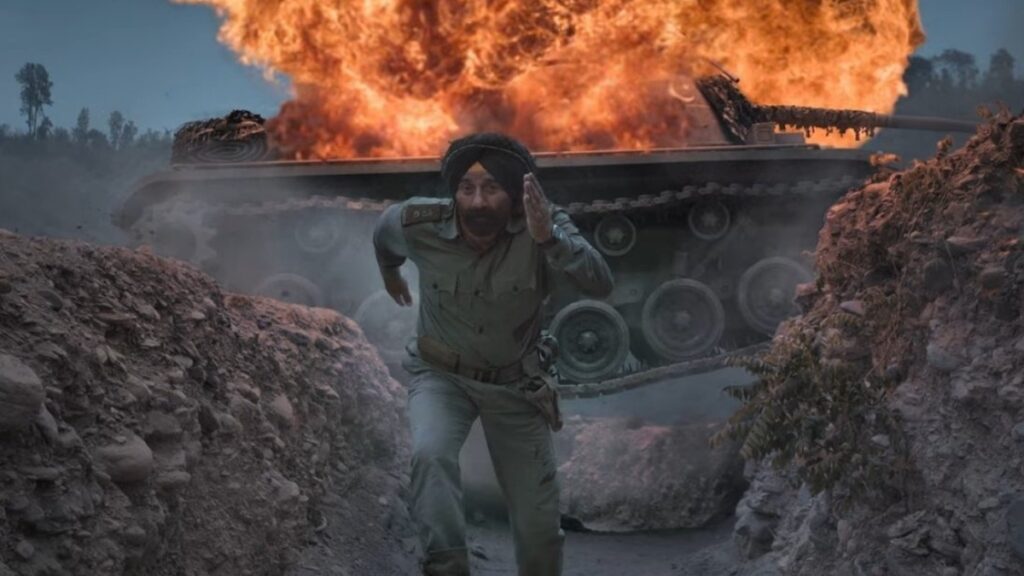
What brings Border 2 to the modern day is the realisation that war movies are inherently patriotic films – but they can also come with a wee bit of nuance. In one of the finest scenes in the movie, the Varun Dhawan character – based on Param Vir Chakra recipient Major Hoshiar Singh Dahiya – encounters a new recruit in the Pakistani Army. He puts the youngster in his place and in the eyes of the audience he scores a point for India, but he also recognises that this is basically a scared young man with a small family that he wants to get back to. The payoff for this encounter comes when they meet again in the second half, and the expression on Varun’s face says it all. One of the massiest moments in Border 2 is the superbly timed beheading of an enemy soldier, but it’s scenes like the earlier one that humanise the movie and give it a beating heart beneath all the bluster.
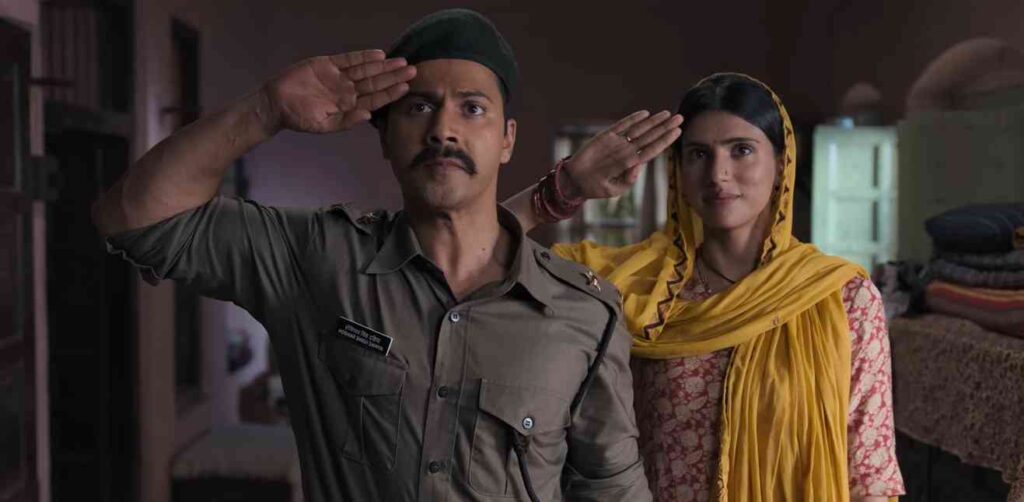
What makes Border 2 work is this mix of old-style “kill the enemy” fireworks (with Sunny Deol’s vocal cords in full form) and the gentler moments that are stripped of melodrama. In another stretch with Major Hoshiar Singh Dahiya, we see him get married during a long leave, and we see the sweet and funny customs and traditions of this marriage that give us a glimpse of an India that lives in the villages. A little later, he is called back to service. His wife puts on a brave front, but when she thinks he is gone, she breaks down. But he hasn’t really left, and seeing her tears, he tells her not to worry. He says, “Fauji hoon. Vapas to aana hi hai – ya to jeekar ya yaad bankar.” This line about returning as a memory could have been said with a heart full of sadness and a roomful of violins wailing away in the background, but Varun gives a small smile. The line is sentimental. The moment isn’t.
After establishing the stakes of the war ahead, Border 2 cuts to a long flashback about the characters played by Varun, Diljit, and Ahan – that is, the Army, the Air Force, and the Navy. This new film understands something that our older films did. If we are to care about the outcome of a large-scale war, we first have to care about the people in it. Diljit is absolutely lovable as the man who hates to lose, and the scene where he meets his “would be” is a lovely bit of comedy. Ahan gets the weakest characterisation of the lot, but he makes up somewhat in his big action set piece. What matters is that these three men truly become the faces of our Armed Forces. During training, the Sunny Deol character – their superior officer – says, “Yeh fauj aapka parivar hai, aur yeh desh aapka ghar.” Varun, Diljit, and Ahan are literally shown like one family, in and out of each other’s homes. They are literally brothers in arms.
Border 2 has no answer to anyone in the audience who asks, “So what’s new!” The film embraces cliché with earnestness, and this puts the clichés across. There’s nothing designer about it. The men are described as sons of the soil. Border 2 could be described as a film of the soil. I had only one issue. Apart from the vulnerable young soldier in that scene with Hoshiar Singh, all the other Pakistanis are those who call Indians “buzdil” and “darpok”, and say things like “Hindustan pe qayamat barsegi aaj.” Fair enough. For them, we are the enemy after all. But having a little more humanity on the other side – from a civilian, say – would have been nice. But then, we all know what happened to Ikkis at the box office, and as I do this review, on the first Monday after release, Border 2 seems to be heading for blockbuster status. I will leave the analysis of popular cinema and populist sentiments to others more qualified.
As a film, though, Border 2 powers through its lulls. The technical departments could have been better, but the musical nostalgia from the earlier Border works big-time, with reworkings of Anu Malik’s terrific songs. As a composition, my favourite song is ‘Hamen jab se mohabbat ho gayi hai’, but I was living in the US when Border opened and ‘Sandese aate hain’ often used to reduce me to tears. I guess it was my generation’s equivalent of ‘Chitthi aayi hai, and it’s used beautifully here. The partly choreographed staging is not too sentimental, not too celebratory – it comes across just right. ‘To chaloon’ is also reused very well. Whether in the earlier film or this one, the song speaks not just about one soldier saying goodbye to his family but about all soldiers who did this over time. Another achievement of the film is the way it delegates the machoism to Sunny Deol and has the other leads play softer characters. The trailer had me wondering if this was going to be an all-out “Sunny Deol screams his way to Lahore” movie, but despite the actor’s proven success in this genre, this is not an all-out Sunny Deol movie. Everyone comes together to win the war.
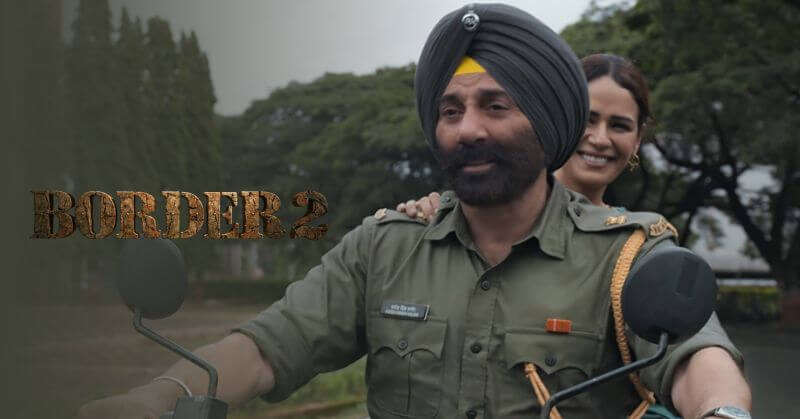
But there’s no denying that Sunny is the first among the equals. He plays Lt. Col. Fateh Singh Kaler, and he’s fighting two wars, one external and one internal. The internal drama is very generic, but put the actor on the warfront and you see why it’s hard to think of anyone else in his place. The big war scenes are staged reasonably well – and Sunny Deol is the father-figure who holds the other three actors together. He is Father India, looking after the Army, the Navy, and the Air Force. The character displays parental love and discipline, but when brute force is needed, he also knows how to demolish an enemy communications centre by driving his Jeep right through it. I wonder what Gen-Z will make of all this, but for older audiences, Border 2 is a solid throwback that works well on a big screen and with a big audience. It delivers exactly what you expect, but with some surprises, and that’s enough to justify the running time – at least until Border 3 appears! And that does look like a certainty, doesn’t it?