
Raichal plays a woman who lives in Sivakasi. She has a secret. She is not ostracised by others, but she has self-ostracised herself, in the sense that she has cut herself off from the community. How she navigates daily life with her secret and her young son forms the crux of this Tamil film. That’s the short take. The rest of this review may contain spoilers.
Kayal is a department-store worker in her early thirties, and she lives with her son Prabhu in a small town in Sivakasi. The characters – played by Raichal and Hemanathan – often seem alone. In an early scene, we see Kayal and Prabhu outside their home. She’s combing his hair before he leaves for school. It’s a wide shot and there’s no one else in the frame except a cleaning lady in the far distance. This sense of mother and son being isolated is an extension of a medical condition, for which they take tablets after which the film is named. Only Kayal’s brother and his wife know. Otherwise, Kayal carries this secret, this burden all alone. And this makes her life a series of lies. She buys bus tickets to Chennai. But to her employer, she says she is going to Kovilpatti. When she wants a day off, she tells someone that there’s a marriage in the family. To someone else, she says it’s an ear-piercing ceremony. To someone else, it’s a visit to see Prabhu’s grandmother.
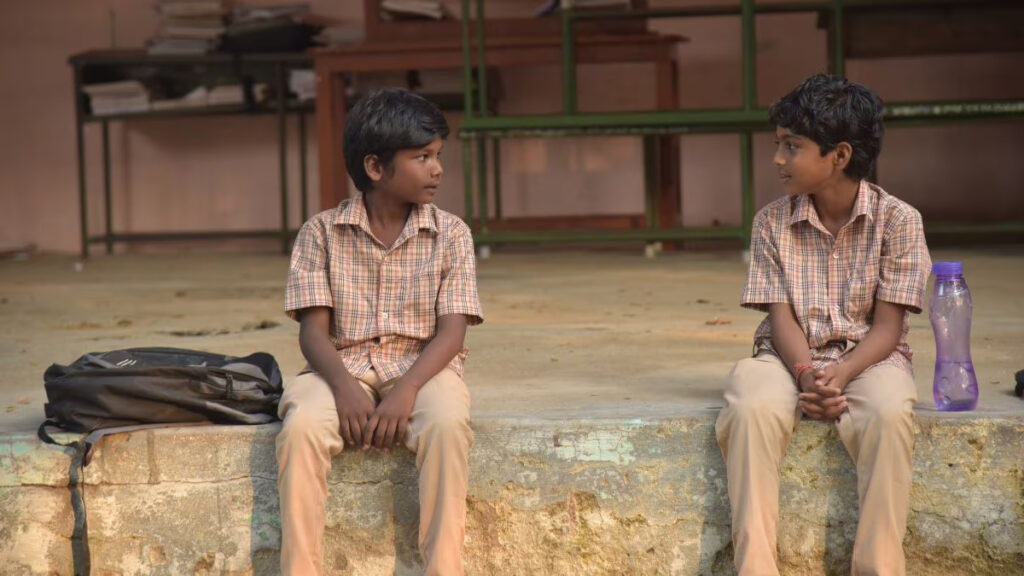
The Tablet, which runs about an hour and fifteen minutes, is Aravind Siva’s debut feature. Except in shots involving transport, the camera is an emotionless and static observer. The only exception is in a scene where Kayal scolds Prabhu. The camera, here, has a handheld feel. It shakes at the edges, as though startled by the rage in this woman who is usually almost unnaturally calm, almost robotic. Kayal has built a shell around herself and her son, and her first answer to anything is usually no. When a friend asks for a taste of the ice cream she is having, she first says no. Inside a bus, when Prabhu asks for the window seat and for her to open the window for air, she first says no. We are not told how she ended up with this condition, but once she was diagnosed with it, we get the feeling that she has been saying no ever since – as though to make up for saying yes earlier. These things are not told to us. The director assisted PS Vinothraj on Koozhangal, and he has a similar sense of laying out a scene and letting us take what we want from it, whatever we infer from it.
The Tablet is more a series of incidents than a story. I was unexpectedly touched by the way Prabhu goes to the department store after school, and Kayal gives him the house keys from inside her handbag. It’s as though she doesn’t want to leave these keys with a neighbour, even though these neighbours seem to be on friendly terms with her. I was touched by the scene that plays after Kayal scolds Prabhu. There is no overt display of emotion. There is no saying sorry, no hug of remorse. Kayal gives her son a sweet treat, and then, instead of sleeping inside the house, they sleep under the stars. I was touched by the behaviour of Kayal’s brother, who is more well-off than her. He is supportive at first, but later, he becomes like the others. He tells Kayal something that he knows will make her refuse his help. In the end, we are all truly alone.
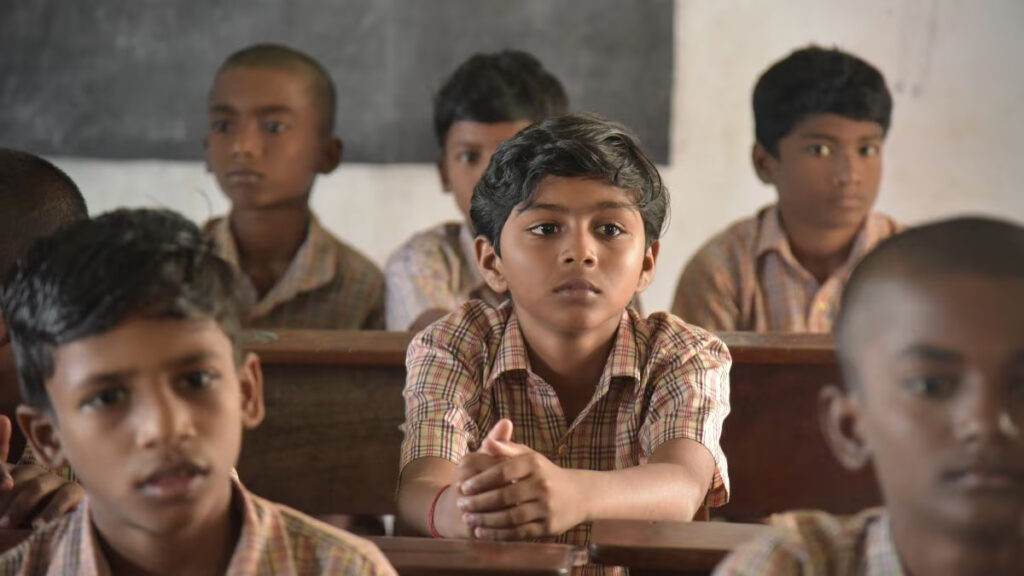
In all this, Kayal never complains. If she believes in God, she does not question Him. She just wants each day to pass by uneventfully, and this small thing is repeatedly denied. She is summoned to Prabhu’s school. She is put in a situation where she has to go to a local doctor. The actors have a few rough edges, but they put the story across. At one point, Kayal has to change the date of bus tickets she’s bought, and she also has to change the number of passengers. When she makes this request, the man at the counter would have probably yelled at her, but we don’t get that reaction. Instead, we get the film’s sharpest edit, a cut that takes us to a river bank where Kayal has her head in her hands. We feel whatever she is feeling, even if we cannot exactly name it. Does the closing scene, set in Chennai, promise happiness and hope? For the moment, yes. But what awaits Kayal and Prabhu when they return to Sivakasi? In a scene inside a bus, everyone seems to be wearing headphones, but Kayal isn’t. She cannot afford to shut out the world. Her life of secrets and lies will probably continue, and so, for now, we leave her with this moment of happiness and hope. She needs it.