 It happens all the time, and yet, when it happens again, it seems amazing. I’m talking about how someone can be very talented and yet relatively under the radar, and then suddenly one film or two comes along and everything changes. The latest instance of this phenomenon is with the German actress Sandra Hüller. She has been an art-house celebrity for a while now, but 2023 changed everything. She had two films at Cannes that went on to become big international hits: Justine Triet’s Anatomy of a Fall, and Jonathan Glazer’s The Zone of Interest. I’m going to digress a bit now. The Zone of Interest is a Holocaust drama, and I have been watching a few of them of late, thanks to OTT algorithms. I caught up with James Vanderbilt’s 2025 courtroom drama Nuremberg, and the next time I logged in, I was rewarded with a recommendation of the much-older Hollywood courtroom drama, Stanley Kramer’s Judgment at Nuremberg. I’ve seen this film, but watching it just after the 2025 version made it look a little bit different.
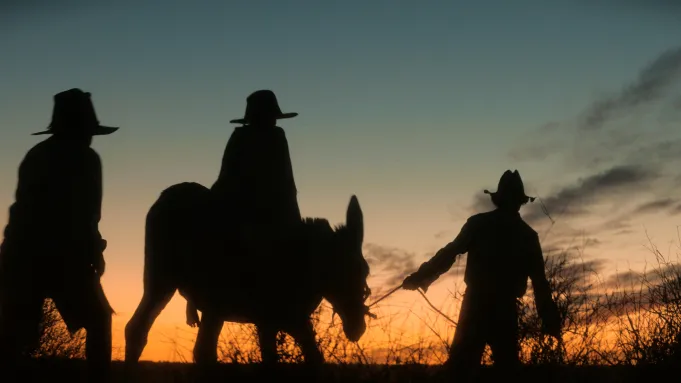
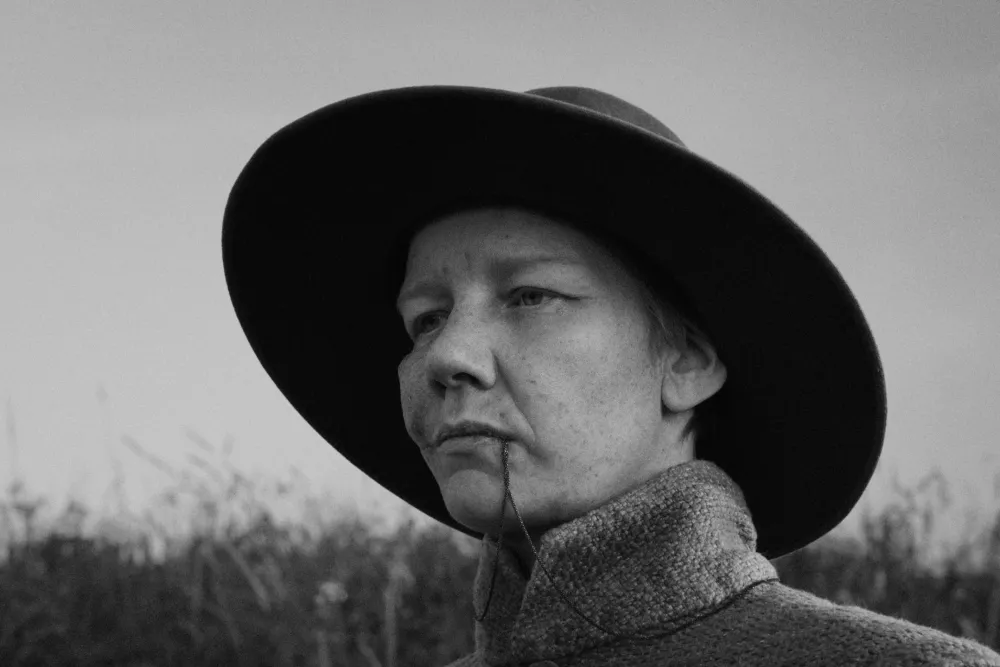
Anyway, back to Sandra Hüller! She is about to have a very big year. In March, she will star with Ryan Gosling in Phil Lord and Christopher Miller’s Project Hail Mary. The trailer has her character saying deliciously apocalyptic things like “The sun is not the only star dying… If we do nothing, everything on [our] planet will go extinct.” I love these disaster movies and I can’t wait! The other big event is a role in Digger, the hotly anticipated collaboration between Tom Cruise and Alejandro González Iñárritu. Again, I can’t wait. But at the Berlinale, Hüller is in a movie that’s a little more low-profile. It’s called Rose, and it’s been directed by Markus Schleinzer. It’s a 17th-century drama about a woman who was in the Thirty Years War. She was a soldier, and when she returns, she decides to continue her disguise as a man. Much later, when asked why, she simply says, “Because there’s more freedom in trousers.”
 This isn’t a movie about sexual identity. It’s about gender performance. Pretending to be a man gives Rose things she could not have imagined as a woman. It gives her the right to own property, for instance. Under a peculiar set of circumstances, Rose gets married to a woman, Suzanna (Caro Braun), who is practically treated like currency, like something to be bartered. You get the feeling that a large part of Rose’s decision to act like a man is to escape these indignities. A pre-release report says that the film (and the character of Rose) is inspired by numerous documented accounts of women disguised as men throughout European history. In 2020, we had the documentary No Ordinary Man, which was about a jazz musician who was born a female but who decided to pass off as a man named Billy Tipton after being denied the opportunity to join the band in her high school as a “she”. Truth is stranger than fiction.
How did Rose’s wife not know earlier? That’s a question a viewer might ask. And how the hell did she get pregnant? This revelation, spurred by Rose’s confusion, produced a big laugh at the screening. But the director does not say what happened, exactly. Clearly, Suzanna slept with a man, and one would assume that the identity of this man – the how and when and where of the conception – would be material for juicy drama. But that’s not what the film is interested in. The film is interested in the bond that forms between Rose and Suzzana. Suzzana may feel betrayed that she was tricked into marrying a woman, but if she talks about it, the same housewifely fate awaits her with another man – and this person may not be as compassionate as Rose. These unstated questions are the bedrock of the narrative. For instance, is marriage something physical and tactile, or can it also be an emotional union between two people who understand and look out for one another? In an ideal world, a marriage would be both these things. But this world is far from ideal, at least for women.
Rose is shot in black and white. I am not going to argue about this choice, but I do want to talk about it. Nuremberg and Judgment at Nuremberg are both set in the same time period and they are both dramas about the trials of Nazis, but the former is in colour and the latter is in black and white. Which choice is more authentic? There’s no answer, of course. If we take books for instance, Hilary Mantel’s Wolf Hall is set in sixteenth-century England, but the language on the pages isn’t the “old English” that was used at the time. But books are something we imagine, while movies are things we see. So what evokes the past on a big screen? Offhand, I recall colour films like McCabe & Mrs. Miller and Jeremiah Johnson. There’s a bleached, water-colour quality to the visuals that make us think that all this really happened long, long ago. The images in Rose are too sharp, too “digital”, and I could never shake off the illusion that it was made today. I liked the film, but when I walked out, I also wondered if there’s a way to make films today where the past really looks like the past.