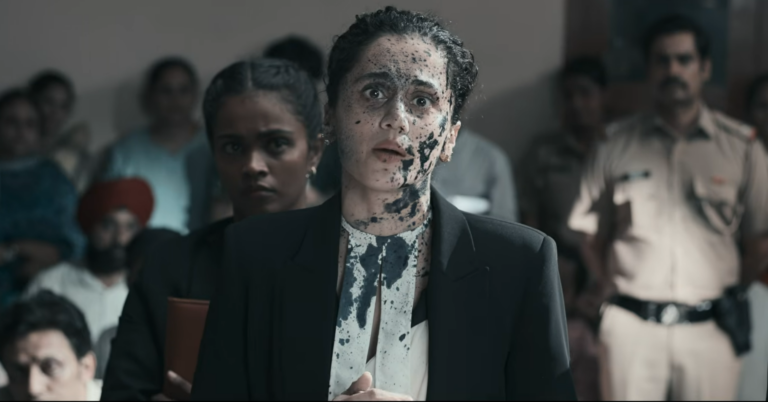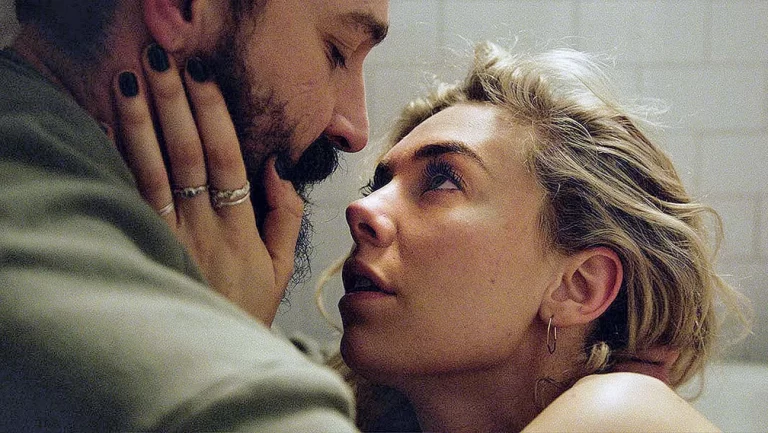
This has been a relatively short visit to Berlin. At a press screening, a friend asked if there was a movie I was especially bummed about missing out on. Not really, I said. I mean, I did want to watch Isabelle Huppert in the titular role of Ulrike Ottinger’s Blood Countess, about the 17th-century Hungarian noblewoman who was thought to have killed hundreds of virgins so that she could bathe in their blood and grow more beautiful. But am I devastated that I did not find the time? Not really. In my early days of attending the Berlinale, movies used to circulate only in the festival circuit and then disappear into a black hole. But now, we have specialised platforms like Mubi, and even more mainstream platforms like Prime Video have a stack of arthouse cinema. So I said I could always catch these films later, even if it’s with some edits and cuts. (For instance, Rohan Kanawade’s Sundance Film Festival Grand Jury Prize-winner Sabar Bonda is now on Netflix, but without the frontal nudity.)

“But will you?”, another friend asked, when I told him about this conversation. His view is that, in theory, we can all catch up on all the movies we miss, but do we really end up catching up? Doesn’t the watchlist on each platform keep getting longer, as we vacillate between “catching up” with older cinema and watching the many buzzy newer films and shows that keep dropping every week? And I instantly recalled tick, tick… BOOM!, the 2021 musical directed by Lin-Manuel Miranda and starring Andrew Garfield. I’ve been fascinated with this material ever since I heard about the original stage version, about an aspiring musician who is torn between following his dream of composing for a Broadway stage musical and settling for a more stable and secure career. A Broadway web site told me there’s a song that goes: Break of day, the dawn is here / Johnny’s up and pacing / Compromise or persevere? Bloody hell, that’s MY story, I thought. They owe me royalties. And because the play was never going to make it to India, the movie became a must-watch.
It still hasn’t been watched (insert emoji of monkey covering its eyes with its paws)! After this conversation, I redoubled my efforts, booking tickets for as many screenings as I could fit in. I even caught up on the screeners, which I said I’d watch later (because a link can be viewed at any time). I watched Abracadabra, Amay Mehrishi’s exquisite short film that competed in the Generation Kplus section. The selection in this section focuses on films that take children and young people seriously in their narratives and cinematic language. These are stories told from the perspective of young protagonists, making their world tangible. The protagonist of Abracadabra is a sensitive 12-year-old named Agastya. He is best friends with his classmate Naman. One day, after fun and games, Agastya puts his head on Naman’s shoulder. And everything changes. When Agastya climbs into the school bus, Naman is sitting with a girl. (Till then, Agastya and Naman always sat together.) Even at this tender age, is Naman pointedly sending out a signal to Agastya?
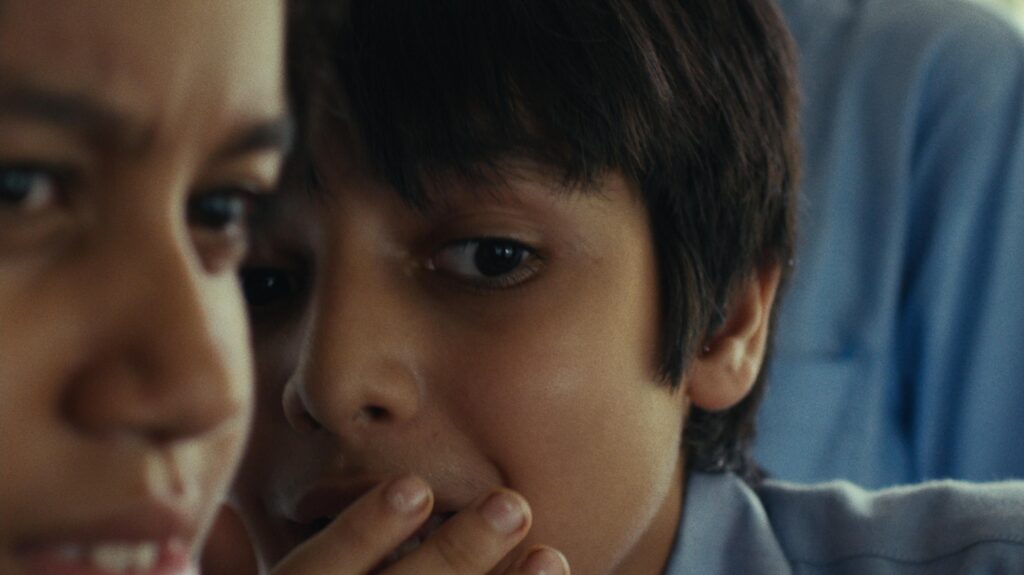 Hovering between an age that says you’re a child and exposure that says you know enough to be an adult, the kids in the bus begin to seem like grown-ups in uniform. Abracadabra is directed beautifully, or maybe I should say it’s calibrated beautifully – with just enough innocence and just enough awareness. Agastya ends up sitting next to a girl in a senior class, a girl who always sits alone. Agastya asks her why. She says that, without Naman beside him, maybe he doesn’t know what he really likes. “[But] I sit alone because I know what I like.” A marvellously profound way of living is presented in such simple words. If we are truly comfortable in our skins, we don’t need the validation of others. It’s like that meme about going alone to the movies or eating alone in a restaurant. If you can do these things, you’ve escaped the trap of needing others. You may want company from time to time, but unless it’s the right kind of company, you don’t really need it! What a thought to find in a “children’s film”! But then, who can say how long children can remain “children” these days!
Aside: I can understand a viewer walking out of a movie after 30 minutes, after an hour even. Some of these are tough movies, and maybe there’s some sleep deprivation and there’s only that much artsiness they could take. What I don’t get is someone springing out of their seat the instant they know how a movie is going to end – like this guy at every press screening here. Hey man, I am not asking you to watch the end credits. I am just saying that if you have waited it out all this way to the almost-end, you can’t watch an extra two minutes to see how the ending plays out? I have seen this in India, too. It’s as though some viewers just want to know what the ending is, and once they see it coming, they’ve switched off mentally and are outta there! There was a film where the ending showed a mother being united with her children. There was a lovely orange in the sky. The music was lovely. The moment was lovely. But no. Our man wanted none of it! He sprang up, walked out, and hopefully he cured cancer.