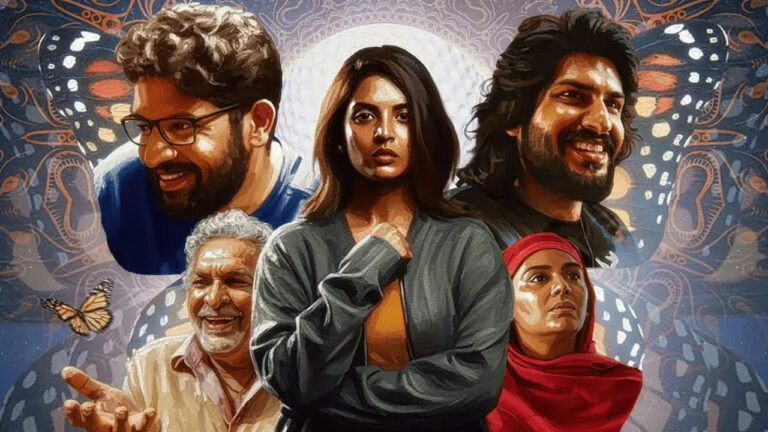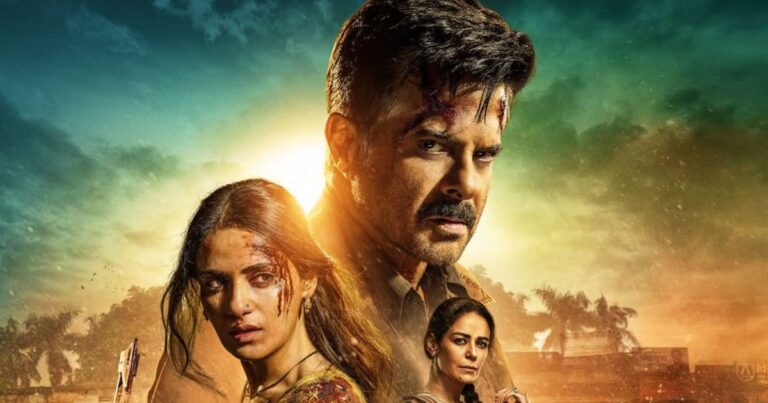
This is not your usual “superhero saves the world” story. Instead, amidst the action set pieces, we dive into what it means to be a superhero. And that makes ‘Lokah’ special. The rest of this review may contain spoilers.
“All legends have an element of truth”, says the text at the opening of Lokah Chapter 1: Chandra. But more than truth, I liked that this legend is rooted in a very recognisable universe. You may be a supernatural creature, but you still need a passport to travel, and you still need the same kind of currency that mere humans do. You still need a place to stay, like a very middle-class flat, where the floors need to be mopped. You need to make money by working in, say, a bakery. And you have a viral illness that needs constant treatment. For all the fantasy in Dominic Arun’s richly imagined universe, it’s the vulnerability that stands out. And for all the superhero fun, especially with an excellent special guest star as a goblin, this is a film with a strain of sadness. You may be immortal, but what if you still carry around the pain of a lover who died more than a hundred years ago!
Kalyani Priyadarshan plays Chandra, and let’s say she’s not quite human. In interviews, Kalyani kept using the word “robotic” to describe how the director saw the character, and you see that in the performance. The only time we see something of a real smile is when Chandra hangs out at a neighbour’s party, with people who look her age. That’s the one time we see her in a non-goth colour: except for the streak of red in her hair, she’s in white. And the only time we see tears are when Chandra sees near-death. Otherwise, this is, yes, a robotic performance in the sense that Chandra herself is a robotic person, numbed by centuries of living and hiding. You’d think one of the first things a superhero movie would do is to establish an exciting supervillain, but even Chandra’s initial opposition is as drab as an organ-trafficking group that has political connections. It’s the crime world’s equivalent of that house that needs mopping.
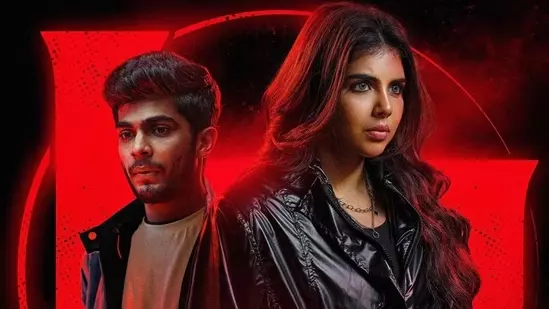
It took me a while to get into this film’s rhythms, probably because of what we think a superhero movie should be like. But slowly, it becomes clear that Lokah is after something more existential. It is about the loneliness of being special. The excellent cinematography by Nimish Ravi emphasises the darkness of this world. The desaturation seems to have been pushed a couple of notches, and Jakes Bejoy orchestrates a brilliantly non-triumphant score. Even as the music soars for Chandra, it underlines her sighs. But this is not to say that Lokah is a character study. It is as much of a character study as the superhero format will allow, but it is also fun. The touch where a much-needed bag of blood lands at Chandra’s feet is one of the biggest “mass” moments of the year.
Naslen plays Sunny, who is Chandra’s neighbour. Like his name, he is a happy person, and this trait is underlined by his bright-yellow clothes. He lives with two doped-out roomies, and this threesome cooks up a lot of fun, with one-liners and sight gags and situational comedy. The guest stars add to the fun. I won’t name them here, but if you want to spoiler-ise yourself, the film’s Wiki-page lists all of them. A wonderfully over-the-top Sandy channels his inner SJ Suryah to play a cop named Nachiappa. He meets someone who tells him about Chandra, then he crashes a party, and the way he finds out about her is written like a solid procedural. His fate makes you wonder what Chandra was like in her early days of being a superhero. She may be nice, but she won’t hesitate to kill in order to cover her tracks.
Naslen covers the same range of expressions he has been using for a while to convey awkwardness, but it still works and the Sunny character is a terrific gender-reversal of the Lois Lane stereotype: here, we have a man who’s awestruck by the abilities of a woman. Even the film’s most unexpected fight is centered on a female character from Kerala folklore. The action sequences are solid, and the use of slo-mo (only when really needed) is exquisite. There’s a mild touch of romance, again handled beautifully and, again, with a hint of sadness. I’m not going into the originality aspect, because legends and myths inevitably cannibalise from one another. But what Dominic Arun has achieved with Lokah is something very impressive. He has made the movie equivalent of a keyhole. We peek through it and get a glimpse of a world, but the future films, I’m guessing, will be the keys that actually let us in.