Karthi plays the sort of double role that was popular in the MGR days. One character is corrupt, and the other one becomes his conscience-cum-alter ego. The result is a movie that could have used better writing, but still kinda-sorta comes together in a sweet, old-fashioned, charming way. That’s the short take. A longer review follows, and it may contain spoilers.
Nalan Kumarasamy’s new film, Vaa Vaathiyaar, opens in 1987, with the death of MGR and the birth of Ramu, played by Karthi. The MGR film that plays at the time of the actor’s death and Ramu’s birth is Kudiyirundha Koyil, a double-role outing with a good twin and a bad twin. Many years later, this template spills off the screen and into real life when the bad-natured Ramu confronts his good-natured conscience-cum-alter ego named Vaathiyaar (again played by Karthi, this time looking like MGR in full costume). The first time Ramu sees Vaathiyaar, it’s in a mirror. It’s his reflection. It’s like in the old movies where the reflection would speak back to the person in front of the mirror, functioning like an inner voice. Vaa Vaathiyaar is essentially an old movie – rather, an old-school MGR movie set in the modern day. At the story level, Vaa Vaathiyaar may remind you of Tughlaq Durbar or Maaveeran. But Nalan’s treatment makes this a very bizarre and charming and unique and sweet-natured movie. Flaws and all, I liked it a lot.
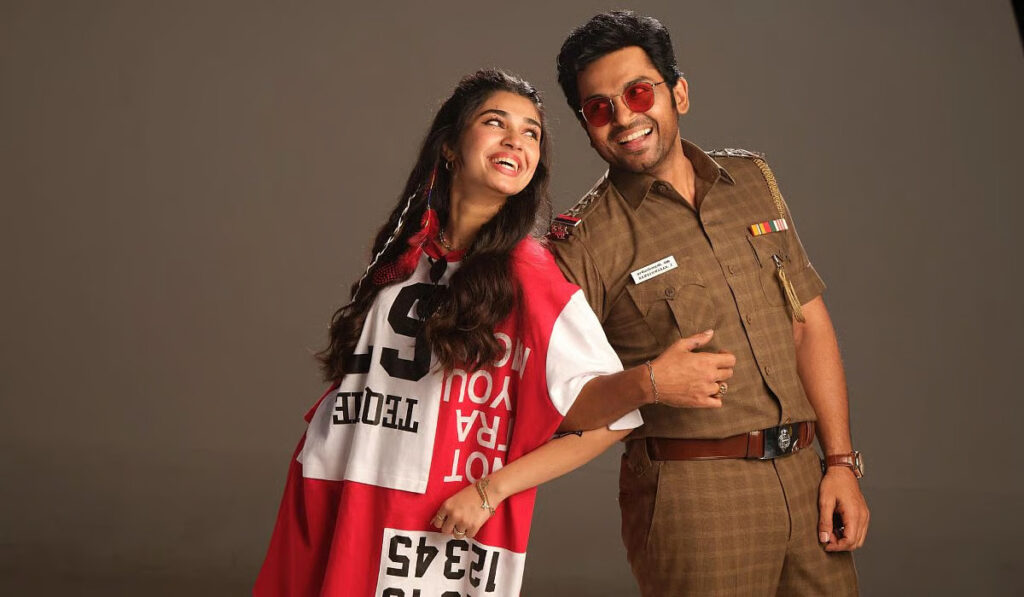
But the first half-hour or so is a bit of a bummer. It has a lot of filler, and it made me squirm. This is before the Ramu-Vaathiyaar double-persona kicks in, and we are left with Ramu as a corrupt cop. Sathyaraj is a generic corporate villain. He has a daughter who’s even more ill-defined. And Krithi Shetty (who’s quite good) shows up as someone named after the sound that a particular bird makes. At first, she seems to be a woman who deals with the occult. She speaks to spirits – that sort of thing. But mysteriously, this character trait disappears, and she turns into a typical heroine. A bunch of ethical hackers are introduced in a very casual manner, and there’s no sense of the stakes involved in trying to bring down the government. (Or maybe we have gotten so used to political corruption that the stakes of an MGR movie seem very low-key today.) Nalan’s writing is not really the strong point of Vaa Vaathiyaar, at least till someone dies and Vaathiyaar makes his appearance. This is when the story picks up, and slowly, you begin to see the entirety of the vision Nalan had in his head.
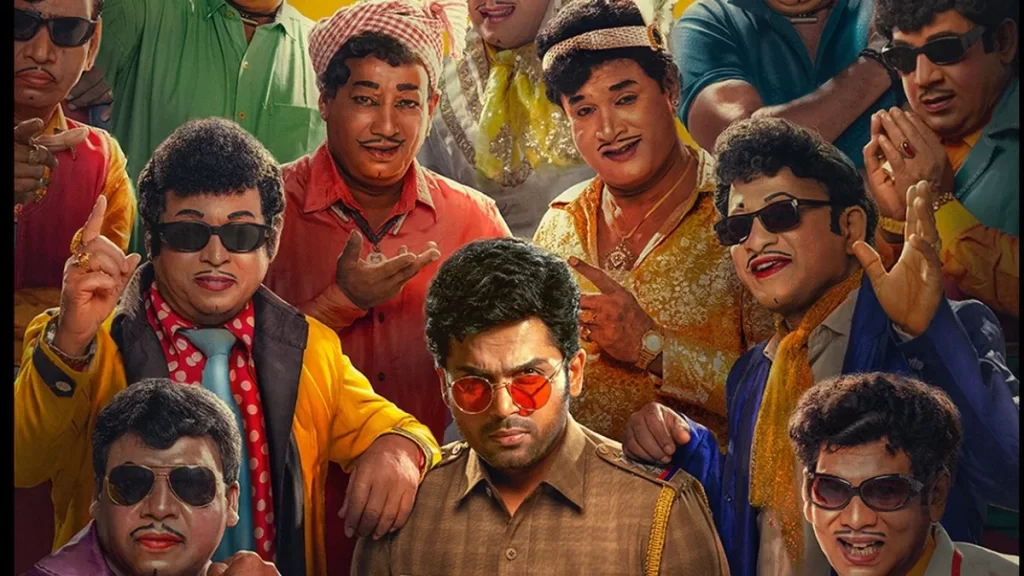
And this is when Vaa Vaathiyaar begins to soar. The film’s ambitions aren’t very lofty, so we are talking about some low-level soaring. But if you are in the mood and if you catch the vibe, there’s a lot of fun, like a terrific hypnosis scene where Karthi is terrific. He is an early contender for the year’s best performance. Or performances. As Ramu, he is the slacker-Karthi we know from his films, but with sharper focus. And this focus comes from the second role Karthi plays. As Vaathiyaar, Karthi nails MGR’s slurry speech, Gevacolor-pink makeup, the pencil moustache, and the hand gestures. But this is no empty mimicry. Karthi channels the actor-politician’s spirit as though MGR were a real person living in today’s times. Anandraj is equally wonderful in almost fully gestural performance that invokes those who make a living by imitating MGR on low-rent stages. He is like Vaathiyaar’s partner who looks like Vaathiyaar.
The MGR references are also fun. The story is set in an imaginary town named Masila, which may be a reference to the song ‘Masila unmai kadhale’ from Alibabavum 40 Thirudargalum. The film recreates the song ‘Rajavin paarvai’ from Anbe Vaa. At first, we hear the song as we would hear it on a gramophone record, with a bit of hiss and crackle and with P Sushila’s voice. And then, we segue to a Santhosh Narayanan remix. The composer does not go all “period”. Instead, his work recalls motifs from the era but in a modern way, much like Karthi’s performance. The score for a big action stretch at the end is especially brilliant. The fights are recreations of MGR-era fights, with whips and sticks, and they seem almost innocent in today’s time when blood and gore is the norm.
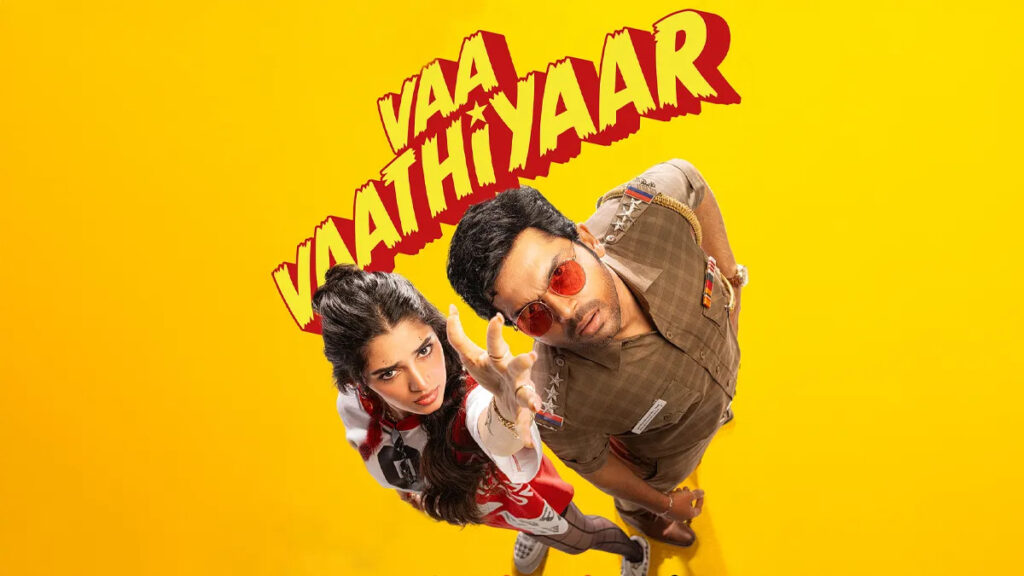
The lack of depth in the writing of the villain or the heroine doesn’t really cause an issue because the film is just about two hours long. And though there are dips in the narrative, the flow is clean and organic – with no random jumps. What holds everything together is Nalan’s direction, aided by cinematographer George C Williams. Nalan knows exactly what he wants on screen, and Vaa Vaathiyaar is lovely to look at. Every frame is so precisely, so carefully composed and lit. There’s no movement for the sake of movement. Maybe they were trying to mimic the look of older films where heavier cameras made movement more difficult – but whatever the reason, it’s a relief to watch a film where you see a strong directorial vision without showing off. Walking out, I was relieved that the film set a low bar for itself (in terms of ambition) and cleared it quite easily. It shows that even a minor work can become something in the hands of a director with a unique vision and sensibility.