Mohanlal plays two characters over two timelines. The plot is about a curse that persists through reincarnation, but the film fails to make anything worthwhile of this premise. That’s the short take. A longer review follows, and it may contain spoilers.
In an episode of the Ramayana, a young Dasharatha is hunting by sound. He hears something. He thinks it’s an animal and he shoots an arrow in that direction. It turns out that the arrow has, instead, pierced a man named Shravan Kumar, who is the sole caretaker of his old parents. Dasharatha confesses to them, and they curse him that he, too, will suffer the loss of a son. This comes true much later when Rama is exiled. This concept of putra shokham, the grief of losing a son, is the core of Vrusshabha, written and directed by Nanda Kishore. And here, this concept is expanded over time with the idea of reincarnation. In other words, what if you commit a crime (however unknowingly) in one life, and end up suffering the consequences in another life? And what if the present life can be used to rectify the wrongs that were done in a past life?
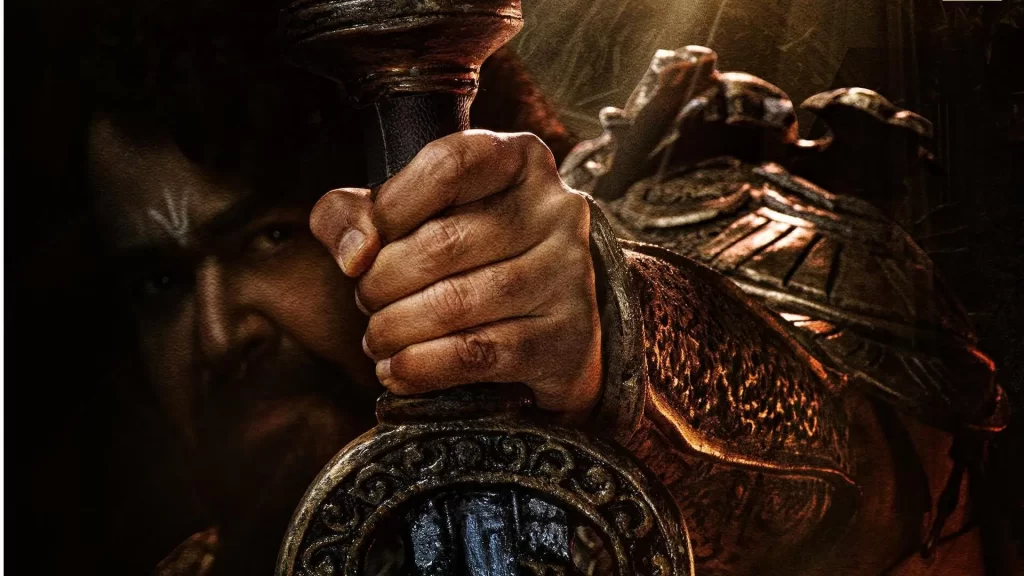
Mohanlal plays Raja Vijayendra Vrusshabha in the centuries-ago life. The king is introduced while riding his horse into an action scene, when a generic evil man is trying to steal a holy object called Spatika Lingam. And in the modern day, the star plays Adidev Varma, who is introduced to us at an event where he receives an award for Businessman of the Decade. What business does he do? Why is he never seen in an office, or while closing a deal, or at least wearing a suit and shaking hands with random Japanese tourists who are asked to pass off as the heads of Eastern conglomerates? Why is he always at home, complaining that their cook Appunni uses too much salt and therefore renaming the man Uppunni? And why does his son compare him to the Lion King, as in the protagonist of the Disney blockbuster?
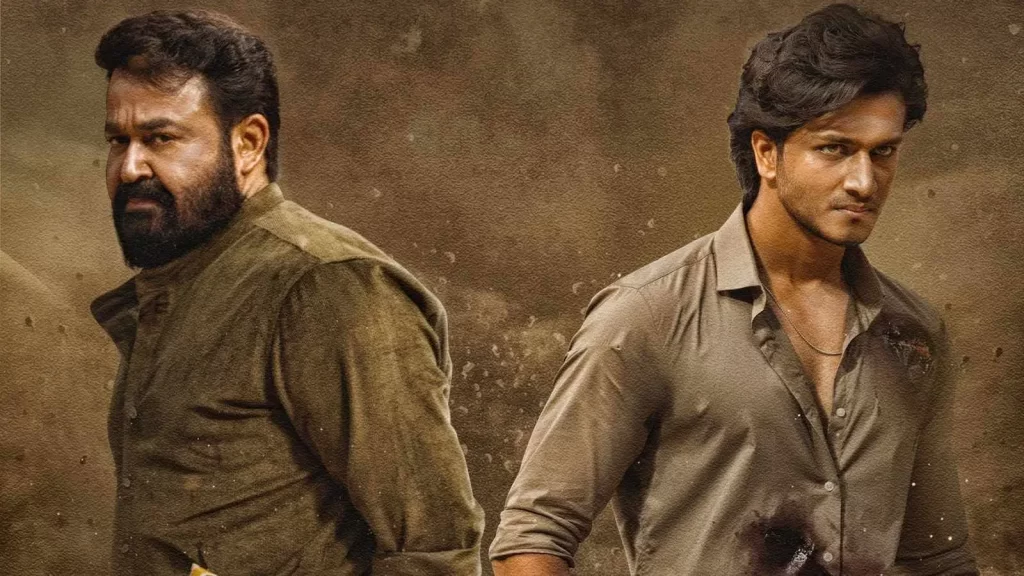
We don’t see any other dimensions of Adidev Varma because the uninspired writing is only concerned with the father-son angle. Samarjit Lankesh plays Tej, the son in the modern day. And in the older timeline, he plays an impulsive young man named Hayagriva, who seeks the Spatika Lingam because it will make his village prosperous. The connection between Tej and Hayagriva is the film’s cleverest, juiciest idea. Apparently, we have all our past lives inside us, like bits of spiritual DNA that are passed on after death, and it only takes a trigger to unleash one of these past lives. For instance, this trigger could be the sight of someone who looks like someone you killed in that past life. Combine this idea with that putra shokham curse, and we have a masala premise that’s rich with possibility. And at least on paper, the interval point is a genuine shocker.
But very little of this ends up on screen as planned. The first half sets up Tej with a woman who serves no purpose in the story but to suggest that she is a love interest. And even this angle is abandoned after a song. She says, “Why do mothers kiss babies on the forehead? To open their eyes to the third world.” I’m still wondering what she meant. There are many, many characters and many, many action scenes. They try to give us gore, but we feel nothing even when a head is chopped off. The first half feels like they’re killing time to get to the big interval point. And the second half feels like an endless series of fights. What could have been a very emotional and dramatic fantasy ends up as something that doesn’t even give us a sense of all the money that’s been poured in. Mohanlal does what he can, but Vrusshabha is yet another example that a great premise means nothing if it’s not backed by great writing.