R Gowtham’s Members of the Problematic Family (Sikkalaana Kudumbathin Uruppinargal) is structured like a memory piece – though it might be incorrect to use the word “structured”. This is a fragmented film – in the sense that it plays out in fragmented bits – about an extended family. The title calls them “problematic”, but they don’t seem to be any more dysfunctional than your average family. Prabha (A Ra Ajith Kumar, who’s perfectly cast) is probably the only real “problematic” person in this unit. He is an alcoholic, and he keeps creating problems for everyone else, including his mother, Santhi. His father is dead, and the film opens with Prabha’s death. Gowtham divides the narrative into a preface and chapters, and the first chapter is titled “Funeral”. It lasts about 30 minutes. People say the things they say at funerals, things like “Who knew he would die at this young age!” Someone else says they did not know that this hospital existed. Someone is judged for demanding orange juice. In other chapters, Santhi cries that she is now all alone. An aunt corrects papers, and we assume she is a teacher.
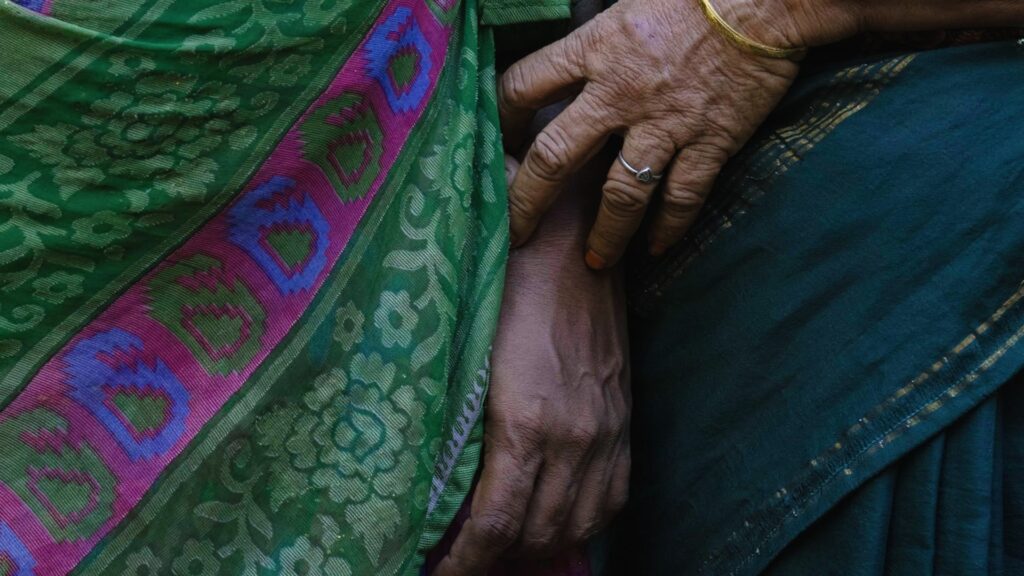 But these “dialogues”, if we want to call them that, are like the film. They are fractured. They are fragmented. They aren’t words that give us backgrounds and backstories. They give us slivers of insight, like light from a barely open window. Occasionally, someone will say something that adds to our understanding of someone else, like the fact that Prabha was good at sports and could have become an athlete. But bigger things, like how Prabha died, are left without answers. Someone says that they are all talking so much about Prabha’s qualities after his death, but it would have been better if they’d talked to Prabha when he was alive and guided him better. And we are left to extrapolate this line. If that had happened, if people had spoken to Prabha when he was alive, maybe he could have become that athlete. Maybe he could have become the breadwinner of his family after his father’s death. Maybe he would not have become this bizarre person, this troublemaker, whose bizarre actions seem to have sprung from an alcohol-addled mind. Maybe Prabha was also a little “off”, mentally!
That’s probably why there’s a sense of “good riddance” during the funeral. The family doesn’t even want a post mortem to understand how Prabha died. They just appear to be relieved that they don’t have to deal with Prabha anymore. No one seems to be grieving the loss of a young man who had his whole life ahead of him. The elaborate funeral rituals are done mechanically. Other than Prabha’s mother Santhi, we meet people named Dinesh and Mugil and Thaen, and there are others who remain unnamed. The only recognisable face in a major role is Karuththadayaan, who played the abrasive father in Koozhangal (Pebbles), and who plays a cop named Sellam here. The character is a similarly abrasive man. There’s a line or two that tells us how they are all related (maybe one’s a cousin, maybe one’s a nephew), and if we miss that line, we continue to watch them as just “family”. They’re all related to Prabha. They’re all part of the death rituals.
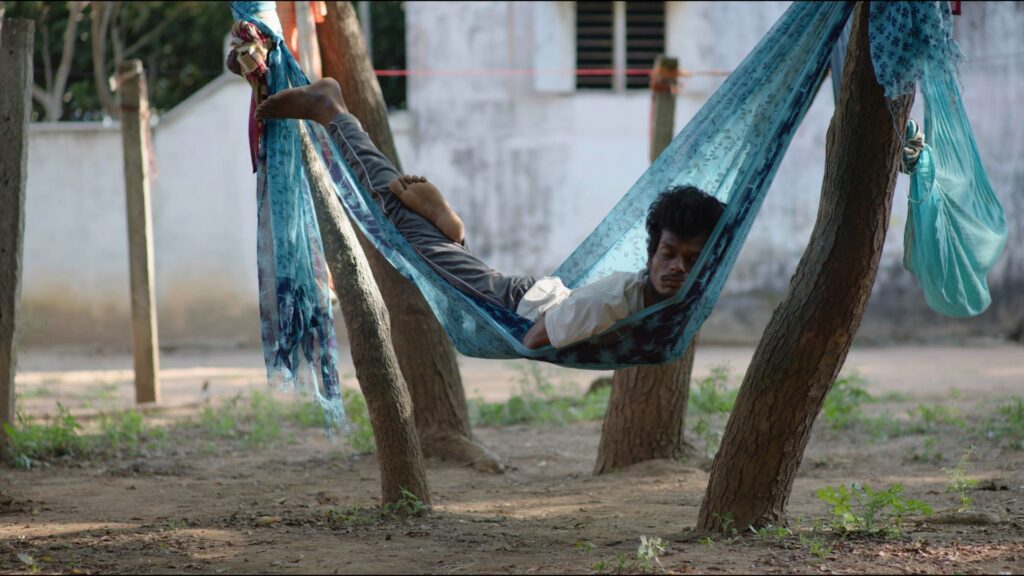 At times, they shout at each other. At other times, they pause and remember Prabha. There’s kindness in the way a young boy is taken care of. There’s cruelty in the way an older man is mocked. The word “problematic” in the title is so apt (“sikkalaana” fits even better) – because it describes the people, the situation, the emotions at play, and also the social need to do something performative around the death. The film is equally performative. It lays out the rituals around death with a subatomic level of detailing. Plastic chairs are kept around the body. A mini shamiana is put up. A goat is killed and skinned, and its insides are scooped out until only the pink flesh remains for the feast. The sanest words come from a relative who knows that people are laughing at them. He tells Sellam, “No one is asking you to be well… Just be…” At the end, Gowtham lists a number of books and films that have embodied this existential maxim in some fashion: The Death of Ivan Ilyich, Ikuru, Anjaathey, Attakathi, Touki Bouki…
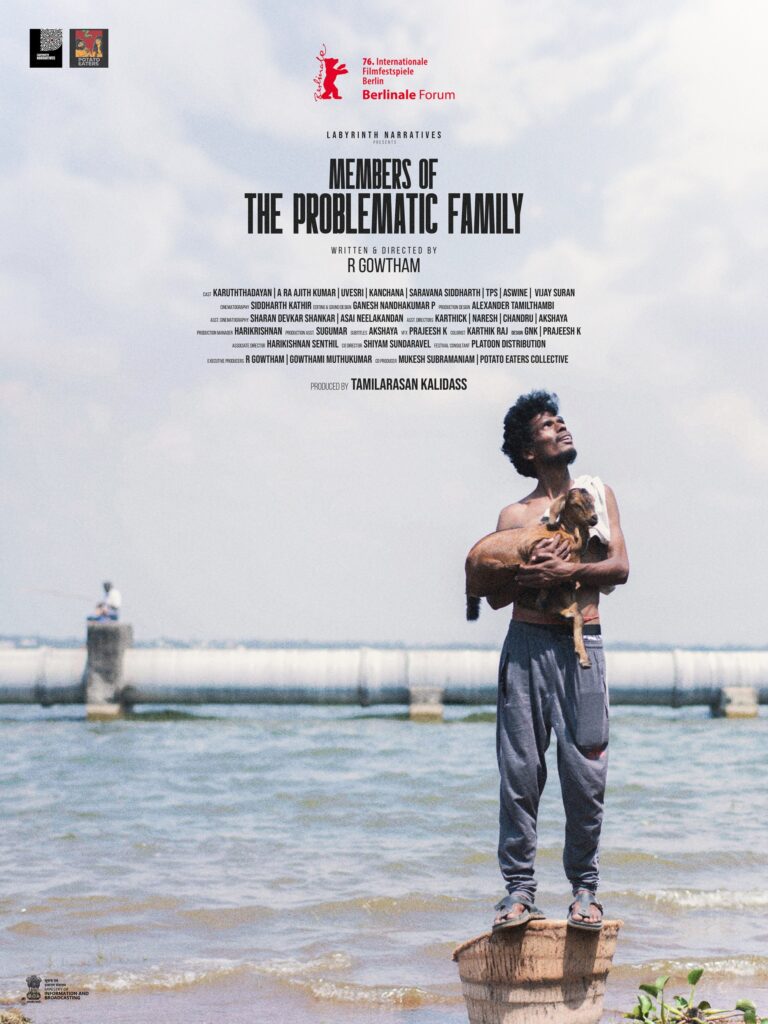 Members of the Problematic Family (Sikkalaana Kudumbathin Uruppinargal) opens with a quote from the poet Sabarinathan, that the colour of our times is that of ash. (“Saambal, nam kaalathin niram…”) Ash is also the residue of death. Ash is also the various shades of grey of life. One part of me wished the film had been more formal, more “composed” in the way it’s been shot and edited. There’s the sense of a great deal of coverage having been exploded with dynamite, and the charred shards having been assembled into a “stream of consciousness” state. But that is probably the intention. Gowtham’s achievement is that he breaks storytelling form. He doesn’t want the film to look clean and composed. He doesn’t distinguish between fictional features and documentaries. This leaves us with the sense that this is another family (not our own), and we will never really “enter” their world in a way we would in a more conventionally told story. The closest the film comes to conventionality is in the final chapter, which is a dream. Prabha admits that he is in a troubled state of mind, and his solution is to go to a barber. And then his grandfather reveals a plan that might be the solution to Prabha’s troubles. But even this dream ends with a dash of harshness. Maybe the problematic Prabha is one of those men who’s going to be happier in death.