The film goes back in time to tell a story set during the time of kings. The narrative suffers from “sequel-itis”. We know the template by now. But the bigness of the production and Rishab Shetty’s incredibly committed performance help to keep us invested. That was the short review. A longer analysis follows, and it may contain spoilers.
As we’ve been told, the follow-up to Rishab Shetty’s phenomenon, Kantara, is actually a prequel. We know it’s set during the rule of the Kadambas of Banavasi, and we have seen the grand visuals that pit golden palaces against the natural habitats of the indigenous communities. In the movies, one does not mess with a winning formula, so I expected more of the same. And yes, again, we get a story about the oppressors and the oppressed. We get the equivalent of the landlord in the earlier film, someone who’s a snake in disguise. We get Rishab Shetty’s magnificent acts of possession, where a god takes hold of him and turns him into a fearsome avenger. So yes, the narrative suffers from “sequel-itis”. The first time many of us saw Rishab Shetty perform a kola, the first time we heard that ear-shattering cry from a tribal – that first-ness, that freshness is missing.
But if the template is fixed, the story still gives Rishab and his collaborators plenty to chew on. It took me a while to realise this. At first, I was fidgeting in my seat during the long setup – but after a while, it becomes clear that Chapter: 1 is a denser narrative. The first film laid out its players very early on, so that we followed the story easily. There was the unruly protagonist. There was the forest officer. There was the moneyed villain. And there was the issue of who owns the forests: the tribes who live there, or the descendants of kings who gave them that land. In this prequel, the premise is not as clear-cut. Within the template, Rishab and his writers do something lovely. They show how a tribe that has had zero contact with the outside world begins to learn about agriculture and trading and – by extension – how they are being exploited by this outside world.
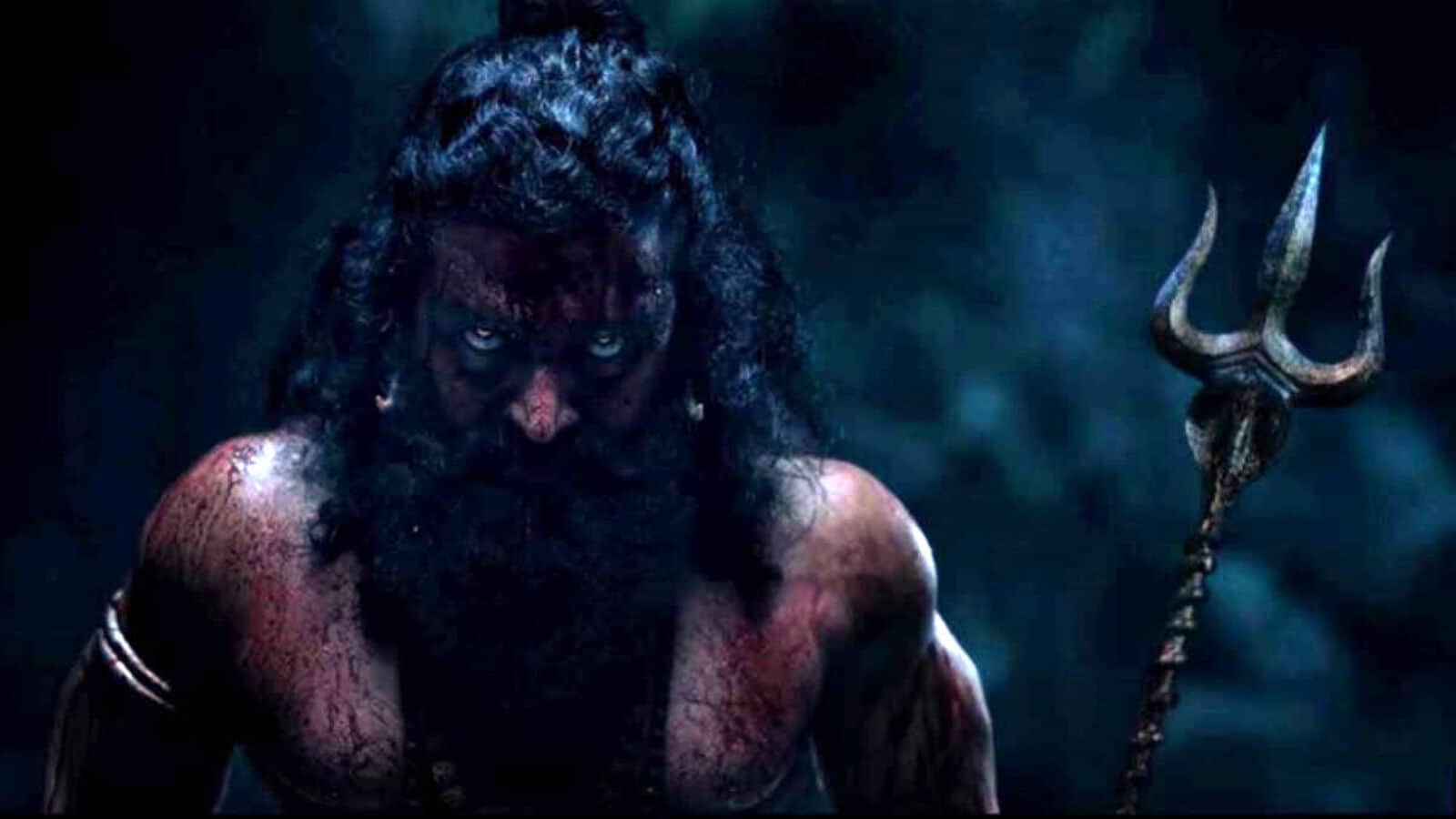
They see, for instance, how people are enslaved. They see how produce from their forests are making outsiders rich. In a way, this is a story about the loss of innocence. The Rishab Shetty character is named Berme, and his wide-eyed wonder upon seeing “civilisation” soon turns into anger when he understands the foundations on which this civilisation is built. In the earlier movie, Rishab got a proper hero-introduction shot in a kambala race. Here, he is introduced as one of many. It’s still a hero-introduction shot, but we see Berme not as a solo creature but as part of a collective. In a way, you could say that this Kantara is like Lagaan, where a bunch of villagers took up the challenge of defeating a more powerful group of people by learning how to play their game. Berme learns how to trade and get things for his tribe, and he rebels against the idea that the royal family has to give him “permission” to do this trade.
Chapter: 1 is more ambitious and also more unwieldy, in the sense that there’s always too much going on. The crux is about a place in the forest which, as legend goes, Parvati created so that Shiva could perform his penance in peace. There are times I wished Rishab and Co. had stuck to that core, instead of cramming a mini-series worth of material into a single, overlong movie. Also, the effort to make this a bigger production results in action set pieces that are Hollywood-sized, but these are also a tad generic. The kola stretches and the forest fights are the only “action blocks” this movie needs – and the kola with a twist at the end is a superb invention. Rishab Shetty really goes all out, and he’s supported by Jayaram, Gulshan Deviah, and Rukmini Vasanth as the royals. Rukmini gets to play a love interest for a while. But after Berme loses his innocence, she goes back to being a princess. And then she comes back into his life in a way that is engagingly written.
The cartoonish humour does not work (at least in the Tamil translation, which is the version I saw). I think they wanted to make a broader entertainer than the earlier, more focused, film – it’s that whole thing about having something for every member of the audience. And some stretches, like a long prison sequence, feel indulgent. But the film delivers where it matters, which are the mystical scenes involving a tiger or another forest tribe with other intentions or the insistence that oppressors will always be oppressors. The technical team (Ajaneesh Loknath’s music, Aravind Kashyap’s cinematography) does strong work, and the production design and sound design are especially impressive. The king’s court, for instance, is not some enormous space. It looks as crammed and crowded as the streets. And in an important sequence, the high-pitched screams feel like they are out to wake up the dead. In other words, like its predecessor, Chapter: 1 is an audio-visual spectacle that demands to be seen on a big screen.