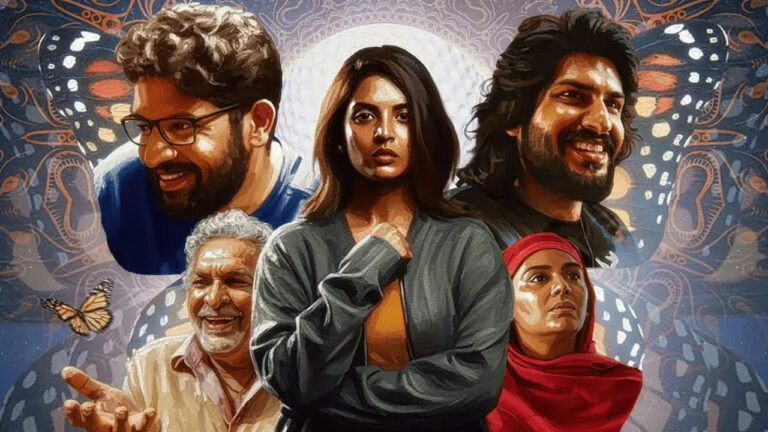
The story is about an evil, rich man who recruits a beggar for a job, and the film wants to be a fable with a moral about haves and have-nots. But the themes and ideas don’t fit in easily, and the film ends up occasionally engaging at best. The rest of this review may contain spoilers.
Sekhar Kammula’s new film is named after the Hindu god of wealth, and it is a story of haves and have-nots. Sekhar explored this zone in a lighter vein in Life is Beautiful, but this time, he is dead serious. Kuberaa opens with oil being found in the sea. Does this belong to all of India (i.e., can it be used to benefit the country), or can it be used to make a few rich men even richer? Jim Sarbh plays the rich villain, Neeraj. He wants it all, like we hear in the lyrics for Devi Sri Prasad’s ‘Trance of Kuberaa’. On the other hand, we have the poorest of the poor, the people who beg. Dhanush plays Deva, a beggar in Tirupati who ends up in Neeraj’s orbit for a reason he does not know. He is recruited for a job. He does not know that this job comes with a death sentence.
Normally, this is all a film would need: a hero and a villain at odds with each other. But Kuberaa is nothing if not ambitious, and it introduces a third angle. Nagarjuna plays Deepak, a CBI officer who is positioned between the haves and the have-nots, between Neeraj and Deva. He is a stand-in for the law, the justice system that often fails the have-nots. Neeraj calls Deepak an emotional fool, which is probably why his loyalties are easily swayed. The story is told like a fable with a moral, and the ending unites the haves and have-nots: a beggar’s child is blessed with crores of money. This is not a spoiler. The narrative is filled with near-miracles, like the fondness Deva has for street dogs and the way they repay his love when he ends up in a sticky situation. Even in a casual shot of Deva walking by the sea, we get to see that a boat behind him is painted with the name Kuberaa.
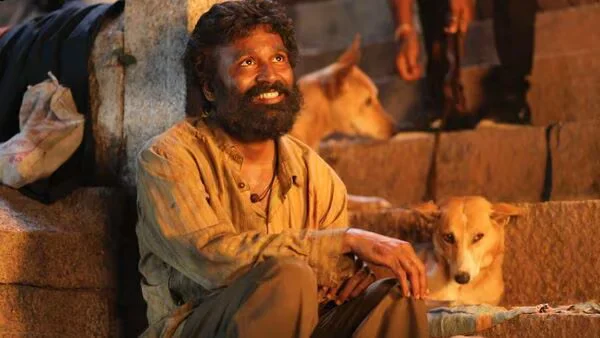
The biggest strength of Kuberaa is the characterisation of Deva. For the longest time, he is utterly powerless, and it’s hard to imagine many star-actors taking up a role that makes them so helpless and so completely at the mercy of fate. An early scene involving a hit-and-run makes us expect an action sequence, but the rich men in the car escape and the poor beggar – the victim – has to be cremated. That is the big point here, that a beggar has to be laid to rest with appropriate rituals so that he does not end up begging in his next birth. The payoff for this scene comes in a rousing song in the second half: it’s one of the film’s few emotional highs. The song does not mourn that a beggar died. It ends up being a celebration of the send-off that a dead beggar can get if there is enough money. Kuberaa has more themes than plot.
Despite his divine name and his divine place of residence, Deva does not do the usual “hero-saviour duties”. The film makes him a victim of destiny. So there are no big action scenes (even when a woman is wronged, she saves herself instead of Deva having to step in), and there are no big duets with the character played by Rashmika Mandanna. This is not an easy haves-versus-have-nots story. Sekhar Kammula takes the difficult route. Deva’s pregnant mother (from when he was a child) finds an echo in a beggar who is pregnant, and this woman calls her son “raja beta”, like north Indians often do: even inside her stomach, this beggar kid is already a king. Neeraj has a scheme that brings together beggars from different parts of India, and in return, Deva hatches a scheme that will benefit beggars all across India. And so on and forth.
The problem with Kuberaa is that all this stays at an abstract level, and does not become concrete points of connection. The ending stretch is just fine. Deva finally stands up for himself and for the have-nots like him, and the way Neeraj suffers is morally correct as well as mildly funny. But it takes a long, long time to get there, and I was wondering why this transformation in Deva did not happen around the interval point. Why spend so much time detailing the oil business and the deal with corrupt politicians? This is all generic stuff, and more time could have gone towards depicting Deepak’s moral dilemma about being on this side of the law versus that one. The way he is recruited by Neeraj seems way too quick and easy. This is something we see in many films these days. They assume we can connect the dots, but they forget that understanding why something happens is not the same as truly feeling that emotion in our heart.
And except for the end portions, Kuberaa never touches the heart. The story moves cleanly and steadily, but it is not shaped well. There is no engagement, nothing that makes us sit up. This feels like another film that wanted to stuff in a lot of things instead of focusing on one or two tracks. There are parts that are downright puzzling and laughable, like when people are eaten up by sharks. Are we to take this as a metaphor, or is this just evil men being evil? Does the Rashmika Mandanna character exist because a mainstream movie needs a heroine, or does she serve any actual purpose other than being a travel companion? It’s fantastic that there is no time wasted on a love angle, but Rashmika feels underused, like she’s there just because they asked her to sit there or stand there.
Deva’s childhood portions are super-generic, and they could be safely axed with the film losing nothing. You could say the same about a lot of scenes. Kuberaa keeps us watching because it is the story of a powerless man who learns to take control of his destiny instead of letting others shape it for him. And to Sekhar Kammula’s credit, he wants to narrate this arc as realistically as possible. But sometimes, some bigness is needed. When you are having echo scenes with dogs, you are no longer in “realistic” territory. You are making a modern-day myth. Instead, Kuberaa tries to be a thriller with a lot of drama, and the results are middling at best. Despite their sketchy parts, Dhanush and Nagarjuna register strongly. But you wonder how much more powerful their performances could have been with more focused writing. At one point, Deva is saved by a tree. Another time, he is aided by a timely power cut. His life seems to be a series of miracles, and these ideas needed a more powerful showcase.