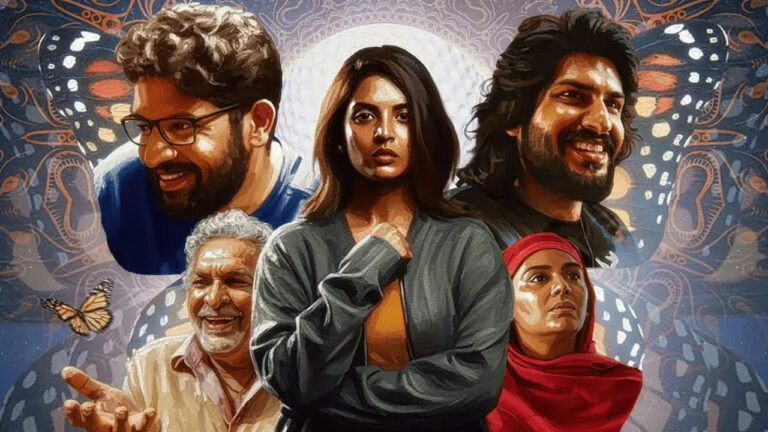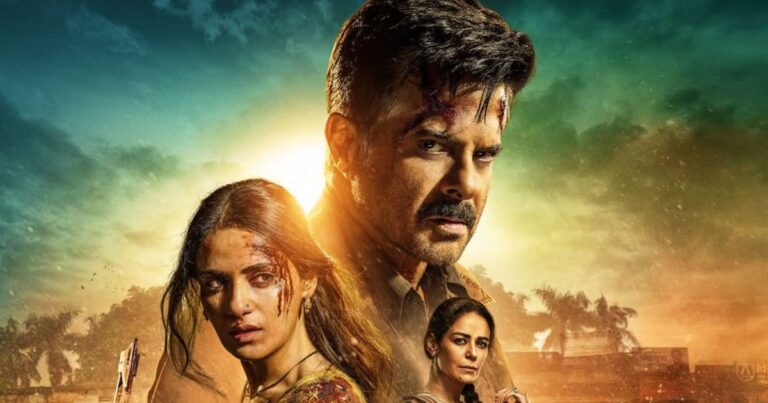
Sivakarthikeyan and Ravi Mohan battle it out in Tamil Nadu when the Centre imposes Hindi as the official language. But despite a lot of research, ‘Parasakthi’ never becomes the fiery slice of history it wants to be. That’s the short take. A longer review follows, and it may contain spoilers.
What is language? Sudha Kongara’s new film, Parasakthi, answers this question right at the beginning with these words: “oru inathoda moochu kaathu.” In other words, language is the air we breathe, and the film that follows is about the attempts to choke a community. The Centre decides to make Hindi the official language throughout the country, and this proves a major problem not just for Tamils but also to people from other non-Hindi states. Parasakthi focuses on a Tamilian who’s cleverly named Chezhiyan. The “Che” part of the name suggests a revolutionary, and the “zha” in the middle is a letter that’s not in the Hindi alphabet. Sivakarthikeyan plays Chezhiyan with all the earnestness and anger at his disposal, and he’s slowly joined by people from other non-Hindi states. But in trying to paint a broad picture of a Tamilian protest that is one of the Dravidian movement’s signature events, the film tries to do too much and ends up meaning very little.
Parasakthi opens with peak drama where Chezhiyan is trying to stop a train, and this big stretch establishes the problem that will persist throughout. The pace is frantic, the editing is hectic, and there’s no breathing space. Sudha stages scenes in the midst of action, which means that people are saying things while doing other things – and some of these things fly by too fast or don’t register at all. When Chezhiyan tells a Hindi-speaking family that he is not against their language or against them as a community, the cuts are so fast that the words don’t seem to be coming from a human being. They seem to be coming from a script. The words sound like they are being read out or recited. They don’t sound like they are coming from the heart. When someone close to Chezhiyan dies, it’s like some random stranger died. We don’t feel Chezhiyan’s emotion because the bond between him and the dead man has been established only in the most generic manner.
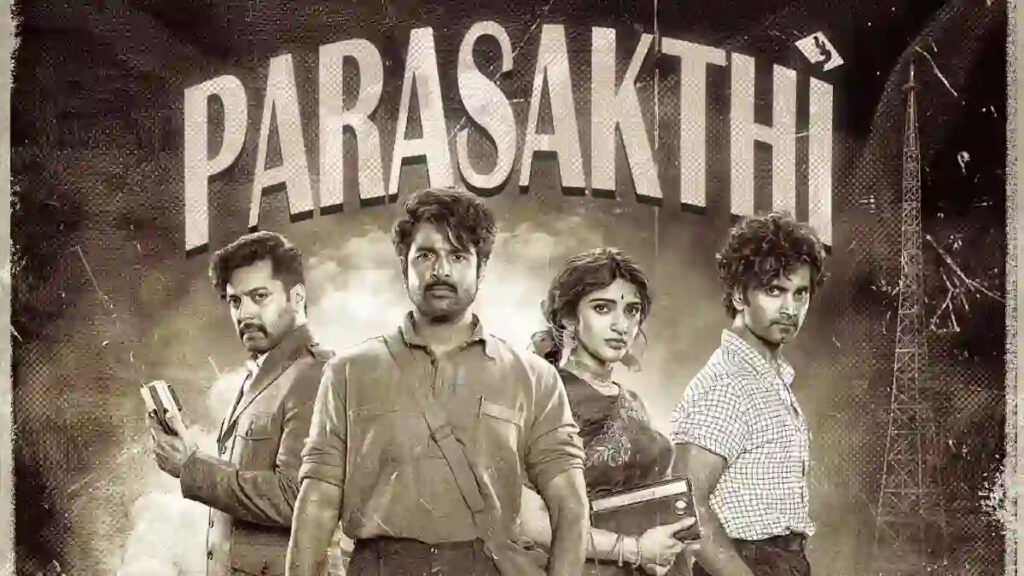
If there’s a word that describes Parasakthi, it is “generic”. The romance between Chezhiyan and Rathnamala (Sreeleela) is generic, with two severely ill-timed songs. The first one kills the mood. The second one appears just after the interval point, and it kills the mood even more. And what is this mood we want? We want sustained, seething anger. We want frustration. We want desperation. We get none of this. Despite the breadth of the screenplay’s geography, the film feels oddly contained. It’s as though everything’s happening in the same backyard. Ravi K Chandran does a valiant job of lighting up the screen, and the film does look gorgeously old-fashioned – but the film doesn’t feel old-fashioned, or like a period piece. It feels very contemporary. And the attempt to mainstream-ise things by having star cameos from other states looks like a mistake. This kind of casting stunt may work in an all-out commercial venture like Jailer, but here, it’s terribly distracting.
I’d never thought I’d see the day when Sudha would resort to the kind of sentimental manipulation where we are asked to weep for a young mother with an infant – but that’s exactly what happens here. When a character named Ayyakannu is detailed in a hurry, we know he will die two scenes later – and that’s exactly what happens. Fire becomes a major symbol. We see bodies on fire. We see trains on fire. In a bit of symbolism that works on paper, Chezhiyan works as a man who fuels trains with coal. But the film stays cold and at an arm’s distance. None of the characters come alive. A restrained Ravi Mohan plays the villain, and he gets a fascinating backstory. He is the product of a Tamil father who abandoned his Hindi-speaking mother. You can project all kinds of things onto him, about why he hates Tamil and Tamilians despite having some of the same blood in his veins. But this bit is mentioned at the start and at the end, and at other times he is just a bad guy who is after the hero. The texture written in doesn’t translate on screen.
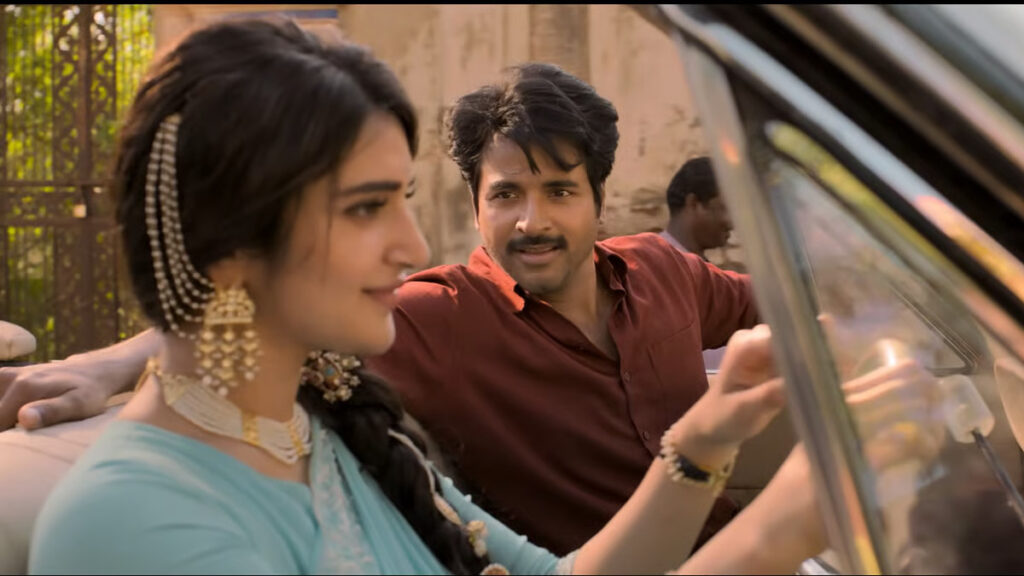
The same could be said about Rathnamala, who is Sudha’s weakest female character. She is both the coy and simpering heroine as well as a revolutionary, and the mix just doesn’t come off. Atharva is reduced to a token presence as Chezhiyan’s brother. The film’s period references are too forced. At one point, the villain listens to a Guru Dutt song, ‘Waqt ne kiya’ – and nowhere else is he shown to be a music lover. The Atharva character stops the screening of a Shammi Kapoor movie, and instead plays the original Parasakthi – as opposed to, say, some random Gemini Ganesan movie or the big hit of the time. When Chezhiyan plays a song on the gramophone, it is ‘Aval senthamizh thenmozhiyaal…’ In this effort to make everything “mean” something, the film loses the sense of everydayness and casualness that filled every pore of Irudhi Suttru, which remains Sudha’s best film. It feels like you are constantly being preached at. It feels like you are in a history classroom and not in a movie.
And what a history lesson this could have been. Imagine a time – the 1960s – when someone from Madurai or Trichy or Tirunelveli or Chidambaram walked into a post office and found that the money order form was entirely in Hindi. Imagine learning Hindi but discovering that you are still at a disadvantage when compared to native Hindi speakers. Imagine having to go all the way to Hindi-speaking Delhi to make your point heard. But all we hear in Parasakthi is GV Prakash’s huge score that triple-underlines every emotion. Yes, I understand that mainstream filmmaking is a weird beast, but didn’t Thani Oruvan (to take a random film) show us that you can make a big hit with a focused screenplay, solid plotting and character-building? I want to give Sudha the benefit of the doubt. Maybe censor issues resulted in the scenes looking so disjointed. But even then, there can be no excuse for the songs and a second-half sequence that actually builds like an interval point. Parasakthi is an underwhelming film for many reasons, and the biggest reason may be the lost opportunity to enshrine a potent moment in our politics and bring it alive for a new generation.