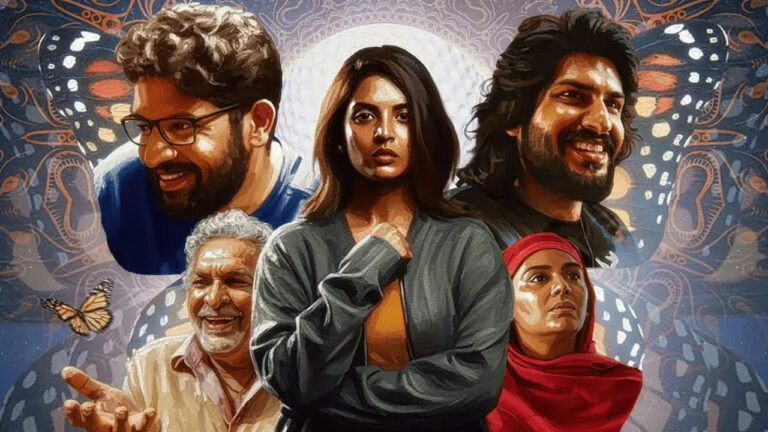
The first hour is charming and very inventively staged. It helps that the genre is rarely seen with an older couple. But the woke messaging makes the latter parts a bit of a pain. The rest of this review may contain spoilers.
In Aap Jaisa Koi, a superb R Madhavan plays Shrirenu Tripathi, or Shri, and this is one of the sweetest parts the actor has played. It taps into his every winning trait. He’s a 42-year-old Sanskrit teacher who’s single. His sister-in-law (Ayesha Raza) has been trying to set him up with women, but she, too, has relationship issues. Her husband (Manish Chaudhary) is dismissive of her attempts to spice up their life. He tells her she is watching too many OTT shows. Worse, he is dismissive of her plans to start a cloud kitchen. Even worse, he is dismissive of their daughter’s desire to join the family’s real estate business. According to him, the daughter should learn to cook for her future in-laws and husband. Shri is not a blatant MCP like his brother, but as he says later, “Par buniyaad to wahi hai na…” He still has a ton of patriarchal thoughts.
Fatima Sana Shaikh plays Madhu Bose, an unmarried French teacher who’s 10 years younger than Shri. Fatima clicks beautifully with Madhavan. They have genuine chemistry, which is so rare to see on screen these days, and this makes you root for these characters and buy their romance. The director Vivek Soni and the writers (Radhika Anand, Jehan Handa) are up to something interesting. They don’t overdo the opposites-attract trope. Yes, Madhu teaches a “cooler”, more modern language than Shri does, but she is not presented as some bohemian. She is very much an Indian girl, a part of a big, broad-minded family. The way Madhu draws Shri out of his shell is a joy to behold. The film is vibrantly shot and imaginatively staged, and the wonderfully melodic songs by Rochak Kohli and Justin Prabhakaran are given a Hollywood-musical treatment. (Again, this is not overdone.)

For about an hour Aap Jaisa Koi is a joy, with the romance having a conflict point in the form of a dating / sex-chatting app. The mood is zany, the pace is steady, and the narrative is filled with surprises. These range from hilarious sight gags (like the one with Shri in a museum) to touchy topics handled thoughtfully, like when Shri asks Madhu about an ex. There are many swoony scenes like the one where Madhu is late, but Shri doesn’t mind because he is finally experiencing the joy of waiting for someone. The line is lovely: “Aaj tak kisi ka intezaar karne ka mauka hi nahin mila”. The high point is a delightful jugalbandi, with Madhu on the piano and Shri handling a sitar. They seem utterly tuned to each other, and we wait for the explosion that will cause problems for the couple.
But when it happens, I stopped liking Shri and began to feel Madhu deserved a better man. You understand where Shri is coming from, but his mental journey from where he is to where she’d like him to be is contrived, and it takes the help of a subplot involving his sister-in-law. It’s something from the woke manual, and I wished this whole angle had been less messagey, and handled with the same lightness and conviction as the earlier parts. Some of the men are so one-note that there is zero conflict about them being punished for their behaviour. Shri’s reunion with Madhu seems far too easy. Yes, this is a rom-com and not gritty reality, but the issues that are raised deserve higher stakes. Deep-rooted attitudes cannot be transformed overnight, and Madhu doesn’t give Shri as much of a hard time as I wanted her to. But yes, Madhavan and Fatima Sana Shaikh are in great form. The whole thing is less than a couple of hours. And it does leave you with a smile! So why complain, I guess?