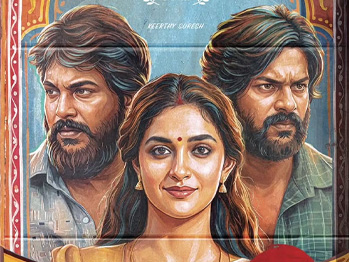
Hiphop Tamizha Adhi plays three roles. He is the grandfather, father, and son in a family of gaana singers. Unlike the usual Tamil film, ‘Meesaya Murukku 2’ is surprisingly inclusive. Instead of piling on the melodrama and asking for pity, it asks that we accept and understand and acknowledge the System and then fight against it. All of this is told with lots of humour and energy and a super album of gaana songs in various flavours. The closing portions seem a tad rushed and don’t deliver the high we want, but overall, this is a solid entertainer and a vast improvement over Part 1. That’s the storyline and the quick review. A longer analysis follows, and it may contain some minor spoilers.-3bfe3040-a053-11f1-9310-f575627d72cf.jpg)
Meesaya Murukku 1 was a fairly conventional, fairly black-and-white crowd pleaser. In the decade or so that’s followed, Hiphop Tamizha Aadhi has become a much better writer. This film points fingers at the System and the Establishment, but there’s also inclusivity. If there’s a Brahminical father who mocks gaana music, there’s a son who embraces the genre and sees it as India’s answer to hiphop. Karunkaran plays this son, Venky. When someone says that a Carnatic artist has “bhagavan anugraham”, Venky asks why they are bringing god into art. This is in the 1970s, and the gaana singer Venky has come to admire is named Dass. The man is from Royapuram, and he comes across as a lighter, chiller version of a Pa Ranjith movie character. He wants gaana to be seen as an art form and not just as a local entertainment for North Madras residents. Venky wants to help, but Venky’s father puts his foot down.
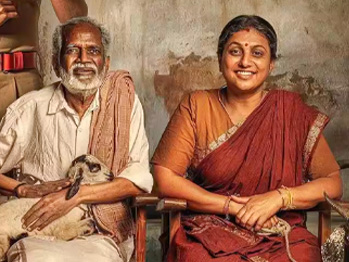
This push-pull dynamic is present throughout Meesaya Murukku 2. Yes, it was (and still is) a fact that the media is filled with savarna writers who become gatekeepers either consciously or unconsciously, because of their tastes and their inability to “understand” music beyond a few “elite” genres. But while pointing out this important truth, the film – in the 1990s portions – also has a girl from a Brahmin family who does not discriminate. Ramya Ranganathan is very good as Vani, a Bharatanatyam dancer who rebels against her family and marries Siva, who is the son of Dass. Hiphop Tamizha Adhi plays the younger versions of Dass and Siva, and in the present-day portions, he also plays Jeeva, the son of Vani and Siva, a “cross” as his amused friend puts it. This is not a film that’s out to vilify any community. Vani says that all music is equal, and she is angry that her Brahmin family rejects gaana music. But the film also sees that the walls around the Establishment cannot be broken down overnight.
It takes three generations to make the change happen. In the 1970s, Dass wanted to take gaana to the masses, but the Establishment did not let him get ahead. In their Brahminical eyes, what he was doing was not “real serious music”. In the 1990s, Siva had the same dream, but a personal tragedy made him opt for a safe government job. Meesaya Murukku 2 understands that people sometimes have to drop their dreams because they’re not practical in real life. Finally, in the present day, Jeeva struggles against nepo-kids and DJs who exclude him from their five-star hotel premises and does what his grandfather and father could not do. The only major complaint I had with this film is that the final portions that bring together all three generations feel rushed. The big gaana concert at the end should have given us a huge, much-awaited high. That does not happen. Otherwise, a crude LGBTQ+ joke apart, almost everything works.
The writing has both the tightness that gives us a solid story arc, and also the looseness that allows random reel-like bits to sneak in. I couldn’t decide if I liked the screenplay because the overall arc works or because I am slowly getting used to the reel-like writing that’s such a big part of cinema today. Another reason the film works is the cast. Adhi isn’t an “actor” in the traditional sense, but he has a solid, energetic screen presence – and that’s exactly what’s needed for Dass, Siva, and Jeeva. And he has cast good actors around him. Karunas is lovely as the older Dass, and the actor’s own struggles to establish himself as an independent musician add a nice meta layer to his part. But the real scene-stealer is Baba Bhaskar, who is wonderful as the older Siva. He puts across both aspects of Siva, the fun-loving father who looks out for his son as well as the man who has gotten used to living with the memories of a tragedy.
Like this tragedy, Meesaya Murukku 2 has heavy themes and scenes. But there’s no melodrama. We feel the sadness or the unfairness, but the film doesn’t dwell on these events. It registers that something’s gone wrong, and then quickly moves on with an attitude that says “okay, now what can be done to right this wrong, and how can we get ahead”. This positivity is contagious, and despite being a sort of message movie, Meesaya Murukku 2 never gets into lecture territory. It’s always entertaining, with a super supporting cast that includes Harshath Khan, Yogi Babu, a well-cast Vijay Varadharaj, Shah Ra, and many others. And the hit-filled soundtrack is filled with all kinds of gaana songs – from traditional to clubby. ‘Aura 10/10’ is the big chartbuster, but my favourite number is ‘Adi podi’, which handles heartbreak in a trancey, dreamy way that makes the angst feel casual.
Regarding the central conflict, some viewers could argue that Carnatic music is a niche circle and that, from the 1950s onwards, film music went on to democratise what constitutes acceptable music. But this is not a huge dealbreaker. I liked that Meesaya Murukku 2 is a very practical movie. When it talks about nepotism, it acknowledges that every parent would want to help their child get ahead. The problem is when they want only their child to get ahead. This is a useful distinction, but again, you can ignore all this detailing and just coast on the vibe of the movie. Despite the big ideas, Adhi and team have given us an easy-watch entertainer whose optimism is sweet and sometimes naive, but always infectious. Vani is a vegetarian, but she learns to cook fish because Siva likes it. Siva wants to be a musician, but he makes a sacrifice for the sake of his son. A son embraces his father. A young man realises that girls aren’t just love material, they can be friends, too. With some more finesse, Meesaya Murukku 2 could have become a really good movie, but for what it wants to do, this is more than enough.