Mammootty plays Karthikeyan, a smuggler who exports red sandalwood. Dhanush plays Thirukumaran aka Thiru, the man Karthikeyan regards as a son. (Note that both have names of Lord Muruga.) Their gang is infiltrated by a mole sent by a forest officer named Nithya, played by Sai Pallavi. This part of the film is shot and edited like a Martin Scorsese movie, and it’s filled with a huge number of characters, a huge amount of detailing. And underneath this crime drama lies the human story of what happens when someone you think of as a bad man is actually a good man. Or what happens when an enemy becomes a friend. The film has a solid first half with a brilliantly unexpected interval point, while the second half struggles to strike a balance between crime drama and melodrama. But overall, there’s lots to like, especially the three lead performances. That’s the basic storyline and the quick review. A longer analysis follows, and it may contain some minor spoilers.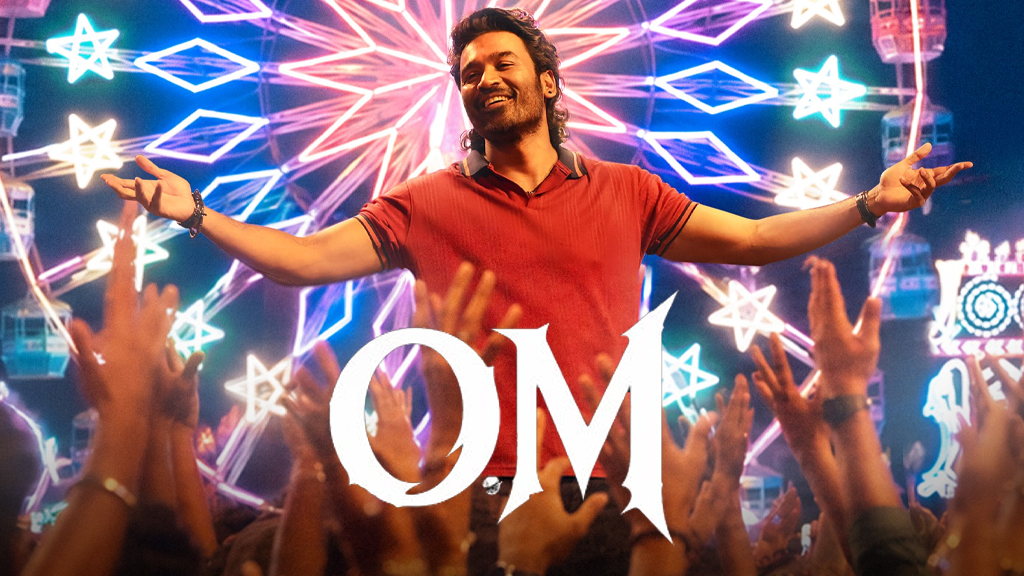
From the start, writer-director Rajkumar Periasamy demonstrates a purity of purpose. He knows the things we need in a movie with a big star, and so we get an energetic group dance set to a Sai Abhyankkar song that sounds like firecrackers going off inside a tin can. We get “cute” scenes with Sreeleela, who plays Thiru’s wife Roja. We get a larger-than-life action sequence in a forest that positions the Dhanush character as some kind of saviour. This stretch is set to the rousing, anthem-like ‘Veezha veera’. We get many intercuts to religious proceedings, as though to ground the Hollywood-like happenings in a local zone. Many of these choices feel unnecessary from a purist point of view, and yet, you understand the need for these elements. Because without these compromises, the good stuff might not have been possible. And I include these compromises in what I call Rajkumar Periasamy’s purity of purpose. For instance, he lets quite a major part of the film play out in Telugu because Nithya is from that part of the country.
Or take the introductions of Thiru and Karthikeyan. In a regular Tamil movie, the hero would get the big buildup and the big face-reveal. But here, this is given to Karthikeyan. He gets the shot that captures him from the back, and he gets the shot of his shadow appearing before he does, and finally he gets the shot that shows his face. And it’s fitting because he is the bigger guy. At this point, the Dhanush character, Thiru, is just a sidekick. He is Karthikeyan’s personal photographer, who also behaves like a henchman. And thus, his intro-shot includes a shot of him taking a picture with his camera and then we get a single-take sequence like the one in Romain Gavras’s Athena, where Ezhil Arasu and his athletic camera team follow men on foot and then jump into vehicles and give us a sense of what Thiru’s life must be like. The introduction of Karthikeyan is still. It builds up the man as a myth. The introduction of Thiru shows the man as a man of action whose mission is to safeguard Karthikeyan, no matter what the danger is.
What I liked most about Operation Mole is its ambition. The fast-moving film wants to build a world filled with characters and detailing. Early on, before we shift to Karthikeyan and Co., we hear of a place called Javvadhumalai. This place is filled with tribals, and they return to the story in a major way in the second half. There is a setup of a little boy who wants an expensive bicycle. The payoff is both shocking and heartbreaking. It’s shocking because we don’t expect the payoff at that point, where we think nothing more can happen. And it’s heartbreaking because this payoff involves a character we have come to love. Nithya is fiercely committed to her job, and it goes beyond the fact that she respects the uniform. It also involves two tragedies. Sai Pallavi is very good in a role that’s a rarity in our male-dominated cinema. She is as much a protagonist as Dhanush is. She gets a big action sequence, and she also gets quieter moments, like the way Nithya instantly composes herself after recalling a tragedy or the way she smiles at a lie cooked up by her mole in Karthikeyan’s gang.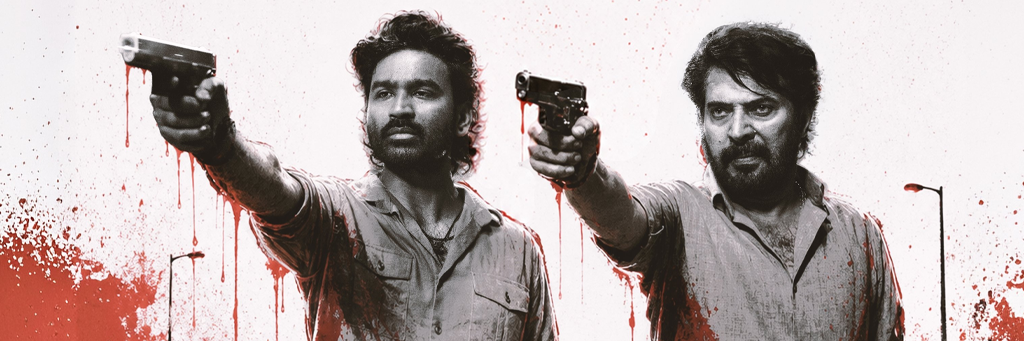
Of course, we cannot like a film just because it has ambition. But Rajkumar Periasamy executes the first half in a way that lives up to this ambition. His writing is expansive. Even as we focus on Thiru, Karthikeyan, and Nithya, many other characters slip in and out, and most of them are well-cast. The only three actors who seem lost are Sreeleela (mainly because the relationship is force-fitted into the crime drama), Naseeruddin Shah (mainly because of his stilted Tamil delivery and the generic nature of his role), and Renu Desai (again, mainly because of the way the character is written). Dhanush and Mammootty are not really tested here, but they bring out the complexity in the relationship between Thiru and Karthikeyan. They get the meat of the scenes about friendship and loyalty, and the bit where they face each other without being able to look each other in the eye is beautifully done.
There’s a clockwork-like precision to the cutting and the largely percussion-driven score helps keep the momentum going. It’s been a while since a movie so filled with dialogues and so crammed with information moved so fast. I had a few questions. Would Nithya take the risk of visiting her mole just to see photographs that could have been sent to her through other means? Would Karthikeyan do an information dump about where the red sandalwood is hidden just because he just felt like telling someone? Wouldn’t a secret operative have devised a better way of tackling his domestic situation than simply disappearing for long stretches with no explanation? But the momentum of the film took me past these questions. Flaws feel like flaws only when you are bored, and nowhere in the first half did I get that feeling.
I was especially touched by the way Karthikeyan was written. This is a man who got into this profession because he loved a woman. I wasn’t convinced fully, but everything the man does keeps telling you that he is basically a decent man in the way we think Velu Nayakan is. These men may do “bad things”, but there’s a heart of gold underneath it all, and Mammootty really sells this heart of gold. Karthikeyan loves football, and he encourages kids who play the sport. He feels bad for people who have died while doing his work, so he gives their families a large sum of money. He trusts the men around him almost completely. Some of the cops come off as more ruthless than this smuggler. And even they are not one-dimensional. They have seen fellow officers die at the hands of those cutting the red sandalwood trees, and theirs is a long-running thirst for vengeance.
But after a brilliantly conceived interval point, the film loses its balance. You get the feeling that maybe the director felt that the story was becoming way too Hollywood, and it’s time now to bring on the melodrama. A lot of this is clumsily done, and it feels especially out of place after the tonality of the first half. A bit of an overfamiliar saviour narrative begins to emerge. And some scenes needed better emotional connection. But again I come back to that point about purity of purpose. Even at these less satisfactory points, there’s an attempt at texture and complexity. Thiru may turn into a “hero” at times, but he is a flawed man. Most films show us a small world within which the characters operate. Operation Mole shows us an ecosystem with stakeholders ranging from impoverished tribals to billionaires in Dubai. The film is not perfect, but flaws and all, it is a step forward in the shaping of a mainstream film with a big hero. It shows us how the hero can be made to share space with other characters. That, in itself, is some kind of achievement.