Bobby Deol is fantastic in the role of a lifetime as a has-been movie star. His life is down in the dumps. And things get worse when he is charged with rape and put in prison. As much as the film talks about what it means for a man to be a victim, it is also a moving coming-of-age-story of a man-child who finally becomes a man. That’s the quick review. A more detailed analysis follows, and it may contain spoilers. 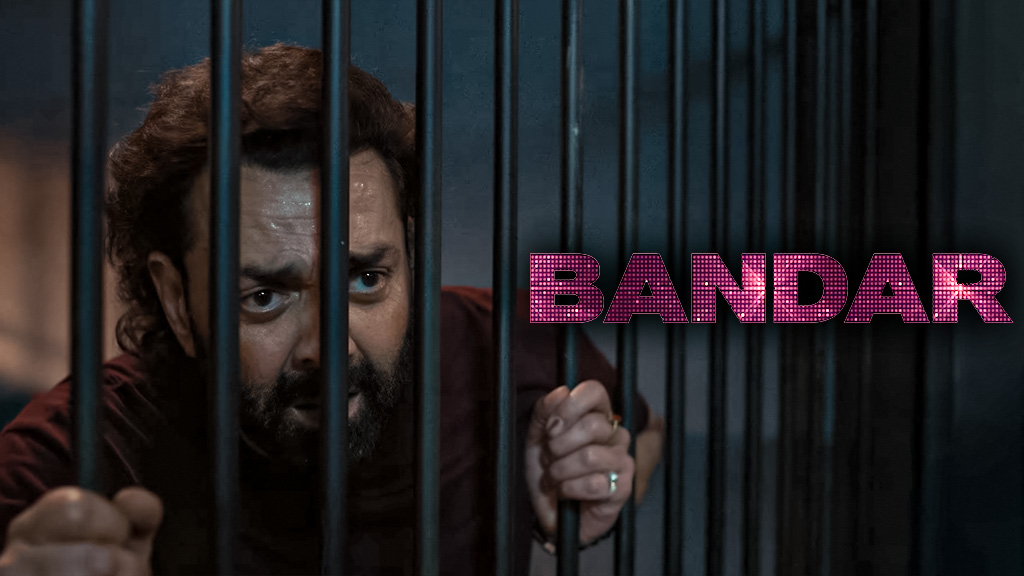
Bandar is directed by Anurag Kashyap, but the more interesting credit is that of the co-director, Sakshi Mehta. She had an assistant director credit on Pink, whose famous “no means no” line finds a mention here. This is also a film about abuse, but the “victim” here is a man. He is a washed-up actor-singer named Samar, and he is played by Bobby Deol. The film opens with a line of text that says that we are all “apni hi circus ka bandar”. And it looks like Samar’s circus is about to pack up. His career is in the toilet. He keeps refusing lucrative TV offers and has delusions of making it big in the movies again. The part has many parallels to the career trajectory of Bobby in real life. Watching Samar’s anguished face as he performs to an uninterested crowd, or seeing his reaction to being ignored by paps who choose to click pictures of Sunny Leone and her husband… You feel bad not just for Samar but also for what it must have been like for Bobby before his massive career resurrection via Animal. Intentional or not, this is fantastic casting, with the actor and the character playing off one another.
Samar is in his fifties. Looking at his nice flat in a highrise, he leads a lifestyle he cannot afford. And he has emotional issues. He has avoided getting married. He dates younger women like Khushi (Saba Azad). Samar briefly dated a more mature-looking woman, a healer named Gayatri (Sapna Pabbi), but he found that she was too intense for him. It’s a bit of a Fatal Attraction-like situation, if you remember the movie where Michael Douglas sleeps with Glenn Close. He thinks it’s a fling. She thinks it’s a relationship. He ghosts her. And she comes screaming for revenge. One day, Samar finds out that he’s been charged with rape. Gayatri has submitted all kinds of intimate evidence (sexting, graphic images) to the police, and Samar finds himself behind bars. His dream has come true in the worst possible way. He wanted to be a star again. And now the very media that ignored him can’t get enough of him, thanks to the sensational nature of the case.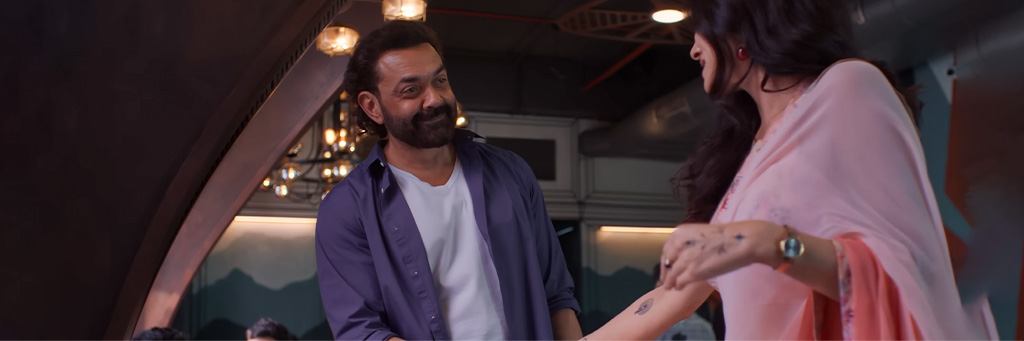
Bandar is shot almost entirely from Samar’s point of view, and it makes it fairly clear (at least to me) that Samar is not guilty of rape. But he is not any kind of angel, either. At one point, his face is covered with a mask as he is being led to court, and his claustrophobia reminds him of the time he asked Gayatri if he could choke her during sex because the orgasm would be awesome. Maybe these are the signs that Gayatri misunderstood. But from Samar’s point of view, the request doesn’t seem to be about sex as much as the fact that he is bored and wants something new to do, the way a child wants a new toy. Samar is terribly unfair to Gayatri. The least he could have done is to tell her this is not working out. Instead, he hides from her like a little boy faced with a strict teacher with a cane. He avoids her calls. He lies to her about his whereabouts. It’s bad enough that he has messed around with her life, but now, without giving her closure, he’s messing around with her self-respect, her dignity. And he gets a taste of what she’s been through when he lands behind bars and loses his dignity.
The film, then, becomes a step-by-step chronicle of what life is like in an overcrowded, unsanitary Indian prison. It’s like Full Metal Jacket, but set in jail. There’s the kind of humour you’ll find only in an Anurag Kashyap movie, like the provocative comparison between dating apps and the army, or the gag about Subhash Ghai and the failure of his mega-film Trimurti. But the overall mood is grim. A judge declares that the film industry is a shameful place. Like many people from the industry, Samar is a privileged outsider who lives in a bubble. He lives in Mumbai and doesn’t speak Marathi. He thinks he is above these Marathi-speaking cops and these prisoners. When his sister (Sanya Malhotra) visits him in prison, he weeps and says, “Main yahan nahin reh sakta in sab ke saath.” And then, slowly, he becomes one of them. In a way, Bandar is some kind of coming-of-age story, too. It chronicles Samar’s growth from man-child to man. When Samar did not want anything to do with Gayatri, he brutally cut her off. With Khushi, he asks for forgiveness in case he has hurt her.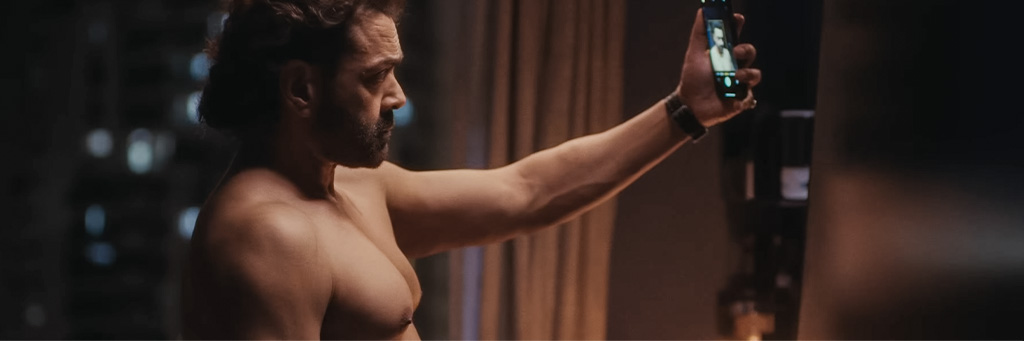
Bandar is written by Sudip Sharma and Abhishek Banerjee, and they pack in a wealth of detail about prison life and gangs and toilets and about how men accused of rape are treated the worst by the other inmates and how there aren’t even any mirrors in case someone breaks one and harms himself or anyone else. And as a result, a prisoner can go for years without seeing his face, without knowing how he has changed. Raj B Shetty and Indrajith Sukumaran play small parts as inmates. They get to play the fool in a song that says that everything is a cage: wife, parents, religion, tradition. Going by Samar and Gayatri, and Samar and Khushi, maybe even romantic / sexual relationships today are a cage. By then, the film itself has become a cage with its mesmerisingly oppressive visuals, shot by Saiyed Shaaz Rizvi. We feel that we are locked up inside prison with Samar for the longest time, and his memories begin to feel like vacations in the world outside.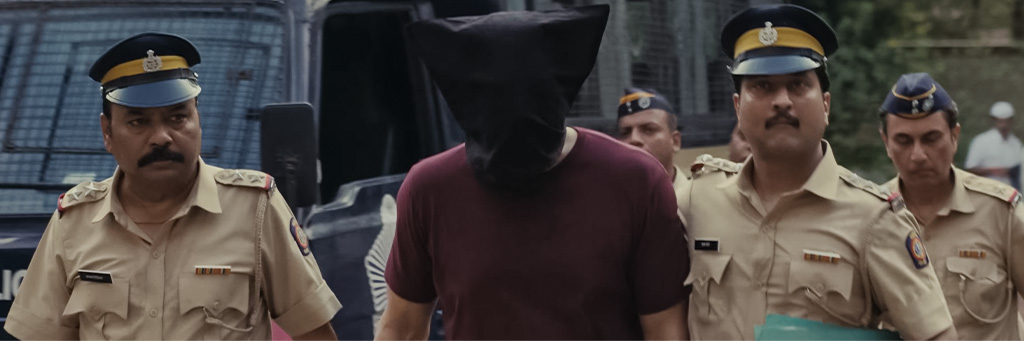
The filmmaking is fantastic, and so are the performances. There’s a sense of scenes not clicking fully into place or the segues being just a beat off – and this leaves us a constant sense of disorientation. Like Samar, we are always off-balance, always unsure what’s going to come up next. To call something “the role of a lifetime” is a cliché, but this really is the role of a lifetime for Bobby Deol – and probably the role of his lifetime. He has the same looks that made us root for him as a hero (think of something like Kareeb, where, again, he was a man-child and a victim of fate), but the years have carved lines on his face and he uses them beautifully. It breaks the heart to see Samar move from saying he is innocent and won’t bribe the cops to begging his sister for money for surviving inside the prison system. And Sapna Pabbi is absolutely brilliant as a woman who comes with her own set of scars. She is not a villain. The film does not make you hate her. It is what it is, and she has helped Samar in a way. By the end, inside prison, this has-been has become a star.