By now, everyone knows that the film is a remake of the 2023 Balayya-starrer ‘Bhagavanth Kesari’. That was a hero-worship vehicle and a female-empowerment story. H Vinoth adds a third layer of political messaging, and you can see why this film has found a release only after the elections. That’s the quick review. A more detailed analysis follows, and it may contain spoilers.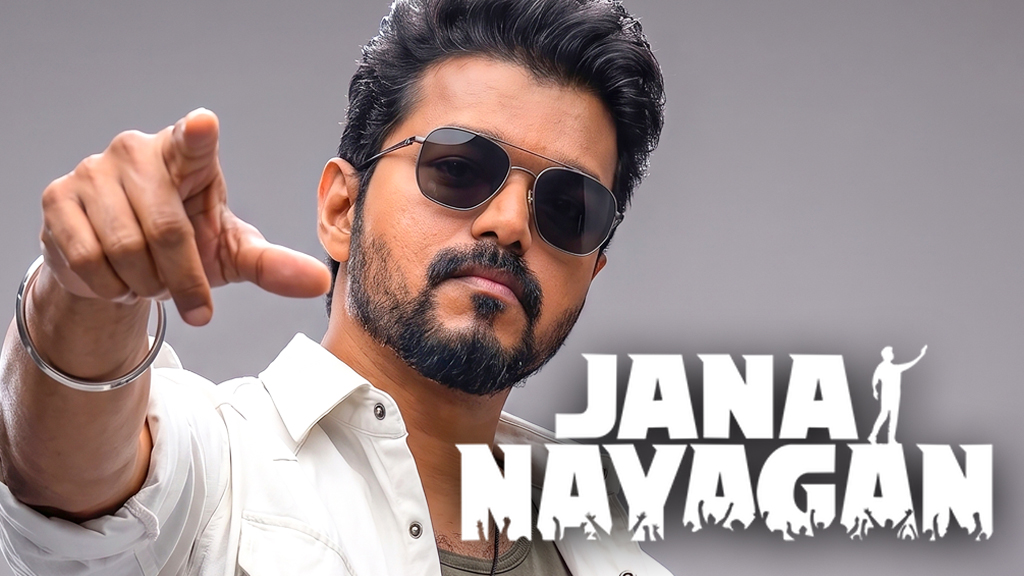
Jana Nayagan is a very unique film to review. One, its leading man is the current Chief Minister of Tamil Nadu. The last time such a situation happened, it was with MG Ramachandran, and I think it’s safe to say I was not a film critic back then. Two, Jana Nayagan has been leaked for a while now, and several people have already watched it illegally. So for many viewers, this may be some kind of late review. Three, it’s not “just a movie” but a movie with a history. It has had a long battle with the Censor Board, and sometimes it appeared that nothing in the movie could be as dramatic as the discussions about who was orchestrating all this. Four, it is Vijay’s last film. Whatever you may think of him as an actor, there can be no doubt that he is the biggest star, the biggest crowd-puller, the biggest seat-filler who emerged after the Rajinikanth era, and there’s a small sense of occasion that this may be the last time we see a brand new Vijay movie being released on the big screen.
But beyond all this, even from a purely cinematic point of view, Jana Nayagan is a very unique film to review simply because of its source material. When news came out that the film was based on Bhagavanth Kesari, many of us were puzzled about how H Vinoth’s screenplay and direction would take on the challenge. And yes, it is indeed a challenge to tackle the unique sub-genre of masala-mass cinema that stars Nandamuri Balakrishna, aka Balayya. The average Balayya moment is like the scene in Bhagavanth Kesari where he sets fire to a corrupt cop’s stomach in order to heat up a glass of tea. That is neither the “H Vinoth brand of cinema”, which is more serious, nor the “Vijay brand of entertainer”, which is lighter, less gory, more family-friendly. Plus, for those of us who have seen Bhagavanth Kesari when it was released, there was also the question of how they are going to eliminate the sense of unintentional comedy in several scenes, like the ones where Kajal Aggarwal plays a psychologist. We watch Balayya films expecting unintentional comedy and over-the-top action. It’s like a live-action cartoon movie! But that’s not how we watch a Vijay movie!
But then, even when it comes to Vijay movies, Jana Nayagan – flaws and all – turns out to be unique. One of the star’s signatures is his appeal to children, his lightweight and humorous screen persona. But this is a dead-serious movie. Even the humour is deadly. The hero is named Thalapathy Vetri Kondaan, aka TVK, aka Vetri. In an action sequence, Vetri buries an axe in a bad man’s forehead. He looks up from the dying man at another bad man and asks, “What bro!” The other bad man replies, “It is very wrong, bro!” It’s as though a schoolteacher is sad that a child is stealing candy. It’s that old Vijay flavour of not taking himself too seriously, but applied to a situation of extreme violence. Hands are chopped off. A head is chopped off. Blood is on display as frequently as a Telugu film heroine’s navel. Unlike the older Vijay, this Vijay is really angry with those who want to destroy our democracy. And H Vinoth gives him a platform – or rather, the podium – to voice that anger.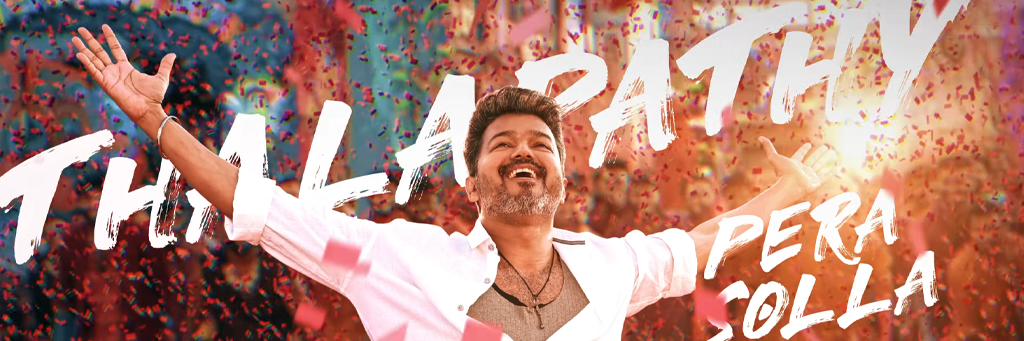
Bhagavanth Kesari had two layers. One was the usual hero-worship layer. The other layer was about female empowerment. But Vinoth adds a third layer of politics, and he changes the flavour of the earlier film. The female empowerment angle in Jana Nayagan comes from Viji, the character played by Mamitha Baiju. She gets the massiest line in the movie, towards the end, and she really sells it. Viji wants to join the army, but her fears and phobias become an obstacle. Vinoth equates these fears with the fears of the people. Jana Nayagan speaks about how these fears can be manipulated by powerful men. Bobby Deol is the primary villain, who believes in the idea of Meluha, which pop culture believes is the empire established by the descendents of Lord Rama – a “Hindu empire”, in other words. He wants to weaponise religious and ethnic hatred to make India an autocratic State. His name is Himmler, which was also the name of a Nazi politician.
While attacking the “Centre”, Jana Nayagan also targets two parties that have been looting the State for decades. The film has a scene where an image of MGR hands over his “Naan aanaiyittaal” whip to Vetri, as though appointing a successor. And the film calls out another party where the grandfather and father and son and grandson have been playing dynastic politics. In fact, the opening scene, set in 2026, is about villagers who are not allowed to vote. One of them tells a cop, “Oru naal vote pottuttu varusham muzhukka bayathoda vaazha mudiyaadhu.” There’s that word again: bayam, fear, phobia. The cop then turns into a narrator and tells them Vetri’s story, which takes away their fears and fills them with inspiration and hope for the future. Accordingly, Jana Nayagan closes with a card that says “The End”, and then changes it to “The Beginning”.
If you recall Bhagavanth Kesari, this narrator was a random man telling this story to a random family. And that was enough for that popcorn movie. But Vinoth takes a serious, focused, streamlined approach. He is like someone who takes a casually wrinkled shirt and irons all the creases out of it. The shirt is still the same. Jana Nayagan doesn’t become a Great Movie™ because of these changes. But everything – the logical stuff, the illogical stuff – ties together very cleanly. Vinoth adds scenes that show how even Himmler was a good man until he was humiliated by political powers, and after that, he lost his faith in democracy. In the earlier film, the girl was forced to join the army because it was her mother’s wish. You felt sorry for her. Vinoth makes this the girl’s wish, too, and gives her agency. You feel sorry not for her being forced to take up a profession, but for the fears that prevent her from achieving this goal. Even the humiliations are gender-neutral. As always in Tamil cinema, a woman is shown her place by having her stripped. But the same thing happens to a man, too.
Vinoth’s bravest decision is to not make this farewell movie a fan-service movie. Jana Nayagan does have Vijay dancing at an Anirudh concert, and the rousing “Raavana mavanda” plays every time there’s a “mass” moment. And yes, there is that reels-like approach to staging and cutting, where too much seems to be happening too fast. We see a hijacked ship that literally seems to be travelling at 3x speed. But there are no snappy duets with the heroine Pooja Hegde, and even the song over the opening credits has the gentle flavour of “Unakkenna venum sollu”. It’s not a hero song. It’s a father-daughter song. And everything keeps circling back to politics. The villain’s back story includes a widow’s protest against illicit liquor, and ends with the assurance that all the women of Tamil Nadu will support Vetri / Vijay. When Vetri walks up to an old man who has fallen, he helps the man get up by holding out a book called Indhiya Jananayagam. The film is far from perfect, but I am glad Vinoth took this serious, no-nonsense approach. Had these issues been combined with fan-service, Jana Nayagan would have ended up looking ridiculous.
As for Vijay, he takes his role seriously and – for the most part – he does not play to the gallery. This is a dense film, with too much to say. It covers too many issues, from mocking the “torch symbol” to addressing something as far-removed from Tamil Nadu as the Babri Masjid issue. It names Pakistan as the source of terrorists, but it also gives us a Muslim scientist who is devoted to India. Jana Nayagan, at times, feels like an overstuffed political manifesto. It is not overtly “entertaining” like, say, Thuppakki. But even with its flaws, it is a solid sendoff to a star, a solid welcome to a politician who wants to be seen as a saviour. I liked the idea where a kidnapped girl’s dupatta replaces the green of the Indian flag, saying that a nation’s honour is in the way it treats its women. It is a powerful image. We even get an unplanned reference to current events, when Vetri says that hunger fasts are of no use anymore, and we have to hit back.
The film talks about child sexual abuse, drone warfare, and it has Terminator-like humanoids turning up during the climax. If there’s one feeling I had at the end, it’s this. I was exhausted, overwhelmed. There is no time to sit back and register anything, because everything is a blur. But credits, again, to Vinoth, for taking a Balayya movie and making something coherent and serious with it. At the Anirudh concert, Vijay is asked for “one last dance”. The film could have been a series of such moments that celebrate Vijay the Star. Instead, it says that the citizens of a nation are as responsible for our state of affairs as criminal-politicians are, because we keep voting for them. Vetri / Vijay says we have to change this. He says that change is a process. He says it will happen slowly. He says we need patience. I don’t know how “hardcore Vijay fans” will like Jana Nayagan. I don’t know how those who haven’t seen Bhagavanth Kesari will respond to this film. But I saw this as more of an H Vinoth movie that tries to make the best of an existing situation. He does well enough. Now, we’ll have to wait and see what Vijay, our CM, makes of the existing situation.