
A mother and son travel from place to place with different identities, always trying to outrun their past. Just when they think they can settle down, more trouble erupts and the cops come in. With writer Jithu Madhavan, Chidambaram takes a major artistic leap with this film that resists easy melodrama while portraying the corruption of innocence that’s needed to survive in a cruel world. That’s the quick review. A more detailed analysis follows, and it may contain spoilers.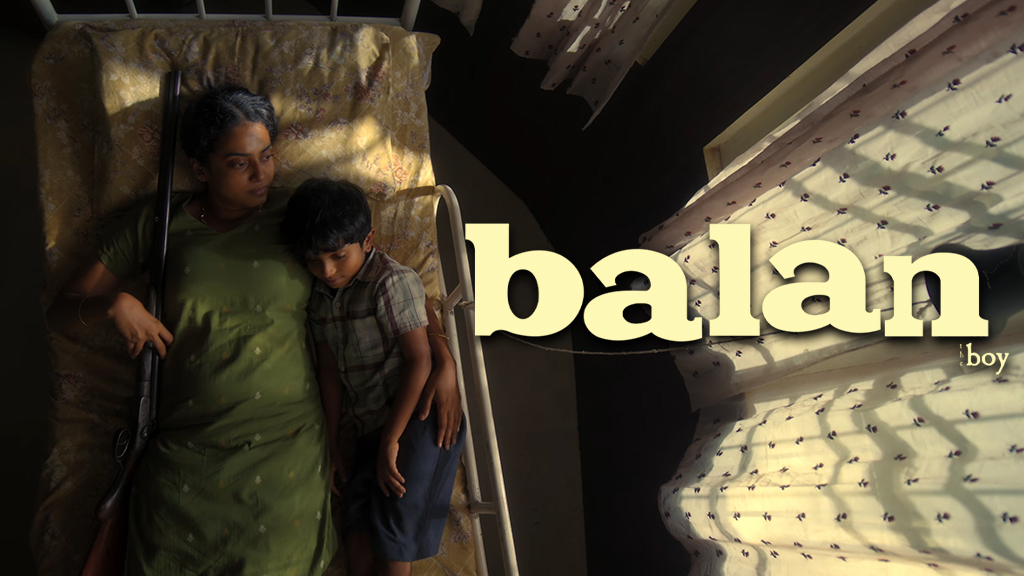
Chidambaram’s Balan: The Boy opens with a tale being told about a mother and a father and a little boy in a little house in the hills. We see a child’s hand-drawn pictures in crayon colours that match the words. Slowly, the idyllic, “once upon a time” nature of this fairy-tale gets f*cked up. There’s a killer elephant. There’s poverty. Later, we learn that this story being told may have included abuse and trauma and murder. If this fairy tale-like family story becomes darker and darker, so do nursery rhymes in school, which begin to sound like a distant echo to Balan, the little boy of this story, brilliantly played by Adhisheshan as a child and Muhammed Zinaan as a teenager. This is not a normal boy, and this is not a normal childhood. He doesn’t even have a permanent name. The only truth about him is that he is a boy. He is a… balan. And when we first see him, he is with his mother in jail. We never get to know her real name, either. We know these two only by the various aliases they assume as they move from place to place like fugitives.
A fantastic first-time screen actor named Farzana Palathingal plays Balan’s mother – and to refer to her, like the generic “balan”, let’s call her a generic “amma”. This mother and son are in a severely dysfunctional relationship. For me, the defining scene and image with Amma is the one where we see her in a wide shot in some sort of wooded area (again, a dark fairy-tale setting). As she walks on, she’s constantly looking back, fearful that someone (or some thing, like her past) will catch up with her. Early on, Amma is given the number of an NGO that could help her find a job. She tears up the card. She does not want help. The only thing she wants is privacy for her and her son. Whatever she has experienced makes her tell Balan: “All we need is each other, no one else.” When a sweet old man says they can live in his house like his daughter and grandson, Amma instantly takes Balan and runs. They keep running and running and running, changing job after job, name after name, coming up with one lie after another, until they end up at the home of an elderly woman, played with earth-shaking eccentricity by the wonderful Dolly June.
This woman could well be the prototype for Amma when she grows old. Maybe that’s why she allows herself to get somewhat close to her, or maybe it’s because she feels sorry for the old woman who has no ties with her son. Amma cannot imagine a life without Balan, and maybe this softens her towards the old woman. And in turn, the old lady instantly sees Amma for who she is. She says Amma should stop running. For a change, Amma takes someone’s advice. She puts down roots in the old lady’s home. She even enrols Balan in a school. Farzana’s expression when Balan is taken away by a teacher is a sight to behold. Without uttering a word, she uses her large eyes and tight smile to convey her mixed feelings. Amma wants Balan to have a semblance of normalcy. She wants him to be in school and be with other children. But her primal brain is screaming that she doesn’t want to let Balan go to a place where she can’t be around to protect him. This may be an extraordinarily dysfunctional mother-son relationship, but it is also defined by an extraordinary amount of love.
The sly screenplay (with one terrific instance of misdirection) is by Jithu Madhavan. We are so invested in Amma and Balan and their survival that it’s only after a while that I realised that the film is running on a loop. Amma and Balan in Place 1, Amma and Balan with new names in Place 2, Amma and Balan with changed names in Place 3, and so on. And suddenly, when they settle down with the eccentric old woman, this loop-like setup tells us that it’s too good to be true. This is not going to be a film with “and they lived happily ever after”. Sure enough, someone from the past, from the jail, turns up. Meanwhile, the screenplay keeps planting things that will keep coming up, like a gun or Amma’s instruction to Balan about where he should wait for her after his school bus drops him off. And the cracker of an interval block sets us up for a thriller.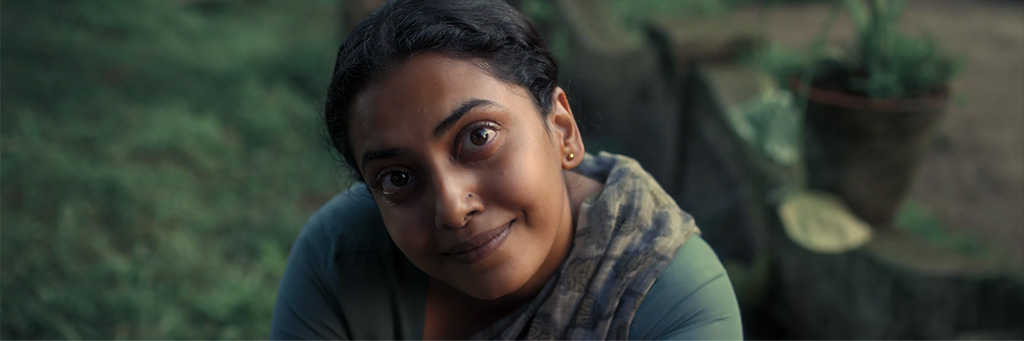
And in the second half, the screenplay does a sweet little trick. So far, we have been travelling linearly. The only visits to the past have been in the oral narrations by Amma and the old lady, and who knows how much truth these narrations really contain. But now, without making us realise it, the film heads towards a flashback structure. The screenplay and the editing by Vivek Harshan are so attuned to each other that we suddenly see a teenager in a bus and think it is Balan, but we’re not exactly sure. There is no spoonfeeding text that says “six years later” or some such thing. That information comes later. What we see in the narrative that has been linear so far is a jump in the timeline, and then we will slip into a flashback to connect the dots. Another screenplay “rule” that is casually broken is that major characters should be introduced early on. Out of nowhere, we are introduced to a cop named Pavithran (a casually chilling Jean Paul Lal), whose love life becomes an issue for Balan. This is a film that feels like they really relished the writing process, and wanted to do novelistic things – as opposed to convenient “cinematic” things where Pavithran is summoned just to look into Balan’s case. Another major character is introduced by a camera move that travels along Balan’s arm that points to a photograph that’s been dulled over time. 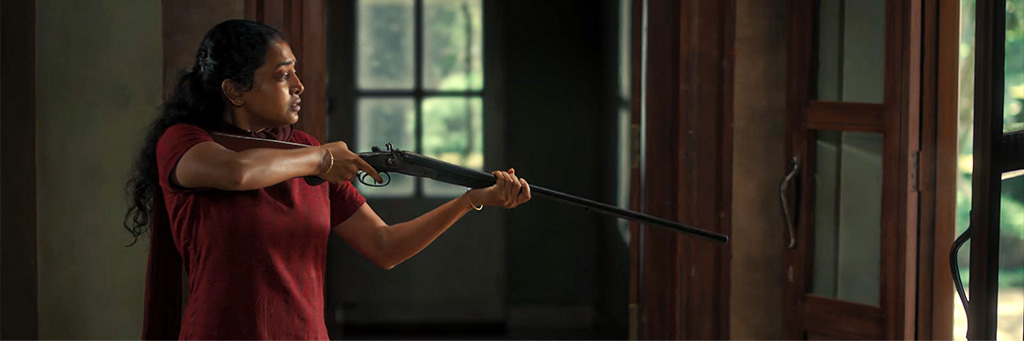
This character is Abbas and played by Tovino Thomas carrying around a magnificent paunch. Only in Malayalam cinema do we see actors shedding their vanity without making a big fuss about it and without ego-feeding PR releases about “oh, I had to put on all that weight and I ate nonstop for six months” and so on. Tovino is absolutely superb as Balan’s father figure who steers the film into Oliver Twist territory. That was a novel with fairy-tale archetypes, like the pure-hearted boy and a missing family and a villain who corrupted the pure-hearted boy. But just like the old woman in the first half was a subversion of the “wicked witch in the woods” trope, Abbas is a subversion of the villain. He does bad things, but he is not a bad man. And if the portions with Balan and Amma were stark and unemotional, the scenes with Balan and his “appa” Abbas are similarly cold. We sense the closeness, but Chidambaram will only take us this far and no further. This is the director’s most mature work, and though there’s ample opportunity for audience-pleasing melodrama (like in his earlier film, Manjummel Boys), he resists it at every turn. It would have been so easy, for instance, to show Amma’s distress upon losing Balan, but Chidambaram and Jithu save the big emotions for the end, when they hit you like a hurricane.
These Abbas portions make sense in retrospect, but while they are unfolding, I became a little restless. And I was not convinced about the reason Abbas withheld a big reveal. But these are possibly the only complaints I had with this beautifully f*cked-up fairy tale of a film. Under their “happily ever after” structure, all fairy tales have darkness and dysfunction. Cinderella was ill-treated by her family. Hansel and Gretel had to escape a cannibalistic witch. Like Balan: The Boy, they are stories of survival. They are stories about the loss of innocence. What Balan does to Abbas may seem terrible, but it is based on the survival tricks that his Amma has taught him. There are thriller elements in this movie, but the core is built on the psychology of survival at all cost. By the end, we realise why Chidambaram has chosen an unemotional approach for the most part. These are not likeable characters in the conventional sense. Amma doesn’t hesitate to sacrifice the life of an innocent. Balan makes Amma proud by doing something similar, and he doesn’t even have second thoughts about it. It’s an instinctive decision. It’s so instinctive that it’s chilling.
Jan.E.Man was warm-fuzzy and fun, and Manjummel Boys was rousing and emotional, but Balan: The Boy signals the arrival of Chidambaram as a major filmmaker. This is a cinema not constructed around plot but around ideas. In a culture where redemption is the norm, here’s a film about the corruption of innocence. And this is not because these are corrupt people. It’s because life has not taught them any other way to be. Even the “happily ever after” fairy-tale ending is corrupted. It doesn’t feel like a warm hug. It feels like a tentative step into an unknown future where who knows what lies in wait! Cinematographer Shyju Khalid paints one incredible image after another in a series of moody colours, and composer Sushin Shyam hits it out of the park right from the killer track with the female chorus over the credits. With his writer and actors and these other collaborators, the director makes a leap into mainstream cinema that takes artistic risks instead of toeing the line of audience expectations. We sense the freedom that can only come from fearlessness.