
Lokesh Kanagaraj plays a low-level criminal named Devadas. Wamiqa Gabbi plays a sex worker named Chandra. They are both sad, troubled souls who are meant for each other. But a determined cop is on their tail, and what follows is a series of bloody and beautiful action set pieces. What the film lacks in emotional heft, it more than makes up for with filmmaking craft, which is fantastic. Oh, and Anirudh totally reinvents himself. That’s the basic storyline and the quick review. A longer analysis follows, and it may contain spoilers.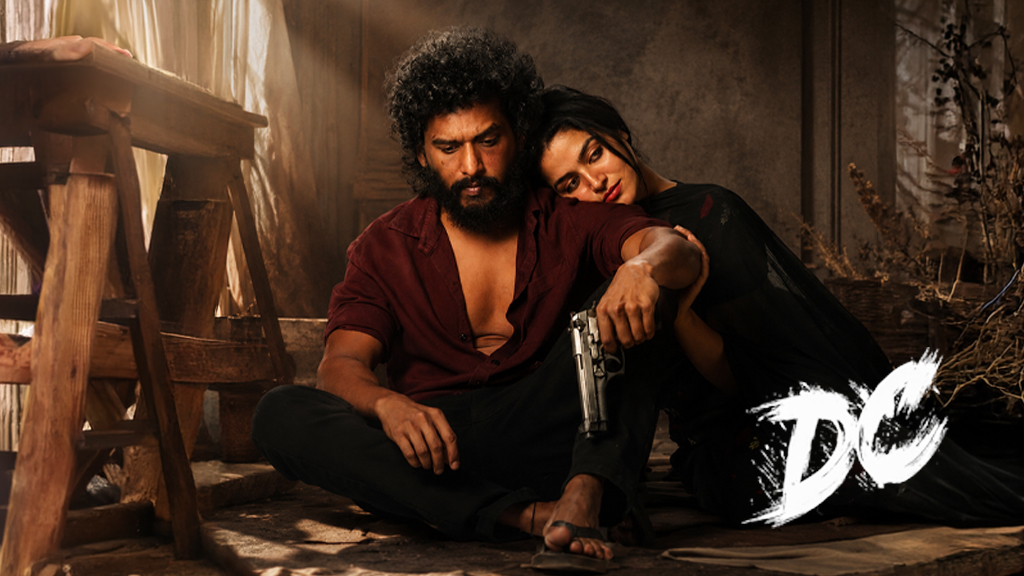
The Devdas story has seen many interpretations over the years, but even with Anurag Kashyap’s radical reimagination, one thing has remained constant. The protagonist is a man-child who might be labelled a “loser”. His lover leaves him, and instead of picking up the pieces and getting on with life, he goes to pieces, determined to destroy his life. But in DC, Arun Matheswaran sees the man differently. He is haunted by his mother’s death the way the original Devdas was haunted by Parvati’s loss, and he carries around his mother’s passport photo the way the original Devdas carried around a bottle of booze. But this version – with the southernised name of Devadas – is no loser. He is a low-level criminal who is also something of a good guy. He kills a cop who has wronged a young mother. When he finds his second shot at love with a sex worker named Chandramukhi – here, she’s called Chandra – he doesn’t stay with her. (In a hat tip to the source material, she is from Calcutta.) He frees her after killing the men who keep her captive. And his mission is to make enough money to give a young boy the English-medium education that his father wanted for him.
But one thing remains the same as in Sarat Chandra Chattopadhyay’s story. Everyone is a sad, troubled creature – either due to circumstances or due to devices of their own making. Sanjana AK plays Parvati as a professional singer with a suicide scar that’s not explained. I don’t mean to say this is an issue. This is a genre piece, not a drama, and the sight of this scar is all that’s needed to suggest that Parvati has not had an easy life. She says she had a toxic lover. Maybe the scar is from that time. DC is a surface-level action movie that only wants hints of emotion to justify a character’s existential state. It doesn’t want to actually get emotional. Whether this is a failing of the director’s writing or an intentional decision, I could not say. (Arun Ranjan is the co-writer.) But the suicide scar and Parvati’s choice of songs give us enough to imagine what she’s like. She goes up to the mic and sings sad-sounding, philosophical numbers like ‘Uravugal thodarkadhai’ and ‘Nilave ennidam nerungaathey’. The first song has a connection to Devadas’s mother, and this makes him want to know more about Parvati.
You could argue whether Parvati, with her very limited screen time, is even needed in a genre piece that moves from one action scenario to another. Why not send Devadas directly to Chandra and kick-start the story from there? At least the character of Chunni Lal has his uses. He is no longer the protagonist’s friend but a lecherous owner of a getaway-car. You could argue whether we need to see and spend time with Devadas’s father, played by Kasthuri Raja. The big reveal that happens towards the end is a surprise only to him, not to the audience, and he doesn’t seem to be very affected by the fact that his son is actually a good man. You could even argue about the decision to transform Devdas into a blood-soaked, full-blown action movie. Why take the story of a romantic loser if your protagonist is a typical Tamil-film hero, someone who does bad things but is actually a good man inside?
But what Arun Matheswaran has made – and what made me enjoy DC – is a work of dazzling filmmaking craft and vision. After a somewhat confused outing with Captain Miller, Arun is back to the relatively minimalistic zone of Rocky and Saani Kaayidham. In those films, he made us root for revenge. In DC, he makes us root for Devadas and Chandra. That’s the relationship that actually comes to mean something, and one of the most powerful scenes in the film has Chandra deciding to free a captive Devadas the way he freed her from her captors in the brothel. Apart from being a genre piece, DC is also a mood piece that stands proudly beside Rocky and Saani Kaayidham. I was never into the film, in the sense that I really didn’t care who lived or died. But the atmosphere that Arun builds with his technical team and especially with Anirudh’s music is stunning.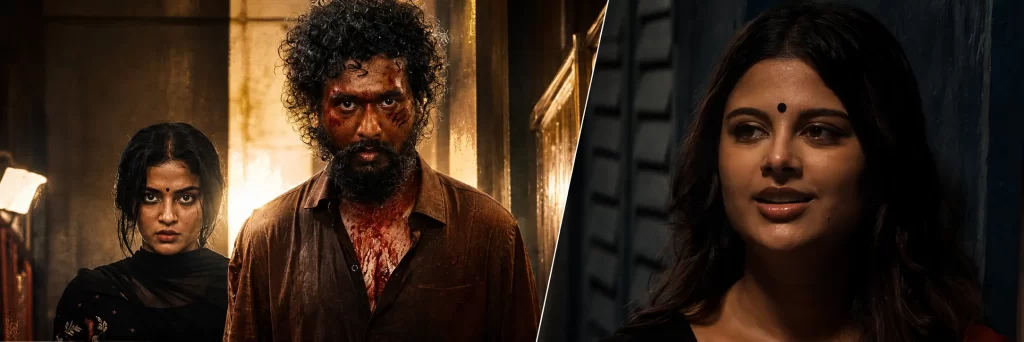
The first credit of the film after the Sun Pictures logo is “An Anirudh Musical”, and by the end, the composer more than lives up to this promise. Anirudh has always given catchy music, like ‘Badli si hawa hai’ from The Ba***ds of Bollywood and ‘Monica’ from Coolie, to name two recent favourites. But what he’s done in DC hits different, and it’s more than the blockbuster album itself, with numbers like ‘Hangova’ and ‘Bum Ba Diga Diga’ and ‘Raga of Revenge’. Anirudh frees the background score from being bound to recurring themes and motifs, a style that has been a staple since the early Hollywood movies. Instead, he goes for pure, instinctive mood, as if he’s saying: “Okay, what you are seeing on screen is the director’s vision, and now, let me give you my vision of his vision”. Only in one scene (involving two elderly men) did I sense something conventional, like what we call “sad music”. Otherwise, Anirudh scores a shootout at a wedding with a brass-band sound, and when Devadas is arrested, we get something like fado routed through the score for a Spaghetti Western.
This scene of Devadas being arrested is also one of the few times DC delivers some genuine emotion. At this point, Devadas is trying to do good, and the person who has betrayed him feels terrible. It’s hard to say what kind of actor Lokesh is (or can be, given a more expressive role), but here, he is very effective at conveying a stony kind of stillness and the air of someone who doesn’t make a big deal of anything. It’s a “casual”, no-fuss performance, and it works. A few scenes with Avinash Raghudevan, who plays an accomplice, also register well, and Krish Dayal makes a solid impression as the cop chasing Devadas. But Wamiqa isn’t able to put across Chandra very well. There’s some terrific writing in the way she gets desperately needed money (it’s the only time the film has some fun!). But take the scene where Chandra says she wants marriage and kids. What’s unsaid (and revealed later) is that she cannot bear children, and when this reveal happens, it should detonate with a ten-ton charge. But it becomes yet another scene with blood and guns. When she tells Devadas, “En uyir pogarthukku munnadi un uyir pogaadhu,” it comes across as an excessive line. It’s too old-school dramatic for this film, and for this character. Similarly, the scene between Devadas and his estranged father and the scenes of a policeman who phones his family with the speaker on seem written with an emotional intent, but they don’t register all that well.
What registers, finally, is the fact that after a really long time, a Tamil film feels so lovingly crafted and is not dependent only on the writing. The action by PC stunts, the often-handheld camerawork by Mukesh G, the production design by Kannan S, GK Prasanna’s clean editing that often cuts on action, the whole staging of even the most casual scenes, the use of the colour red that goes beyond blood to a rose and a getaway car and the lights behind Parvati when she performs – everything makes up a movie that practically dares you to look away from the screen for even a second. Who needs emotion when you see pieces of a cop reflected in shards of a broken mirror beside a dying woman! Or the swirls of black dust that make Devadas and Chandra look like a twinned silhouette! Or the brothel corridor that resembles a low-budget Wong Kar Wai set! Or the improbably exquisite kitsch of Chandra’s room, with swirls of van Gogh-style paint and a Salvador Dali clock and a faded picture of Bonnie and Clyde! This last image hints at the nature of the relationship that will develop between Devadas and Chandra, just like the VCR visuals of the brothel scene from Moondram Pirai hints at the way Chandra has been trapped in her hell. DC is a strange and very original kind of kitsch art, and it fills the senses even if it doesn’t quite fill the heart.