
Arjun Das plays Raghu, a sad soul with a sad past. Aditi Shankar is the chirpy Anjali, who tries to fill Raghu’s life with sunshine. The USP of the film is the delicacy, the softness with which it approaches situations that could have been pumped up with drama. The part about Raghu’s past does not land as well, but the unfussy writing, the lovely visuals and score help to shape an urban romantic drama in the mould of Mani Ratnam and Gautham Menon. That’s the basic storyline and the quick review. A longer analysis follows, and it will contain spoilers. So be warned.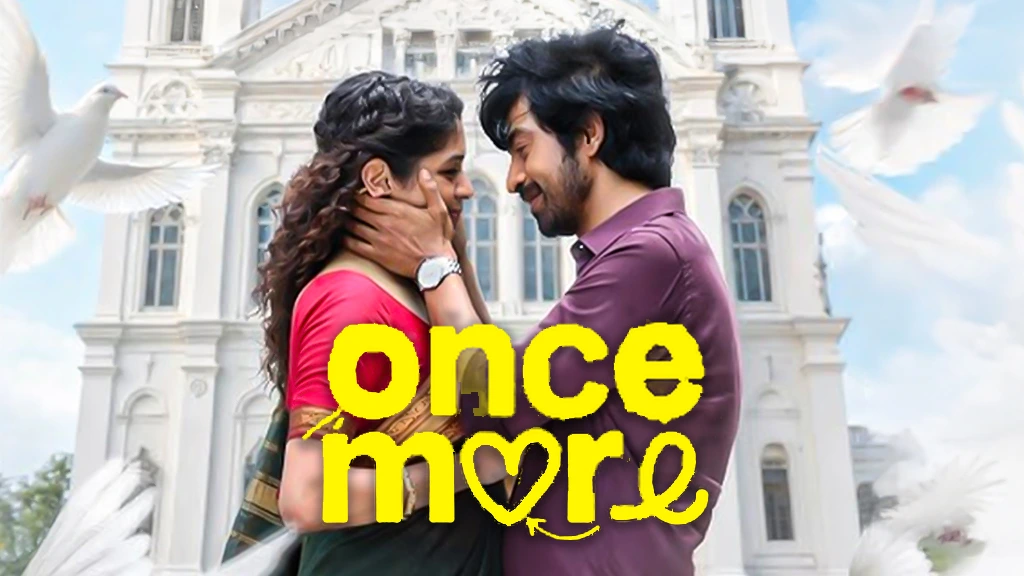
In Once More, Arjun Das plays the kind of leading man we don’t usually see in Tamil cinema. The character’s name is Raghuvaran (or Raghu), and when the film opens, he is working on himself. He is in some kind of depression. He is seeing a therapist. She asks if he really wants to be happy, or if he’s become comfortable with sadness. A line in the song that plays over the opening credits echoes this sentiment. “Poo theendamal vandukkal bothai kollaathey…” Raghu’s only friend is a priest, and his only real connection is with his older sister, who’s married to a Muslim man. Raghu lives with them, and they are worried about him. The sister looks to be in her mid-thirties and she has strands of grey. With a job and a little boy to take care of, she probably does not have the time for vanity. Her husband helps their son with his homework. The writer-director Vignesh Srikanth builds a small, convincing, unexaggerated middle-class world that’s refreshing to be in.
Things begin to change when Raghu runs into Anjali, played by Aditi Shankar. In their first meeting, she says she loves him, and their second meeting has him meeting her parents. He complains that she feels like someone who jumped out of Santhosh Subramaniam, but again, she is presented in a convincing, unexaggerated manner. Aditi has a way of holding a frame without too many expressions, and she makes it less of a pain to be around Raghu, who has no intentions of letting go of his sadness. These scenes have a reverse Mouna Raagam-feel. Raghu begins to enjoy being with Anjali the way Revathy slowly warmed up to Karthik. Arjun Das is good. The scenes develop organically. The classy visuals and Hesham Abdul Wahab’s pleasant music make Once More an easy watch. We get a gay couple who seem to be around more for inclusivity, but they don’t bother the flow of the film in any way. They are used to show that pain transcends sexuality.
Raghu falls for Anjali, and they get engaged. That’s where things begin to turn cinematic, with a girl from his past, played by Sona Olickal. Her name is Indira, and we spend a lot of time with her and Raghu. There’s, again, a delicate undercurrent in this track. Indira’s father was in the Army, and because they kept moving, she never had a sense of belonging. Through this relationship, Once More is trying to tell us that people don’t always grow apart due to major upheavals. Sometimes, a small feeling of unease (along with childhood insecurities) is all it takes to break up a relationship. But this episode is monotonous and it takes up too much time, and we begin to miss Anjali and Raghu’s family and all the happy people from the first half. The pre-interval portions were also stripped of artificial drama, but there were many moments to savour. That goes missing in the Raghu-Indira portions.
But the final stretch gets back on track again. The film is walking a tightrope. Raghu does not tell Anjali that Indira is back in his life. He is not trying to hide anything, but he wants to make sure that he is making the right decision. And there’s another plotline we usually don’t see done very well. We know that it’s best to leave the past where it belongs, especially when we have begun to move on. Raghu’s rational self knows that Anjali is the future. But one part of him wants to know why Indira did what she did. He wants the closure that only she can give him. He knows he is not playing fair with Anjali, but he has spent eight years being depressed and he wants to know what he did to deserve this. I wish Once More had dug deeper into all these emotions, the way Vineeth Sreenivasan’s Hridayam did, but the film does enough to make you overlook the things that could have been. What it is, that’s nice enough.