A 24-year-old woman is raped and murdered. Prithviraj Sukumaran is solid as DCP Raman Kumar, who investigates the case, rounds up the culprits, and then performs an encounter killing. Kareena Kapoor is less effective as DCP Ajooni, who has to investigate Raman’s actions. The film gives us a lot to make us root for Raman, and gives Ajooni very little inner life other than her belief that the law must take its due course. The resulting story is unbalanced in its Raman vs. Ajooni drama, and the matter-of-fact treatment of an investigation we have seen many times in theatres or on OTT doesn’t help. That’s the basic storyline and the quick review. A longer analysis follows, and it may contain some minor spoilers.
Daayra opens like a very broad masala movie. A little boy wants to light some firecrackers in a gathering that is celebrating the latest encounter killings by DCP Raman Kumar. The boy appears scared. An older man urges the boy to go ahead. He says, “Dar kyon raha beta? Aaj himmat ka din hai. Dikha do himmat.” Someone else is distributing sweets. Colour powder is being thrown about as though it were Holi, and as the powder dispels, we see Raman’s face. It’s not a character introduction shot. It is a hero introduction shot. To these people who are celebrating Raman, he is a hero whose team has wiped out the men who raped a young woman, killed her, and then set her body on fire. Raman’s assistant says that he has been in the force for a while now, but this is the first time he feels happy that he has achieved something.
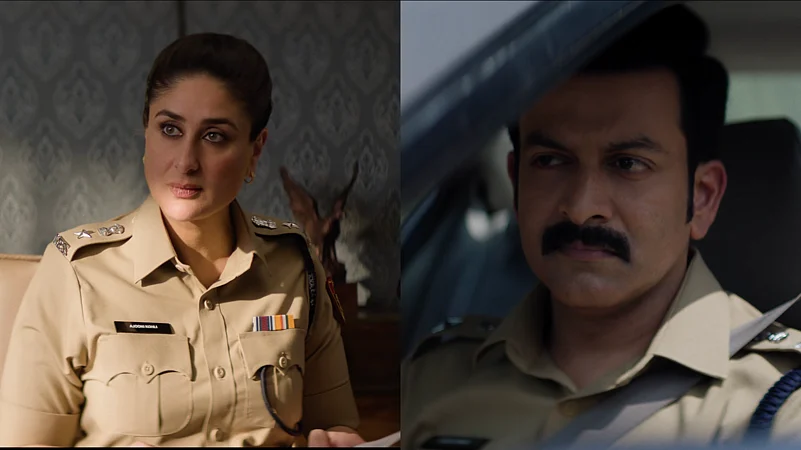
After this huge, noisy opening, Daayra settles into an undramatic, matter-of-fact investigation. Meghna Gulzar has written the film with Sima Agarwal and Yash Keswani, and she wants us to see that there is another side to the police taking the law into their own hands. And this side is represented by DCP Ajooni, who is appointed head of a Special Investigation Team that will look into these encounter killings and decide if Raman and his team really acted in self defense or if they shot the criminals dead because they wanted them dead. In other words, this is a “law versus justice” movie. A TV anchor says that people have lost faith in the justice system. This was a trial held by the media. The judgement came from the public. The police then did what they had to do. And that is why Raman is such a star and is being celebrated as a hero – because he gave the people what they wanted.
The film wants you to ask whether you are on Team Ajooni or Team Raman, but it stacks up so many points in favour of what Raman did that Ajooni becomes a mere spectator in the larger scheme of things. Here’s what Raman has to face. Cases drag on for years. Prisoners are often given lesser sentences or even let off because of mental instability or depression. We hear of a juvenile rapist being given a new identity and put in a protection programme. Raman wonders why. If someone can rape and kill, are they still “juvenile”? In a powerful scene, Raman barges into a rapist’s house and takes him into custody with brute force as the man’s parents keep asking what he did. Raman shouts to the rapist, “Bataa apni maa ko kya kiya tu ne.” The subtext is clear. What kind of animal lives with his mother and yet preys on other women!
And it’s the cops, too. A rich prisoner bribes guards to get massages and kale salad and avocado tikki. We see the mother of a missing girl being made to wait endlessly in the police station where she has gone to file a report. Listening to this, Ajooni’s own assistant asks her, with frustration, “Aur kitni baar hum yeh story sunenge madam?” Ajooni replies that the police will probably assume that the missing girl had loose morals and a boyfriend. Later, during an investigation, when Raman asks a cop about the exact time an event happened, the cop says, vaguely, “Chhe aath maheene pehle.” It doesn’t occur to him to check the relevant files and then tell Raman when the event happened. This casual attitude makes Raman angrier. Naturally! Prithviraj gets a solid role to sink his teeth into. He may have visited this territory in films like Jana Gana Mana, but there’s a difference in the tonality of the performance. Raman’s anger with the System is more internalised.
The anger comes with frustration, because Raman keeps trying to do the right thing. He goes to the home of the young woman who was raped. Kshitee Jog breaks your heart as the mother. Raman tells her that TV channels are going to begin talking about the case and the media is going to swarm her house, asking for sound bites. He says maybe they should move to another place for a while. She tells him that she has done nothing, and the family, anyway, has to get used to all this. She doesn’t lay a finger on Raman, but it’s as good as a slap on the face. Raman faces another bit of humiliation when he tries to do the good thing, this time with the dead woman’s brother. He thinks the boy will find some solace in the fact that one of the rapists has been found. Raman says that he will soon find the others and they will be punished. The young man asks him, “Woh inspector jisne hume raat bhar ghumaaya… Uska kya!” Raman can put criminals behind bars. But what about cops who fail to do their duty!
Raman keeps running into the brick wall of the fact that he is part of an extremely flawed System, and along with his anger and frustration, the film makes the controversial decision to show the rape as graphically as possible. We see the girl being lured into a truck. We see the men pouring liquor into her mouth. We hear her endless screams. From the girl’s blurry point of view, we see the first man unzipping his pants and later we see the last man getting up after raping her. After the rape, in a medium close-up, we see the girl being strangled. We see her gasping for breath as another man closes her mouth with his palm. And then, in a merciful long shot, they burn the body. After all this, whether Raman is baying for their blood or not, we certainly are. As an aside, I wondered how people might have reacted if a male director had filmed this stretch the exact same way!
So with all this, we understand Raman. We understand why he did what he did. Even if our heads say that the law must be obeyed, the heart says that killing them is better than the prospect of them getting good lawyers and getting away with a reduced jail term. That’s how movies work on us. And what do we have on Ajooni’s side? Nothing! There’s her belief in the legal system and that things should be done the right way. There’s a case around her father that’s dragging along, but even then, she does not lose her belief in the justice system. But compared to the heated emotional drama on Raman’s side, Ajooni’s scenes are very cool. Kareena acts like a star. She keeps giving amused smiles that seem to be mocking the people she investigates, as they try to lie to her. Somehow, the character does not come across at all. Raman is a living, breathing individual. Ajooni is an abstraction. And the film never finds a balance in the question it’s trying to pose to us.
Daayra is structured as two investigations in two timelines. Raman’s investigation occurs soon after the rape-murder. Ajooni’s investigation happens a little later, as she interrogates many of the same people while trying to decide if Raman is guilty or innocent. I kept thinking about A Few Good Men, which was a courtroom drama about US Marines. It was about living by the code and trying to see a Marine as a human being. If debate was the thing on Meghna’s mind, why didn’t she opt for a similar courtroom-drama approach? Instead we get two overfamiliar police procedurals for the price of one, and the attempts at realism make the happenings feel remote. Season 1 of Delhi Crime tackled a similar case with more drama and texture. Daayra seems to be content that it took up such a subject in the first place. It actually has a line where Raman offers Ajooni a lift, and she says “Mera raasta alag hai.” This isn’t subtext. It’s self-congratulation.