
If you’ve seen the first two installments, you know what to expect. But a charged, convincing Rani Mukerji, the emphasis on women on both sides of the law, and some solid masala-movie writing keeps things consistently watchable. That’s the short take. A longer review follows, and it may contain spoilers.
The first Mardaani came over a decade ago, in 2014, and it was directed by Pradeep Sarkar. The sequel appeared five years later, and it was directed by Gopi Puthran, who wrote the first film. Now, we have Mardaani 3, directed by Abhiraj Minawala. The filmmakers keep changing, but what doesn’t change is the mission of these movies, which is to give us tight thrillers centered on Shivani Shivaji Roy, the cop played with brisk efficiency by Rani Mukerji. She is the primary USP of this series modeled on the ‘male star’-centric masala cinema from Tamil and Telugu. For instance, we get a terrific face-reveal shot for Shivani, and writer Aayush Gupta is well-versed with the lingo of this kind of cinema. When a subordinate cop, a gunner, grumbles that he could use night vision goggles, Shivani replies, “Angrezi picture zyada dekh raha hai na tu?” It’s a dash of humour as well as practicality. Who has the budget for fancy equipment when basic things like GPS trackers don’t function properly.
The masala-flavoured lines keep coming, but they are not all punch lines for the heroine. When Shivani finds an ally in her war against what seems to be a human-trafficking beggar mafia, the man likens their collaboration to a couple of mythical fighters. He tells her, “Aap teer kamaan sambhal lo… Aapka saarthi mil gaya.” The story takes off with the kidnapping of two young girls. One is the daughter of a diplomat. The other is his manservant’s child. Shivani stresses that the recovery of both girls – from both economic classes – is important. The diplomat prioritises his daughter, but where a lesser masala movie would have painted this man in evil colours, here he is presented in shades of grey. He tells Shivani that she can judge him all she wants, but he doesn’t care. His answer will be to God. He knows that he is not doing the right thing. He also realises that he is a mere human being, and he does what a father would do.
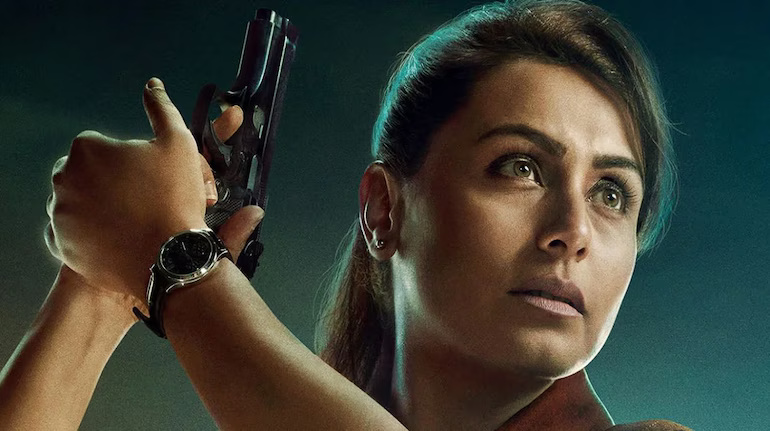
Unlike the hero-centric masala cinema, the Mardaani films are stripped of glamour and gloss. Rani Mukerji wears very little makeup, even when the camera goes close enough to count her freckles. There are no love scenes, no songs. The camerawork is gritty and atmospheric. It isn’t afraid of darkness. The music isn’t overly melodramatic. And while Rani may get to walk in slow motion, the action scenes are reasonably believable, in the sense that she isn’t asked to perform stunts that look like they belong in a circus. The director knows that this is a genre movie, and he keeps cutting fast and keeps the story moving. At interval point, Shivani gets what the screenplay books would call a “dark night of the soul” moment. She is at her lowest. It’s hard to imagine a hero-centric movie where the hero would be allowed to fail so spectacularly. This makes the character – and her exploits – so much more believable and worth rooting for.
The special spice in the Mardaani movies is that they are so women-centric, even beyond the gender of the protagonist. The crimes are those that are committed on women. The messages are about women. The villain in this episode is a woman, the fantastically cast Mallika Prasad who pitches the character at just the right point between a bad human being and a cackling witch from a dark fairy tale. The primary supporting character is a female cop played by Janki Bodiwala, whose character keeps us guessing. And even little girls are shown to be brave. When the diplomat’s daughter is kidnapped, the manservant’s daughter tries to save her the only way she knows. She climbs a tree and throws stones on the car with the kidnappers. Another gender reversal is that Shivani’s husband (Jisshu Sengupta) is the equivalent of the heroine in those other films. He ends up being threatened by the villain.
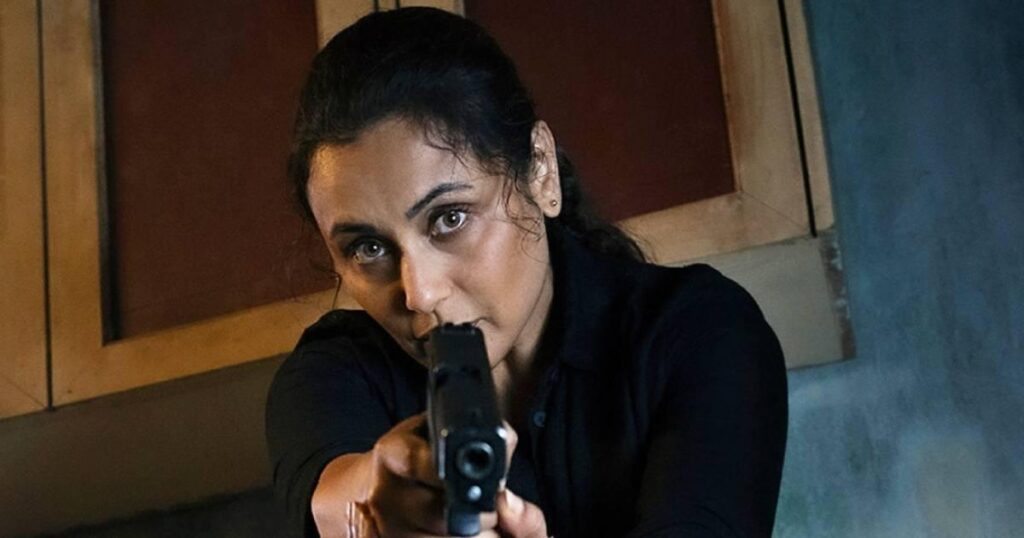
Mardaani 3 chugs along well enough, and I had only a couple of problems. One, the issue of human trafficking was seen in the first part as well, and it’s become a bit repetitive. The other thing is that the closing portions have a slight sci-fi feel that doesn’t seem to belong to this rooted universe. I am not saying these things cannot happen. It’s just that the way they are shaped and staged, it comes off rather far-fetched. But all said, the film leaves us waiting for Mardaani 4. This is a series that keeps finding ways to overcome the basic familiarity of the storyline. The touch with the dead infant in a plastic bag, the touch with the diplomat’s return to the story, the choice that Shivani has to make between an urgent mission and a husband in the emergency room, the unexpected killing, the scene with a clever child and a knife – all of this keeps us on our toes even as we expect the predictable ending of good winning over evil. And at a time we seem to have forgotten how to make masala movies because we only seem to make “mass” movies, this counts for something.