
We stay at a distance, watching this story about a female spy played by Alia Bhatt. The actors do what they can, but they are trapped in a confused product which is neither a full-on, full-meals masala movie nor a sleek, cold Hollywood-style actioner. That’s the quick review. The longer, spoiler-filled analysis follows.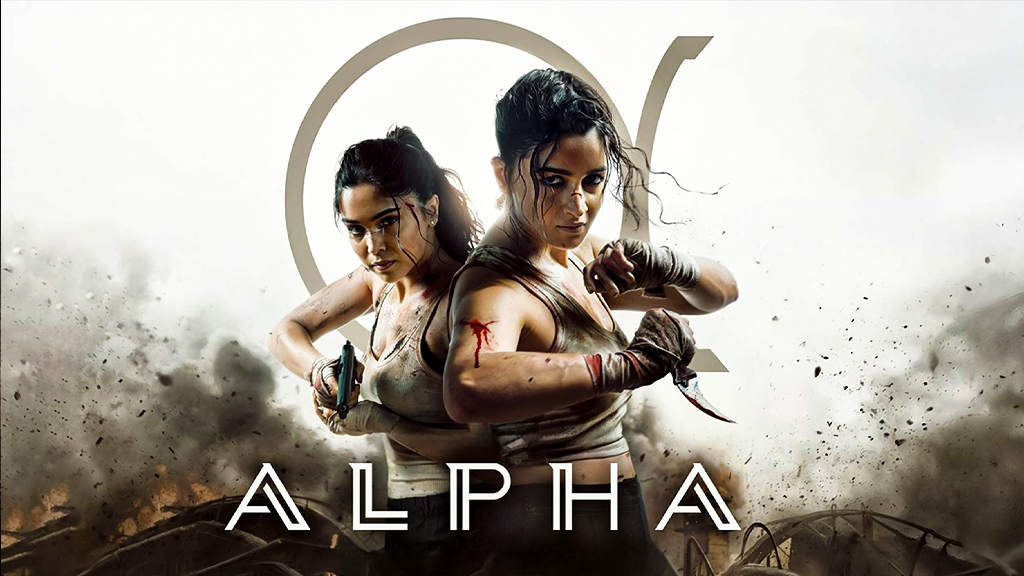
Sometimes, it’s simply the fact that the films, the templates that work in one era stop working after a point. Alpha is reasonably and remotely watchable, but there’s nothing unique about it. Many movies are made by borrowing a bit from here and a bit from there, so “lack of originality” is not the biggest sin. But what do these borrowings end up in? Is the end result special? Are you able to take two and two and make it five? That never happens in this installment of the Yash Raj Spy Universe, written by Soumil Shukla and Shridhar Raghavan, and directed by Shiv Rawail. The so-called USP is that this Universe gets its first female hero, but except for a small scene about the onset of menstruation, the story treats her “like a guy”. This may make for a great exercise in equality, but what we see Alia Bhatt do here is exactly what we see our male heroes do in their movies.
Alia is petite. She has those girlish looks. So casting-wise, she is perfect as someone who has been made into a fighter before she experienced a proper childhood. She’s still a lost little girl, trying to cover up her emotions with action and an utter disregard for human life. The story actually has a graph for this character, named Sita. In the midst of kicking butt, how does she transform from a lethal fighting machine into a human being? What happens inside her to make her change from her leathery all-black wardrobe to the soft, sky-blue top at the end? A good movie would find a way to integrate these internal recalibrations with her external battles, and have us rooting and hooting for Sita. But Alpha is content to be mid. Alia, as always, is mindful of her character. She never gets over-emotional, and her arc is played with a wariness that makes you think that Sita is suspicious of these sudden feelings that are sprouting in her. But the script and the direction don’t help.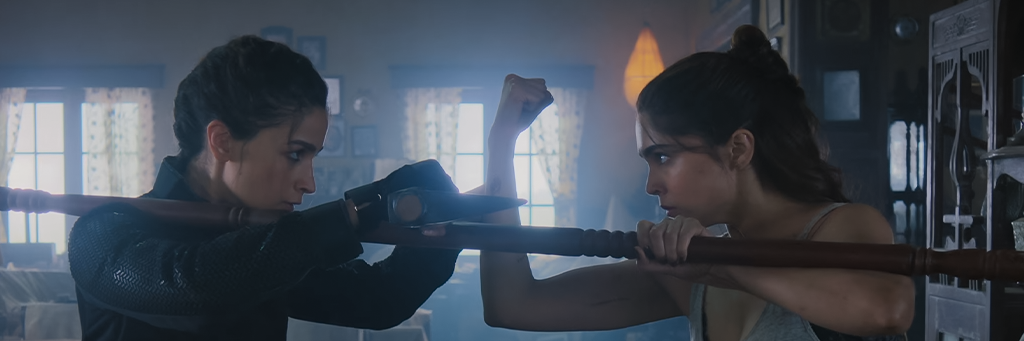
The story by Uday Chopra has promise. Alpha opens with a lovely image about the cost of war. It’s one day after the Kargil conflict has ended, and we see rows and rows of coffins draped with the Indian flag. The film never lives up to the tragic grandeur of this visual, but at least the story beats are pulpy and propulsive. A scientist (nicely played by Dibyendu Bhattacharya) develops a serum that can turn humans into kinda-sorta X-Men, with heightened sensory and self-healing powers. Sita, in a nice turn of events, ends up being the only survivor of this programme – or at least, we are made to think that for a while. The rest of the running time is filled with two father-figures, one mirror image of a woman who is all things happy to Sita being all things sad, and some stunts (like one involving exhaust fans) that sound good at least on paper, as an idea.
But Alpha quickly becomes a grim checklist of cliches. It’s clear that they have hired some solid stunt people and put a lot of thought into the action, but it all feels like a video game being played in a nightclub blaring non-stop Punjabi pop music. It doesn’t help that the action occasionally switches to music video-like slo-mo, like when Sita executes a somersault. It feels like a cool dance move, and not like something Sita is doing to save her life while killing other lives. Despite the huge stakes involved – from Sita’s growth to the nation’s security – nothing ever feels at stake. At one point, the villain carries knives while Sita is pointing a machine gun at him. But she doesn’t shoot. She throws away the gun so that she can follow the unwritten laws of on-screen machismo and have a dagger-versus-dagger showdown. This sort of swagger may have worked in an earlier time, but now it just seems silly.
All the signatures from an older era misfire badly. Our heroine says things like “Sita aaj khud Lanka jalaane aayi hai,” and the character played by Sharvari is named Durga – but all these callbacks to myth feel hollow in a movie that flaunts its designer athleisure wardrobe without worrying that these trendy clothes are going to make these people conspicuous when a spy is supposed to remain as invisible as possible. For this kind of thing, we can always revisit the Dhoom series. Why bother spending money on a brand new movie? And even if that is the mood and feel they are going for, the songs are nothing special, and there’s no comedy. Alpha is neither a full-on, full-meals desi masala movie nor a sleek, cold Hollywood-style actioner. The director is Rahul Rawail’s son. He sneaks in a reference to one of his father’s blockbusters, with a location called “Betaab House”. Even as in-jokes go, it’s sad.
The questions keep coming. Why not save the revelation about the Sharvari character for later, the way the reveal about Tiger Shroff was done in War! It’s a great plot point, but it’s practically thrown away. Even without this reveal, this character would have ended up having the same impact… or lack of impact. Why not make Sita closer to the villain, so that his betrayal comes as a bigger shock! Why not exploit the Anil Kapoor character’s emotions with a scene that tells us how bad he feels about what he’s done to his children! In short, why not add things that our cinema is strong at – namely the emotional stuff – instead of aping Hollywood and going for grand action set pieces that will never look as grand as what Hollywood does! If you are desi enough to call upon the star power of one of this Spy Universe’s biggest stars, why not go desi all the way!
The film is not entirely without thought. If Sita is introduced with an action scene, Durga is introduced with a song. If Sita is dressed in black, Durga wears light, bright colours. If Sita has a don’t touch-me body language and has only her technology and her guinea pig to talk to, Durga is a chatterbox with people and also a big-time hugger. Sharvari, Anil Kapoor, Bobby Deol, and especially Dia Mirza in a small role, all do what they can to breathe life into the material. But the material is dated – probably even dead. We don’t get cheap thrills. We don’t get sophisticated thrills. There’s just no sizzle. Walking away, I recalled an image of Sita placing a flower behind her ear and looking at her little girl-like reflection in a river. It’s a silent, poignant “what if my life had been different!” image. But then, to really blossom into something, it needed a movie that was different.