A family is preparing for the wedding of their daughter the next morning. But as darkness falls, danger arrives in the form of IPKF soldiers who take over the house because they need a hideout. The situation turns more dangerous for the family when Tamil rebels see this as an opportunity to attack this IPKF unit. In short, the premise is a nutshell version of Sri Lankan Tamils trapped in the war between rebels and the Indian army. That’s the short take. A longer review follows, and it may contain spoilers.
The year is 1988. Middle-class homes have the practice of renting a VCR (and some video cassettes) to watch movies at home. A young man and a boy set out to arrange this entertainment. The women ask for Mouna Raagam. Maybe they identify with the Revathy character, or maybe they have a crush on Karthik. The boy, however, has no use for a sensitive romance. He wants hard-core action. He wants a Vijayakanth movie. On the surface, you could be watching a scene from a Chennai neighbourhood that year – except that this is a village in a Tamil-speaking area in Sri Lanka. The young man and the boy get the VCR, but on the way back, they encounter the Army. The members of a religious procession are paraded in front of a masked person. A priest is identified and taken into custody. On the way back home, the boy asks the young man whether the right man was identified. The young man says that someone has to be ID-ed, or else the masked person might be in trouble. It’s every man for himself!
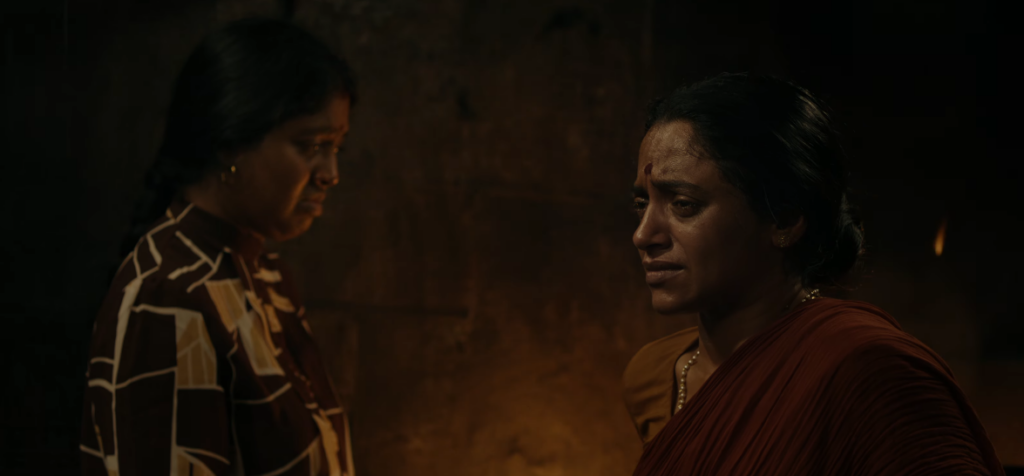
Writer-director Someetharan is a Sri Lankan Tamil filmmaker, and his debut feature Neelira – which means “long night” – is dedicated to the souls who sacrificed their lives for the war in his motherland and to all his kin living around the world bearing wounds that are yet to heal. This is fiction based on the memories of a war child, and it unfolds over a single night in that middle-class house in that Tamil neighbourhood. The daughter is about to get married. The extended family has gathered for the wedding. But during wartime, nothing is “normal”, not even a wedding. Someone recalls that weddings used to be grand three-day affairs. Now, they are just a symbolic ceremony.
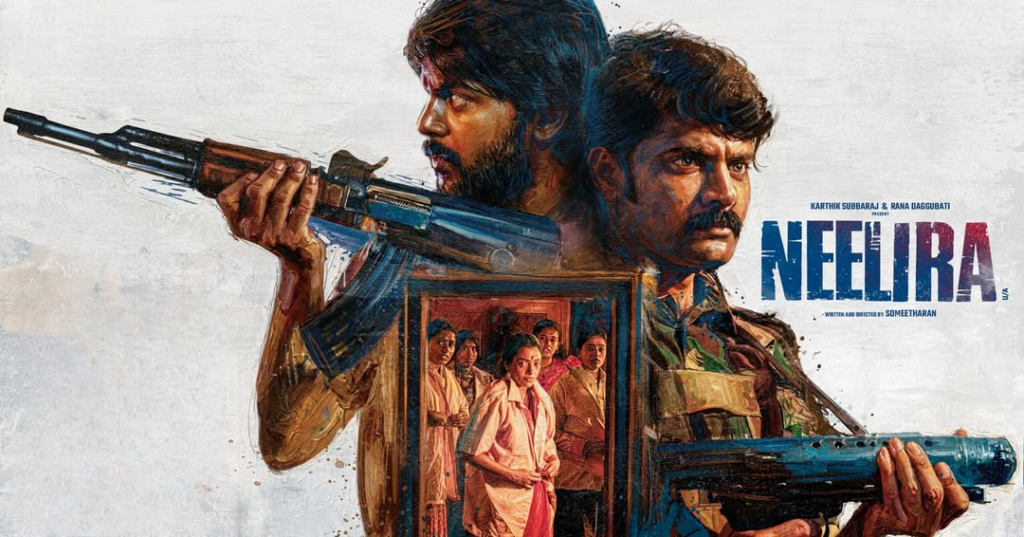
The dialogues (like this one) are often direct and come to the point rather bluntly – but the words carry the lived experience of the situation, and the premise carries an honesty that is very affecting. The local cinema hall has been converted to an IPKF office. In the middle of the video cassettes, the films stop to show documentaries about the war situation. You could almost make the case that “moviemaking artistry” is a luxury. The bigger priority is to tell so many things that need to be told, like the fact that the wedding at the centre of this story needs a permission letter from both the IPKF and the Sri Lankan Army. And even after these permissions have been obtained, there’s trouble. A few IPKF soldiers come by. They end up taking the wedding-house as shelter, while Tamil rebels gathering outside plan to wipe them out. Trapped in the middle is the family that just wanted to marry off their girl. (It’s notable that the Sri Lankan Army doesn’t get much mention here. That’s a whole different struggle – perhaps something Someetharan will tackle in another movie.)
Neelira is filled with contrasts. The coldness of the night outside contrasts with the warm colours inside the house. The stark uniforms of the soldiers contrasts with the silks and the decorations for the wedding. The food made inside the house (steaming puttu) contrasts with the “army-kaaran saapadu” of the soldiers, namely chapati-s. Inside the house, everyone’s a Sri Lankan Tamil. The soldiers are from all corners of India: one from the North East, one from the Hindi heartland, one Sardar, one Indian Tamilian. Even amongst the soldiers, there are contrasts. One of them is hot-headed and equates fighting with manliness. The Captain (Naveen Chandra) thinks that we fight to live. But what’s common is loss. The bride’s father is no longer with them. He chose a life of rebellion and fiery poetry. The bride’s sister has lost a boyfriend. He was a doctor. He traded his stethoscope for guns.
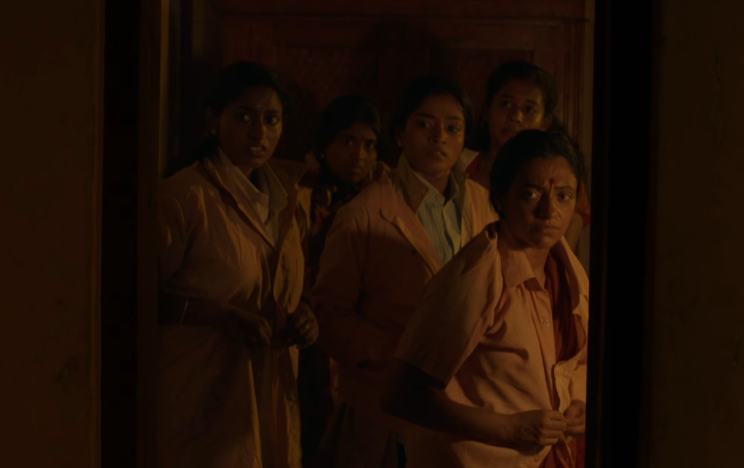
This subplot with the doctor, which invokes the Gothic-fiction trope of the madwoman in the attic, is the weakest part of Neelira. Someetharan attempts to introduce the feel of tragic poetry into a story that works far better as gritty prose. But the rest of the film is solid. It’s filled with lived-in performances, and it plays out like a demonic inversion of one of our movie staples. We are used to love triangles. This is a hate triangle, the three sides being the rebels, the Indian Army, and the family trapped in between. The people in this family have strong feelings, but they are forced to swallow their anger and pride and hide their sympathy for the rebels in order to simply survive. The women also have to hide themselves, wearing loose-fitting shirts over their saris and blouses. A combination of such visual details and other spoken details makes Neelira a tight, tense journey into the heart of darkness, both literal and metaphorical. This long night lasts only 90 minutes, but for survivors, it’s a lifetime of trauma they may never be able to shake off.